






By mindnesto Editorial Team · Updated June 2026 · 12 min read
Reviewed for accuracy — sources cited from APA, Gottman Institute, Mentor Research Institute, NHS and peer-reviewed relationship neuroscience
Resentment in relationships rarely arrives with a bang. It builds quietly — through small disappointments left unaddressed, through needs communicated and consistently ignored, through the invisible accumulation of moments where you gave more than you received and said nothing about it. Then one day, something trivial happens — a forgotten errand, a thoughtless comment, a tone of voice — and the reaction it produces feels wildly disproportionate. Because it is not really about the errand at all.
That disproportionate reaction is resentment announcing itself. And by the time it announces itself that loudly, it has usually been living in the relationship quietly for a very long time.
Understanding resentment in relationships properly — where it comes from, what it does to your brain and your bond, and what actually heals it — changes how you respond to it entirely. This guide covers everything the 2026 research tells us about resentment in relationships, including the neuroscience that most relationship content has never mentioned, and 12 specific evidence-based strategies that go far beyond the generic advice to “communicate more.”
We have connected this to our guides on toxic relationship mental health, healthy boundaries mental health, and secure attachment communication — because resentment, boundaries, and communication patterns are inseparably interconnected systems.
⚠️ Medical Disclaimer: This article is for informational and educational purposes only. Significant relationship difficulties, including those involving emotional or physical abuse, require professional therapeutic support. If you are in an unsafe situation, please contact a crisis service immediately.
What Is Resentment in Relationships — The Clinical Definition
Resentment is the sustained emotional residue of perceived injustice, unfairness, or unacknowledged hurt within a relationship. It is not simply anger — anger is acute and motivating, pointing toward a wrong that needs addressing. Resentment is anger that was never expressed, never resolved, and never repaired. It settles into the body and the relationship like sediment, accumulating layer by layer over time.
The American Psychological Association defines resentment as a persistent negative emotional state characterised by feelings of bitterness, indignation, and ill will toward a person who is believed to have caused harm or acted unfairly. In relationship contexts, resentment typically builds through three primary mechanisms.
The first mechanism is silent obligation — when you say yes to things you actually want to say no to, you spend the entire time seething, convinced the other person “made” you do it. The resentment is not really about their request. It is about your inability to honour your own needs.
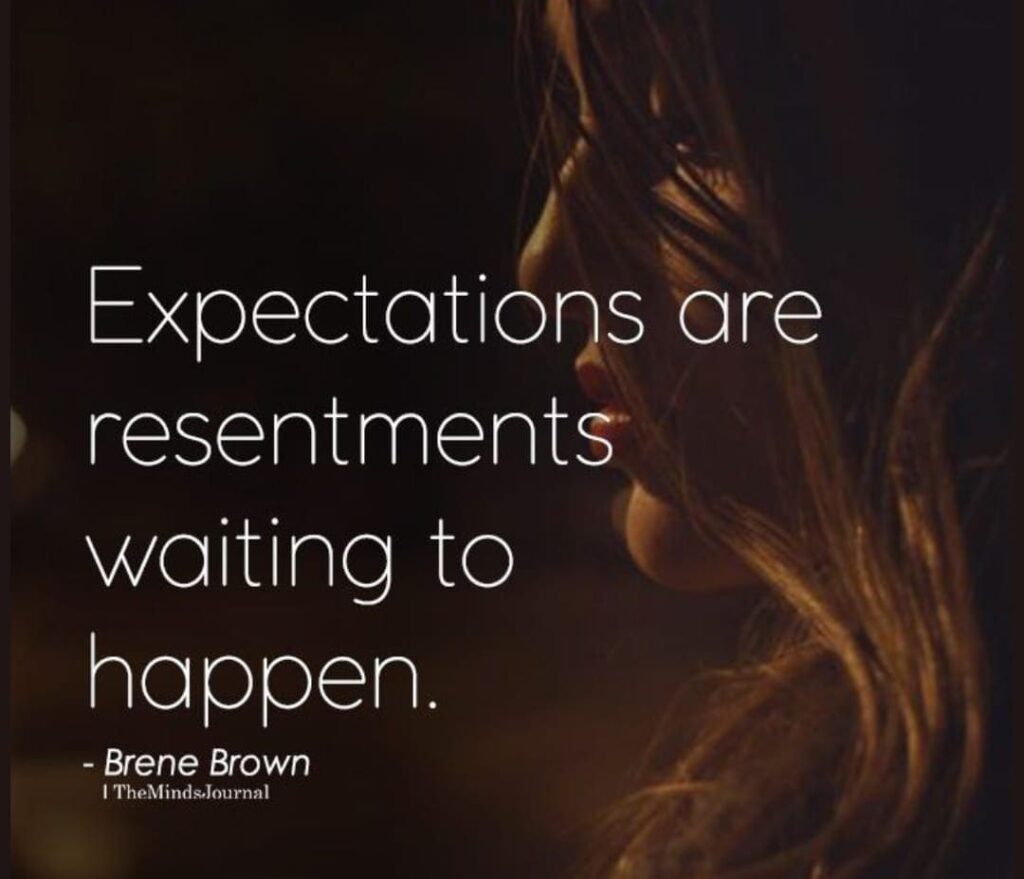
The second mechanism is assumption — expecting the people who love you to read your mind. When they inevitably fail to meet expectations they never knew existed, the hurt that follows feels like evidence of indifference rather than the simple absence of information it actually is.
The third mechanism is repeated boundary violation — consistently crossing your own limits for others, then blaming them for the exhaustion that follows. Many of us walk around with elaborate rulebooks in our heads — expectations, obligations, and agreements that exist only in our own minds.
Resentment vs Contempt — The Distinction That Changes Everything
Understanding the difference between resentment and contempt is one of the most clinically important distinctions in relationship psychology — and one that almost no popular article on this topic draws clearly.
Dr. John Gottman of the University of Washington — whose four-decade longitudinal research programme on relationships is the most comprehensive in the field — identifies contempt as the single most destructive pattern in relationships and the strongest predictor of relationship dissolution. Contempt is what resentment becomes when it is left unaddressed for long enough. It moves from “I am hurt and angry about what happened” (resentment) to “I have lost respect for who you are” (contempt).
Resentment still carries pain, and pain contains the possibility of repair. Contempt is the absence of that pain — replaced by a cool dismissal of the other person’s basic worth. Resentment that still carries anger and emotional energy has fuel for repair. The couples who benefit most from therapy are those who come in earliest, before the resentment has hardened into contempt.
The Neuroscience of Resentment in Relationships
This is the section that Verywell Mind, Healthline, and most relationship content sites omit entirely. And it is the section that changes how you understand what resentment actually is.
The Amygdala and the 6-Second Resentment Response
Research in affective neuroscience shows that the amygdala can deploy a full stress response in roughly six seconds — well before the neocortex catches up and offers any kind of rational assessment. This means that by the time you are thinking about whether your partner’s comment was actually hurtful, your body has already decided that it was. Your heart rate has already spiked. Your muscles have already tensed. You are already in survival mode.
This six-second biological reaction is one of the primary reasons resentment in relationships is so difficult to manage in the moment. You are not choosing to be hurt before thinking — your nervous system is making that decision for you, faster than conscious thought allows. Knowing this removes much of the shame that resentment typically generates. The amygdala’s speed is an evolutionary feature, not a character flaw.
The Cortisol-Oxytocin See-Saw — The Biology of Holding Grudges
On a basic level, harbouring resentment and anger toward another person stimulates the stress response of the fight-or-flight mechanisms of the sympathetic nervous system, spiking levels of the stress hormone cortisol. Conversely, resolving conflicts and letting go of anger stimulates the tend-and-befriend mechanisms of the parasympathetic nervous system, which can increase levels of the bonding hormone oxytocin.
This biological see-saw has profound implications for resentment in relationships. When resentment is chronic and unresolved, cortisol stays elevated. Elevated cortisol suppresses oxytocin — the very hormone that creates felt connection, trust, and the desire to be close. The person you resent literally becomes someone your biology pushes you away from.
When your nervous system is chronically activated by relational distress, your body produces elevated levels of cortisol. In healthy relationships, cortisol spikes occasionally during arguments and then returns to baseline when repair happens. Without repair, the baseline itself rises.
Over time, a chronically elevated cortisol baseline in a relationship creates what researchers call an adapted threat state — a condition in which the nervous system treats the partner’s presence as a persistent low-level threat rather than a source of safety. This is the biological explanation for why unaddressed resentment makes physical proximity to a partner feel draining rather than comforting.
Biological Feedback Loops — The Self-Sustaining Resentment Cycle
Research published by the Mentor Research Institute in 2025 — examining psychoneuroendocrine foundations of relationship strain — confirmed that biological feedback loops involving cortisol, oxytocin, dopamine, and serotonin strongly influence relational stability. Female hormonal cyclicity introduces periodic changes in stress sensitivity, empathy, and affiliative drive that can heighten vulnerability to conflict. Male hormonal systems, by contrast, promote short-term dominance and withdrawal responses that can amplify misunderstanding.
These biological feedback loops explain why resentment in relationships tends to become self-sustaining without deliberate intervention. The resentment produces physiological responses that make the relationship less nourishing, which increases the frequency of resentment-triggering interactions, which deepens the resentment further. Breaking the cycle requires targeting both the relational patterns and the biological state they create.
Neuroscience Insight — What Appreciation Does to the Resentment Biology
Neuroscience suggests that positive social interactions activate reward pathways involving dopamine and oxytocin while helping regulate stress responses mediated by cortisol and the amygdala. Expressions of gratitude and recognition can reinforce attachment bonds and increase feelings of safety. When appreciation disappears, the opposite may occur — the brain begins scanning for evidence of rejection, unfairness, or emotional abandonment. Over time, repeated disappointment can strengthen negative cognitive biases and increase emotional vigilance.
This finding has a direct, actionable implication for resentment in relationships. Deliberately and specifically expressing appreciation — not generic thanks, but specific recognition of what the other person has done and why it matters — is not simply a warm social gesture. It is a biological intervention that activates oxytocin, reduces cortisol, and interrupts the threat-scanning that resentment maintains.
The Seven Root Causes of Resentment in Relationships
1.Unmet Needs — Communicated and Ignored
The most common root of resentment in relationships is the experience of communicating a genuine need and having it consistently dismissed, minimised, or forgotten. A single instance of this is ordinary relationship friction. A pattern of it across months or years is the primary substrate from which deep resentment grows.
The unmet need does not have to be dramatic to produce significant resentment. Partners who feel chronically unheard on small matters — how they want to spend weekends, how they need support during stress, how they like to be greeted at the end of the day — accumulate resentment from these small repeated misses as surely as from major betrayals.
2. Invisible Labour and Emotional Labour Imbalance
One of the most clinically underrecognised sources of resentment in relationships — particularly in heterosexual partnerships — is the asymmetric burden of invisible labour and emotional labour. Invisible labour includes the mental and logistical management of household functioning: planning meals, tracking appointments, monitoring children’s needs, managing social calendars, and anticipating household tasks. Emotional labour includes the management of the relationship’s emotional climate, conflict de-escalation, and the monitoring of everyone’s emotional states.
Research cited in the Washington Post couples column in July 2026 confirms that intimate relationships offer no shortage of opportunities to feel that you are giving more than you are getting — whether in finances, parenting, housework, affection, or commitment. When that imbalance is sustained over years without acknowledgment or redistribution, the resentment it generates can become foundational to how the burdened partner experiences the entire relationship.
3. Boundary Violations — Repeated and Unacknowledged
Resentment builds reliably when your stated or unstated limits are consistently violated and nothing changes after you communicate the violation. The resentment is not simply about the boundary being crossed. It is about the implicit message the repeated crossing delivers: that your limits do not merit consistent respect.
4. People-Pleasing — The Self-Betrayal Root
Perhaps the most psychologically nuanced source of resentment in relationships is people-pleasing. When you consistently say yes to avoid conflict, to keep the peace, or to manage another person’s emotional state, you betray your own needs in service of theirs. The resentment that follows is real — but its direction is complicated. Part of it points at the partner for expecting compliance. Part of it points at yourself for providing it.
5. Accumulated Small Hurts — The Slow Build
Not all resentment in relationships originates from specific, identifiable incidents. Some of it accumulates from the hundreds of small moments — a tone that felt dismissive, a moment of vulnerability met with distraction, a contribution that went unnoticed — that individually seem too minor to mention but collectively form a sediment of felt disrespect.
6. Past Betrayals Never Fully Repaired
When a significant hurt — an infidelity, a serious breach of trust, a period of emotional unavailability — is addressed only at the surface level without full emotional processing and genuine repair, resentment occupies the space that healing never reached. The event is technically in the past. The wound is not.
7. Self-Directed Resentment — The Pattern Nobody Discusses
This is the resentment cause that no mainstream article addresses — and one of the most clinically important. Some people resent their partner partly for choices they themselves made: for giving up opportunities to accommodate the relationship, for suppressing aspects of their identity, for consistently choosing the relationship at the expense of their own growth. This self-directed resentment is frequently displaced onto the partner — because acknowledging its true target requires confronting painful truths about your own patterns of self-abandonment.
Signs of Resentment in Relationships — Recognising It Early
Resentment rarely announces itself loudly. Emotionally, it feels like a slow drain. You feel chronically unappreciated, even when your partner does express gratitude. Past hurts replay in your mind on a loop, and you have lost that sense of admiration you once had for them. When something good happens in their life, you struggle to feel genuinely happy.
The physical signs are equally telling. Your body keeps the score. You tense up when your partner enters the room. Eye-rolling becomes reflexive. Some people experience chronic fatigue specifically around their partner, feeling drained by interactions that used to energise them.
Additional signs of resentment in relationships to watch for include:
- A persistent sense of keeping score — mentally tracking who has done more, given more, or sacrificed more
- Finding it difficult to receive affection genuinely when you are harbouring unaddressed resentment
- Sarcasm replacing direct communication as your primary mode of expressing frustration
- Small irritations provoking reactions that feel disproportionate even to yourself
- Fantasising about the relationship ending, not out of genuine desire for it to end, but as a relief fantasy from the chronic tension
- Interpreting your partner’s neutral behaviour through a consistently negative lens
12 Evidence-Based Strategies to Heal Resentment in Relationships
1. Name the Resentment — Without Waiting for Perfect Conditions
The first and most important healing strategy is simply naming the resentment — to yourself, and then to your partner. Resentment that stays unnamed grows in the dark. Acknowledging it, even privately, begins to shift the neurological state it maintains.
When you bring it to your partner, the naming requires specificity rather than accumulation. “I have been feeling resentful about the household division of responsibilities” is a specific, addressable statement. “I resent everything about how this relationship works” is an accumulated discharge that typically produces defensive shutdown rather than repair.
2. Separate the Resentment From the Person
Resentment in relationships frequently becomes confused with resentment toward the person themselves — their character, their worth, their fundamental adequacy as a partner. This conflation is both unfair and clinically counterproductive.
Effective resentment work separates the behaviour or pattern from the person. “I resent the pattern of my contributions going unacknowledged” is a relational system problem, amenable to change. “I resent who you are” — which is contempt — is a person problem, much harder to address constructively.
3. Identify and Communicate the Unmet Need
Because most resentment in relationships traces back to unmet needs, identifying the specific need beneath the resentment is an essential healing step. This requires moving beyond the surface complaint — “You never help around the house” — to the underlying need it represents: “I need to feel that our shared responsibilities are genuinely shared, and that my contribution is noticed.”
The secure attachment communication framework — specifically the soft startup technique — provides the most evidence-based format for communicating these needs: “When [specific situation], I feel [specific emotion], and what I need is [specific, actionable request].”
4. Rebuild Positive Sentiment Override
Dr. John Gottman identifies positive sentiment override — the buffer of accumulated positive emotional memories that absorbs minor negativity — as one of the strongest protective factors against resentment escalating into contempt. When positive sentiment override erodes, neutral interactions are filtered through a negative relational lens.
Deliberately rebuilding positive experiences alongside resentment work is not avoidance — it is the neurobiological foundation repair that makes the harder conversations possible. Regular rituals of genuine connection, specific expressions of appreciation, and emotional bids turned toward rather than away from all contribute to this repair.
5. Accept Influence — The Gottman Resentment Antidote
Gottman’s research identifies the refusal to accept influence as one of the strongest predictors of relationship failure. Accepting influence means being genuinely open to your partner’s perspective, willing to compromise, and secure enough to let them shape your decisions. When partners feel they have influence in the relationship, resentment has far less room to grow.
For partners whose resentment stems from feeling consistently overridden or disregarded, this research point is particularly validating — and clarifying. The experience of feeling influential in a relationship is not a luxury. It is a fundamental requirement for sustained emotional investment without resentment accumulation.
6. Address Invisible Labour Explicitly
If invisible or emotional labour imbalance is a significant contributor to resentment in your relationship, addressing it requires making the invisible visible. This means naming — specifically and without blame — the full scope of what you are managing, and having a genuine conversation about redistribution.
Research on relationship resentment consistently finds that acknowledgment matters as much as redistribution. Partners who feel their invisible contributions are genuinely seen and appreciated report significantly lower resentment levels than those whose contributions are redistributed without acknowledgment.
7. Set Boundaries — With a Relational Rationale
Because people-pleasing and boundary violation are two of the most common roots of resentment in relationships, establishing clearer personal limits is a core healing strategy. However, boundary-setting in long-term relationships requires a different framing than the general guidance in our healthy boundaries guide.
In intimate relationships, boundaries are most effectively communicated as relational information rather than personal rules. “When I agree to things I genuinely cannot give, I end up resentful and it damages us — so I need to start saying no to ______.” This framing makes the boundary a relationship protection rather than a personal withdrawal.
8. Practise Biological Regulation Before Difficult Conversations
Given the six-second amygdala response and the cortisol elevation that resentment produces, attempting to address it directly while physiologically flooded is unlikely to produce the outcomes either partner wants. Regulating your nervous system before resentment conversations — through extended exhale breathing, brief physical movement, or a deliberate 20-minute co-regulation pause — creates the physiological conditions in which genuine hearing and problem-solving are neurologically possible.
9. Repair Actively and Early
Get help before you need it desperately. The couples who benefit most from therapy are those who come in earliest, before the resentment has hardened into contempt. Think of it like physical health: an annual check-up is more effective than an emergency room visit. If you sense resentment beginning to build, do not wait.
Repair does not require a formal conversation. It can be a specific acknowledgment — “I realise I have been dismissive lately and I am sorry for that.” It can be a changed behaviour, sustained long enough to be credible. It can be a genuine question — “What do you need from me right now?” — asked with real intent to hear the answer.
10. Explore Forgiveness — As a Self-Directed Practice
Forgiveness in the context of resentment in relationships is widely misunderstood. It is not condoning the behaviour that caused the resentment. It is not reconciliation. It is not the elimination of accountability. Rather, forgiveness is the decision to stop allowing a past hurt to generate ongoing cortisol at your own expense.
Research by Dr. Everett Worthington of Virginia Commonwealth University — one of the most cited researchers on forgiveness psychology — consistently finds that forgiveness produces measurable reductions in cortisol, blood pressure, and depression in the person who forgives — independent of any behaviour change in the person who caused the hurt. You forgive primarily for the sake of your own nervous system.
11. Practise Self-Compassion for Your Own Resentment
Many people experience shame about feeling resentful — as though resentment is evidence of a mean spirit or insufficient generosity. In reality, resentment is a predictable emotional signal that something in the relational dynamic is not working. It deserves the same compassion and curiosity you would bring to any other emotional signal.
Dr. Kristin Neff’s self-compassion framework, applied to resentment, sounds like: “I notice I am feeling resentful, and this is genuinely painful. Many people feel this way in relationships. What do I need right now that would help?” This compassionate self-inquiry is more clinically productive than shame-driven suppression — and significantly more likely to lead to the clear communication that resentment actually needs.
12. Seek Professional Support — Sooner Rather Than Later
Couples therapy — particularly Emotionally Focused Therapy (EFT) developed by Dr. Sue Johnson of the University of Ottawa — has the strongest evidence base for addressing resentment in relationships. EFT specifically targets the attachment patterns and emotional cycles that maintain resentment, producing lasting change in relationship quality for approximately 70–75% of couples who complete it.
Individual therapy — particularly CBT and schema therapy — addresses the personal patterns (people-pleasing, boundary difficulty, self-directed resentment) that contribute to resentment accumulation.
Professional support access:
- UK: Relate UK — couples counselling | NHS Talking Therapies
- USA: ADAA Therapist Finder | ICEEFT — EFT Therapist Locator
- Canada: CAMH | ICEEFT Canada
- Australia: Relationships Australia | Beyond Blue

Can You Heal Resentment in a Relationship Without Your Partner’s Participation?
This is one of the most important and most frequently asked questions about resentment in relationships — and the honest answer is nuanced.
Unilateral healing is genuinely possible — but it has a ceiling. You can reduce your own cortisol through forgiveness practice
However, the underlying relational patterns that generated the resentment — the invisible labour imbalance, the dismissed needs, the repeated boundary crossings — cannot be resolved unilaterally. They require genuine dialogue, mutual acknowledgment, and sustained behaviour change from both partners.
Working through resentment should not mean forcing yourself to move on. Instead, it means giving the original hurt enough clarity, care, and structure that your nervous system stops bracing around it. Sometimes that structure requires professional facilitation. There is no shame in that — only pragmatism. Calm
— Key Takeaways
The complete 2026 evidence-based summary:
- Resentment is the emotional residue of perceived injustice that was never expressed, resolved, or repaired
- Three primary root mechanisms: silent obligation, assumption, and repeated boundary violation
- The amygdala can deploy a full stress response in six seconds — before rational thought engages
- Chronic resentment elevates cortisol, suppresses oxytocin, and creates a biological threat state that makes the partner’s presence feel draining
- Harbouring resentment activates cortisol; resolving it activates the oxytocin and tend-and-befriend response
- Contempt — resentment left unaddressed — is the single strongest predictor of relationship dissolution according to Gottman’s research
- Invisible and emotional labour imbalance is one of the most underrecognised sources of relationship resentment in 2026
- Self-directed resentment — resenting choices you made that served the relationship over yourself — is a clinically important and widely overlooked contributor
- EFT (Emotionally Focused Therapy) has the strongest evidence base for resentment in relationships — 70–75% positive outcomes
- Resentment that still carries anger has fuel for repair — do not wait until it becomes contempt
- Forgiveness reduces cortisol and depression in the person who forgives — independent of any partner behaviour change
- The most powerful resentment prevention strategy is the consistent, specific expression of genuine appreciation
A Word From mindnesto
At mindnesto, we believe that resentment in relationships is one of the most painful and most misunderstood emotional experiences people bring to us — because it carries so much shame alongside the hurt. Feeling resentful toward someone you love feels like a character indictment. It should not.
Resentment is your nervous system’s record of what went unaddressed. It is information — specific, meaningful, and actionable. It tells you where your needs have not been met, where your limits have been repeatedly crossed, and where the relationship needs genuine attention and repair. That information is valuable, even when the emotion carrying it is painful.
You do not have to keep carrying this alone. The neuroscience, the therapy research, and the clinical experience of relationship professionals all point toward the same conclusion: resentment in relationships can be healed. Consistently, genuinely, and lastingly — when it is addressed with honesty, compassion, and the right support.
You deserve a relationship where resentment is replaced by genuine safety, genuine repair, and genuine connection. 💙
→ Read next: Healthy Boundaries — Why They Matter and How to Set Them
→ Also read: Toxic Relationship Mental Health — Signs, Effects and How to Heal
Frequently Asked Questions
What causes resentment in relationships?
Resentment in relationships typically builds from three core mechanisms: unmet needs that were communicated but consistently dismissed, boundary violations that occurred repeatedly without genuine repair, and silent self-betrayal — saying yes to things you genuinely wanted to refuse and then blaming the other person for the exhaustion that follows. It also accumulates from invisible and emotional labour imbalances, assumption-based expectation that others will intuit your needs without being told, and from past hurts that received only surface-level repair rather than genuine emotional processing.
How do I know if I have resentment in my relationship?
Common signs include feeling chronically unappreciated despite your partner’s actual expressions of gratitude, past hurts replaying on a mental loop, finding it difficult to feel genuinely happy when good things happen for your partner, tensing physically when they enter the room, and experiencing reactions to small irritations that feel disproportionate even to yourself. The most telling sign, according to relationship therapists, is the persistent sense of keeping score — mentally tracking who has given more, sacrificed more, or contributed more to the relationship.
What is the difference between resentment and contempt?
Resentment is anger and bitterness rooted in specific perceived injustices — it still contains emotional energy that can fuel repair. Contempt is what resentment becomes when it is left unaddressed — a loss of basic respect for the other person’s worth and character. Gottman’s research identifies contempt as the single strongest predictor of relationship dissolution. Resentment is a relationship problem. Contempt is a person problem. Addressing resentment before it reaches contempt is one of the most important relationship health strategies available.
Can a relationship recover from deep resentment?
Yes — in most cases. Resentment that still carries anger and emotional energy has fuel for repair. The conditions for recovery include both partners being willing to acknowledge the patterns that generated the resentment, genuine behaviour change sustained long enough to be credible, appropriate professional support, and the rebuilding of positive shared experiences alongside the harder repair conversations. Emotionally Focused Therapy (EFT) produces positive outcomes for approximately 70–75% of couples who complete it — including those presenting with significant resentment.
How does resentment affect mental health?
Chronic resentment maintains elevated cortisol through sustained sympathetic nervous system activation — producing the same physiological consequences as any chronic stressor: sleep disruption, immune suppression, heightened anxiety, and increased depression risk. It simultaneously suppresses oxytocin — the bonding hormone that creates felt connection and relational safety — transforming the partner’s presence from a source of comfort into a source of biological threat. Over time, this neurological shift makes the relationship feel depleting rather than nourishing, even during periods of external calm.
When should I seek professional help for resentment in my relationship?
Seek professional support when resentment has been present for more than 3 to 6 months without meaningful improvement, when communication about the resentment consistently ends in escalation or shutdown, when you notice contempt beginning to replace resentment in how you think or speak about your partner, or when the resentment is significantly affecting your sleep, mood, or daily functioning. The earlier couples or individuals seek support, the more effective professional intervention is — relationship therapists consistently report better outcomes with clients who engage at the resentment stage rather than waiting until the contempt stage.
Sources and External References
Empathi — Why Resentment Gets Worse With Time, 2026
Embodied Wellness — Neuroscience of Resentment and Emotional Neglect, 2026
Mentor Research Institute — Biological Feedback Loops in Relationships, 2025
Psychology Today — Holding a Grudge Produces Cortisol
Gottman Institute — Relationship Research
Washington Post — 5 Steps to Reduce Resentment, July 2026
Reachlink — Resentment in Relationships, 2026
Calm Blog — Resentment in Relationships, May 2026
APA — Relationships and Mental Health
NHS — Relationships and Mental Health
Relate UK — Couples Counselling