





By mindnesto Editorial Team · Updated June 2026 · 10 min read
Reviewed for medical accuracy — sources cited from NHS, CDC, National Sleep Foundation, NICE and peer-reviewed sleep science research
Sleep hygiene is one of those phrases that sounds vaguely self-help adjacent — something people mention alongside gratitude journals and green smoothies. In reality, it is a precise clinical concept with a specific definition, a strong evidence base, and measurable consequences for mental health that most people significantly underestimate.
Here is the thing that tends to change people’s relationship with sleep hygiene once they understand it. Every sleep hygiene practice targets a specific biological mechanism. Keeping a consistent wake time anchors your circadian clock. Avoiding caffeine after noon prevents adenosine receptor blockade from delaying sleep pressure. Getting morning sunlight sets your melatonin release timer for exactly 12 to 14 hours later. The practices are not arbitrary wellness rituals. They are biological interventions with documented mechanisms.
Understanding those mechanisms makes sleep hygiene far more motivating to apply consistently — because you know exactly what you are doing and why it works. That is what this guide provides.
We have linked this to our sleep optimization guide, our new depression and sleep guide, and our insomnia guide — because sleep hygiene, sleep optimization, and insomnia treatment exist on a continuum that requires a coherent understanding of all three to navigate effectively.
⚠️ Medical Disclaimer: This article is for informational and educational purposes only. If you are experiencing persistent sleep difficulties alongside mental health symptoms, please speak with your GP or a qualified sleep medicine specialist.
What Is Sleep Hygiene — The Clinical Definition
Sleep hygiene refers to the collection of behavioural and environmental practices that support consistently good sleep quality and adequate sleep duration. The term was introduced into clinical use in the 1970s by sleep researcher Peter Hauri at the Mayo Clinic — one of the earliest systematic attempts to identify the environmental and lifestyle factors that influence sleep.
The National Sleep Foundation defines sleep hygiene as the healthy habits, behaviours, and environmental factors that can be adjusted to help you have a better night’s sleep. The NHS sleep hygiene guidance frames it as the foundation of good sleep health — emphasising consistency, environment, and pre-sleep behaviour as the three primary domains.
Understanding sleep hygiene in the context of mental health specifically requires recognising that its effects operate through the same biological systems that underlie mood, anxiety regulation, cognitive function, and emotional resilience. Good sleep hygiene does not merely improve sleep comfort. It actively supports the neurological processes — REM emotional processing, slow-wave glymphatic clearance, HPA axis cortisol regulation — on which mental health depends every night.
Sleep Hygiene vs CBT-I — An Important Distinction
Before exploring specific practices, one clarification is important and frequently missed. Sleep hygiene alone is not sufficient for treating insomnia disorder. Research published in Sleep Medicine Reviews has consistently found that sleep hygiene education, provided without CBT-I, produces limited and often temporary improvements in clinical insomnia.
This matters because millions of people with genuine insomnia disorder are told to practise sleep hygiene and then feel inadequate when it does not resolve their problem. The issue is not the sleep hygiene. It is that insomnia disorder involves specific maintaining mechanisms — conditioned arousal, hyperarousal, and dysfunctional sleep beliefs — that sleep hygiene alone does not address.
Sleep hygiene is the foundation. CBT-I is the treatment. Both are necessary, and neither replaces the other. Our insomnia mental health guide covers this distinction in clinical detail.
The Biology Behind Sleep Hygiene — Why Each Practice Works
The Two Sleep Systems and How Sleep Hygiene Supports Them
As covered in our sleep optimization guide, sleep is governed by two independent biological systems. Understanding both explains why specific sleep hygiene practices matter so much.
System 1 — Sleep Pressure (Adenosine): Adenosine accumulates throughout the waking day, building progressively increasing pressure to sleep. Caffeine works by blocking adenosine receptors — temporarily masking sleep pressure without reducing it. Every sleep hygiene practice that limits caffeine, protects waking hours, and avoids excessive napping is directly maintaining the adenosine build-up that makes sleep onset natural and reliable.
System 2 — Circadian Rhythm: Your biological clock governs the timing of sleep and wakefulness through the regulation of melatonin, cortisol, and core body temperature. Sleep hygiene practices that anchor consistent timing, provide morning light exposure, and reduce evening artificial light are maintaining the circadian signal that tells your brain when sleep should occur.
When these two systems are well-aligned — adenosine has built up sufficiently and the circadian rhythm signals sleep simultaneously — sleep arrives reliably, deeply, and restoratively. Sleep hygiene is the set of daily behaviours that keep these systems aligned.
The Mental Health Mechanisms That Sleep Hygiene Protects
Good sleep hygiene protects mental health by preserving three specific neurological processes that poor sleep disrupts:
Glymphatic clearance — the brain’s toxic waste-removal system — operates almost exclusively during slow-wave sleep. Adequate slow-wave sleep, supported by good sleep hygiene, maintains the neuroinflammatory clearance that prevents the cumulative neurological burden associated with depression and cognitive decline.
REM emotional processing — occurring primarily in the later sleep cycles — strips the emotional charge from distressing experiences while retaining their informational content. Sleep hygiene that protects adequate sleep duration and consistency protects the REM cycles most concentrated in the second half of the night.
HPA axis cortisol regulation — the normal overnight cortisol pattern that supports healthy waking arousal — is maintained only with consistent, adequate, architecturally sound sleep. Poor sleep hygiene that produces fragmented or shortened sleep disrupts this pattern, waking people with abnormal cortisol profiles that directly worsen anxiety and mood.
The 14 Sleep Hygiene Practices — With the Science Behind Each One
1.M aintain a Consistent Wake Time — The Most Powerful Single Practice
A fixed daily wake time is the most important sleep hygiene practice available — and it must be maintained seven days a week, including weekends, to be effective. Varying your wake time by more than 30 to 60 minutes across the week produces social jet lag — circadian rhythm disruption with measurable mental health consequences.
Research by Dr. Till Roenneberg of Ludwig Maximilian University Munich found that even one to two hours of social jet lag per week significantly increases depression risk, fatigue, and metabolic disruption. Fixing your wake time before addressing any other sleep hygiene practice provides the circadian anchor on which every other practice depends.
2. Get Morning Sunlight Within 30 Minutes of Waking
Natural outdoor light exposure within 30 minutes of waking is the strongest available circadian zeitgeber — the environmental time-giver that resets your biological clock each morning. Research from Dr. Andrew Huberman of Stanford University and Dr. Charles Czeisler of Harvard Medical School confirms that morning light sets the timer for melatonin release approximately 12 to 14 hours later — directly determining when you feel naturally sleepy each evening.
On overcast days, outdoor light still provides significantly more circadian signal than indoor lighting. Five to ten minutes outdoors is the minimum effective dose. Wearing sunglasses during this period reduces the signal — the light needs to reach the retinal ganglion cells directly.
3. Set a Caffeine Cutoff at 12 to 1pm Daily
Caffeine has a half-life of approximately five to seven hours — meaning a cup consumed at 2pm still has approximately half its original caffeine load circulating at 8 or 9pm. Research published in Journal of Clinical Sleep Medicine found that caffeine consumed six hours before bedtime measurably reduced total sleep time — even in participants who reported feeling unaffected by it.
Setting a hard caffeine cutoff at 12 to 1pm prevents adenosine receptor blockade from extending into the evening hours — preserving the natural sleep pressure build-up that makes sleep onset reliable. This single sleep hygiene change produces sleep improvements in most people within 48 to 72 hours of consistent application.
4. Avoid Alcohol Within 3 Hours of Sleep
Alcohol is one of the most widely misunderstood sleep hygiene factors. While it reliably accelerates sleep onset by enhancing GABA activity, it profoundly disrupts sleep architecture in the second half of the night. Alcohol metabolises into aldehyde compounds that activate the sympathetic nervous system — producing a cortisol rebound that fragments sleep, suppresses REM, and causes early morning awakening.
Research published in JAMA Internal Medicine found that even moderate alcohol consumption of one to two drinks reduced REM sleep by up to 40 percent. For anyone managing depression or anxiety alongside sleep difficulties, alcohol’s REM-suppressing effect is particularly clinically significant.
5. Optimise Your Bedroom Temperature to 16–19°C (60–67°F)
Core body temperature must fall by approximately one to two degrees Celsius to initiate and maintain sleep. Your bedroom temperature directly influences the speed of this drop. The NHS sleep guidance and multiple sleep research institutions recommend a bedroom temperature of 16 to 19 degrees Celsius as the optimal range for sleep onset and maintenance.
Most people sleep in rooms that are warmer than this — particularly in winter with central heating — and experience the fragmented, unrestorative sleep that excessive warmth produces without necessarily connecting it to the temperature as the cause.
6. Make Your Bedroom as Dark as Possible
Even small amounts of light — from street lamps through thin curtains, from device charging indicators, or from clock displays — suppress melatonin and fragment sleep architecture. Research published in Journal of Clinical Sleep Medicine found that sleeping in complete darkness significantly improved sleep depth and morning alertness compared to sleeping with any ambient light exposure.
Blackout curtains or a quality sleep mask are the two most practical solutions. Covering LED indicators on any devices remaining in the bedroom addresses a commonly overlooked light source.
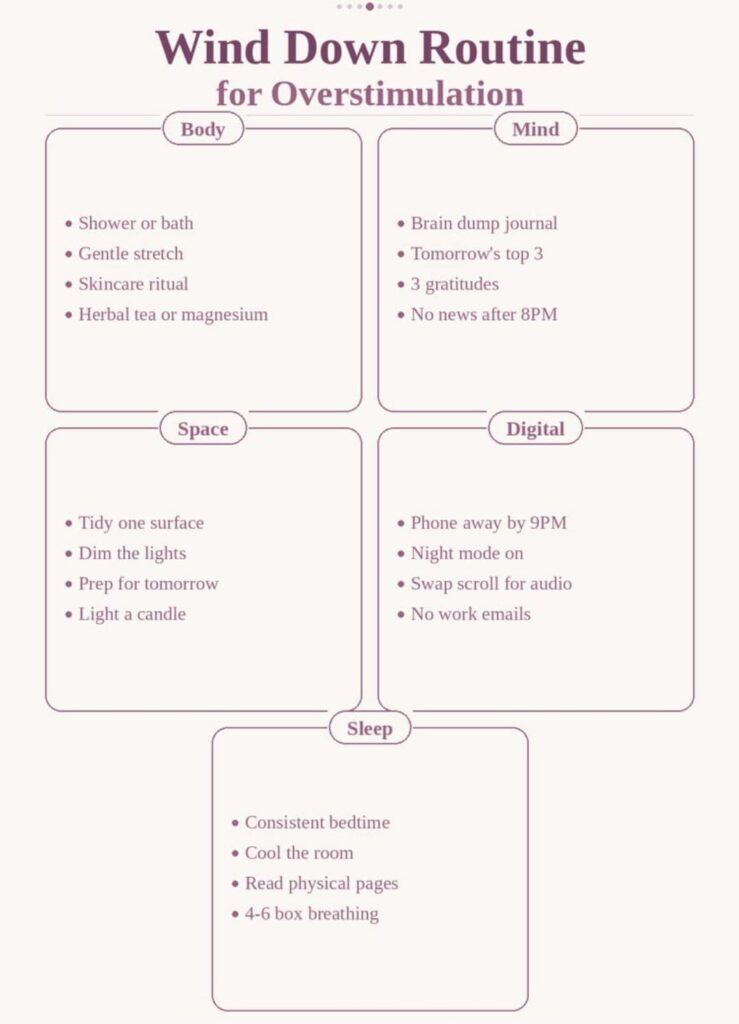
7. Implement a 60-Minute Pre-Sleep Wind-Down Routine
Your nervous system cannot transition from full daytime activation to deep sleep instantaneously. A consistent pre-sleep routine that progressively reduces physical and mental arousal trains the nervous system that sleep is approaching — and produces measurable improvements in sleep onset speed and depth within two to three weeks of consistent application.
An evidence-based wind-down sequence:
- 60 minutes before bed: All screens off. Dim household lighting significantly
- 45 minutes before: Warm shower or bath — the subsequent core temperature drop accelerates sleep onset
- 30 minutes before: Physical reading, gentle stretching, or structured journaling
- 15 minutes before: Breathing exercises — extended exhale breathing activates the parasympathetic nervous system and reduces cortisol
- Bedtime: A cool, dark, quiet room consistently associated with sleep only
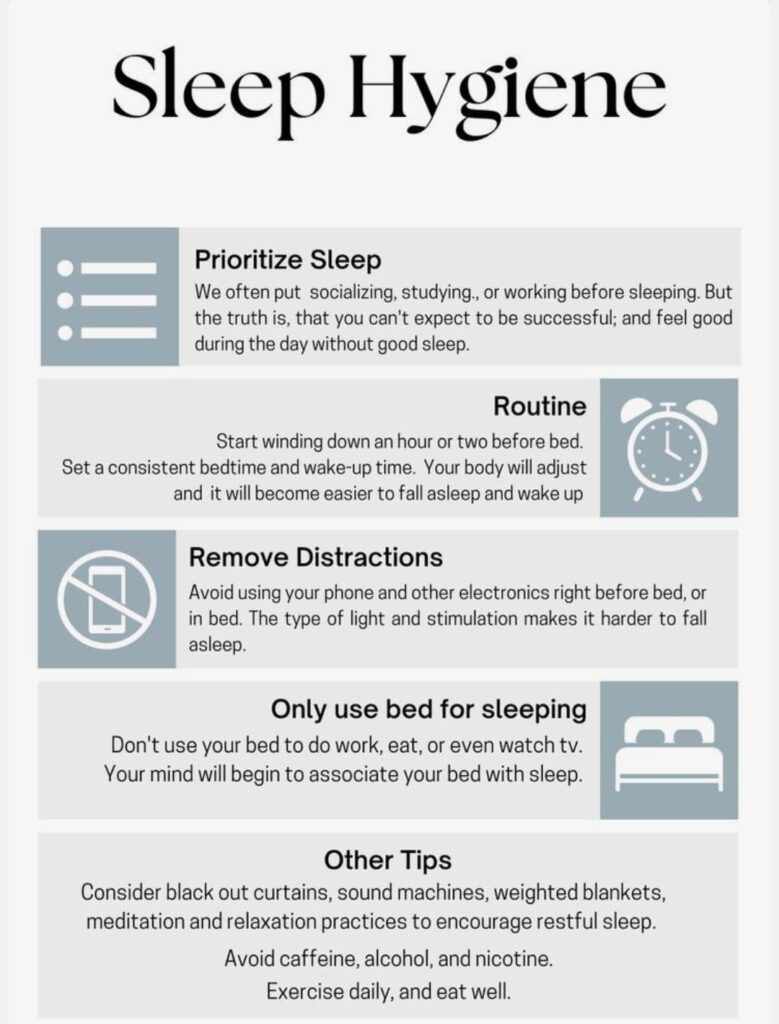
8. Use Your Bed Only for Sleep
Stimulus control — the sleep hygiene principle of associating the bed exclusively with sleep — is one of the most evidence-based individual sleep interventions available. Working in bed, watching television in bed, eating in bed, or lying awake anxious in bed for extended periods all erode the conditioned association between the bed and sleep.
When the bed becomes associated with wakefulness, anxiety, and stimulation rather than sleep, the brain enters a state of arousal rather than relaxation when you lie down — making sleep onset progressively harder. Restoring the bed-sleep association requires consistent application of stimulus control over two to three weeks.
9. Avoid Long or Late Naps
Napping reduces adenosine sleep pressure — the biological drive that makes night-time sleep reliable. A nap taken too late in the day or for longer than 20 to 30 minutes can reduce sleep pressure sufficiently to delay sleep onset significantly that evening. The NHS sleep hygiene guidance recommends avoiding naps after 3pm and limiting nap duration to 20 minutes for people managing sleep difficulties.
For people with insomnia disorder specifically, napping should be avoided entirely during the early phases of CBT-I — as it undermines the sleep restriction component that is CBT-I’s most powerful tool.
10. Exercise Regularly — At the Right Time
Regular physical exercise is one of the most consistently evidence-based sleep hygiene interventions. It increases adenosine build-up, reduces cortisol, promotes slow-wave sleep depth, and improves sleep continuity. However, timing matters significantly for sleep hygiene purposes.
Vigorous exercise performed within two to three hours of bedtime raises core body temperature and cortisol — both of which delay sleep onset and reduce sleep depth. Morning or early afternoon exercise provides the full sleep hygiene benefit without the evening timing penalty.
11. Avoid Large Meals Within 2–3 Hours of Sleep
Active digestion raises core body temperature and stimulates the enteric nervous system — both of which interfere with sleep onset and early sleep quality. Additionally, large evening meals — particularly those high in refined carbohydrate — can produce blood sugar fluctuations that trigger cortisol release during the night and contribute to early morning awakening.
Our eating habits and mental health guide provides detailed nutritional guidance for sleep, including the specific nutrients — magnesium, tryptophan, glycine — with the strongest evidence for supporting sleep quality when consumed in the evening.
12. Keep a Sleep Diary to Monitor Your Hygiene Practices
A sleep diary — recording bedtime, wake time, estimated sleep onset time, nighttime awakenings, and morning mood and energy — provides the objective data needed to identify which specific sleep hygiene factors are most affecting your sleep and to track improvement over time. The AASM recommends a minimum of two weeks of sleep diary data before any sleep hygiene intervention is evaluated for effectiveness.
13. Address Worry and Rumination Proactively Before Sleep
Mental hyperarousal — the racing, ruminative thoughts that characterise bedtime for people with anxiety and depression — is one of the most consistent sleep hygiene disruptors. Addressing it through structured pre-sleep practices reduces its interference with sleep onset without requiring suppression.
Scheduled worry time — a dedicated 20-minute period in the early evening for deliberately engaging with outstanding concerns in writing — externalises cognitive content before it can intrude at lights-out. Our anxiety journaling prompts provide specific prompts designed for this pre-sleep cognitive offloading practice.
14. Manage Your Light Environment in the Evening
Beyond screen avoidance, the overall light environment of your home in the evening significantly influences melatonin onset. Research from Harvard Medical School found that artificial room lighting in the evening — particularly overhead fluorescent and LED lighting — delays melatonin onset by 90 minutes on average compared to dim evening lighting.
Switching to warm-toned, dim bedside lamps after sunset, using warm-spectrum bulbs in living spaces, and avoiding bright kitchen or bathroom lighting in the hour before bed all support the natural melatonin rise that underlies reliable sleep onset.
Sleep Hygiene for Specific Populations
Sleep Hygiene and Mental Health Recovery
For individuals recovering from depression or anxiety, sleep hygiene requires particular intentionality because the conditions themselves disrupt the very sleep patterns that hygiene practices aim to protect. Maintaining a consistent wake time is the most important single practice during mental health recovery — even when depression makes leaving bed feel impossible. It is the practice that most directly counteracts the circadian drift that both conditions produce.
Sleep Hygiene and Menopause
Perimenopausal and menopausal women face specific sleep hygiene challenges — including night sweats that disrupt sleep, oestrogen fluctuations that alter sleep architecture, and increased cortisol reactivity that worsens sleep maintenance insomnia. Optimising bedroom temperature to the lower end of the recommended range, using moisture-wicking bedding, and discussing menopausal sleep symptoms explicitly with a GP are all appropriate additions to standard sleep hygiene in this population.
Sleep Hygiene for Shift Workers
Shift workers face the significant challenge of maintaining circadian rhythm consistency while working schedules that directly oppose biological sleep timing. Strategic light exposure — including light therapy during night shifts and blackout sleeping during daytime sleep periods — combined with consistent pre-sleep routines regardless of clock time are the most evidence-supported modifications to standard sleep hygiene for shift work populations.
Key Takeaways
The 14 sleep hygiene practices and their biological targets:
- Consistent wake time — anchors circadian rhythm, prevents social jet lag
- Morning sunlight within 30 minutes — sets melatonin timer 12–14 hours later
- Caffeine cutoff at 12–1pm — preserves adenosine sleep pressure build-up
- Alcohol 3 hours before sleep — prevents REM suppression and cortisol rebound
- Bedroom temperature 16–19°C — facilitates core body temperature drop for sleep onset
- Complete bedroom darkness — prevents melatonin suppression from ambient light
- 60-minute pre-sleep wind-down — progressively reduces nervous system activation
- Bed for sleep only — maintains conditioned bed-sleep association
- No late or long naps — preserves adenosine sleep pressure
- Morning or early afternoon exercise — builds slow-wave sleep depth without delaying onset
- Last meal 2–3 hours before sleep — prevents thermogenic digestion interference
- Sleep diary — provides objective data for evaluating practice effectiveness
- Pre-sleep worry journaling — externalises rumination before sleep window
- Dim warm lighting after sunset — supports natural melatonin onset
A Word From mindnesto
At mindnesto, we find it genuinely moving that the most powerful mental health intervention most people have access to — one that costs nothing, requires no prescription, and is available every single night — is so consistently undervalued. Sleep hygiene is not a wellness trend. It is the biological maintenance protocol for the most complex and most important organ you possess.
The practices in this guide are not difficult. They are simply specific. Applied consistently, with understanding of the biological mechanisms they are targeting, they produce compounding improvements in mental health that surprise most people who try them properly for the first time. Start with one. Add another the following week. Build the foundation one practice at a time. 💙
→ Read next: Sleep Optimization — 12 Science-Backed Strategies
→ Also read: Depression and Sleep — The Bidirectional Connection
Frequently Asked Questions
What is sleep hygiene and does it actually work?
Sleep hygiene is the collection of behavioural and environmental practices that support good sleep quality and adequate sleep duration. For people with mild to moderate sleep difficulties, sleep hygiene produces clinically meaningful improvements when applied consistently. For people with diagnosed insomnia disorder, sleep hygiene alone is insufficient — CBT-I is required alongside it. Research consistently shows that the most effective sleep hygiene practices are consistent wake times, morning light exposure, caffeine timing, bedroom environment optimisation, and pre-sleep routine consistency.
How does sleep hygiene affect mental health?
Sleep hygiene affects mental health by protecting the biological processes that mental health depends on nightly — REM emotional processing, slow-wave glymphatic clearance, and HPA axis cortisol regulation. Poor sleep hygiene disrupts these processes, increasing amygdala reactivity, impairing prefrontal cortex emotional regulation, and elevating baseline cortisol — directly worsening anxiety, depression, and stress reactivity. Good sleep hygiene maintains the neurological conditions for healthy mood, emotional regulation, and cognitive function the following day.
How long does sleep hygiene take to work?
Most people experience measurable improvement in sleep quality within one to two weeks of consistently applying the most impactful sleep hygiene practices — particularly consistent wake time, morning light exposure, and caffeine timing. Full benefit typically accumulates over three to four weeks as circadian anchoring becomes established and pre-sleep routines become effective conditioning signals. If significant improvement has not occurred after four weeks of consistent application, please discuss your sleep difficulties with your GP.
Is sleep hygiene the same as a bedtime routine?
A bedtime routine is one component of sleep hygiene — specifically the pre-sleep wind-down practices that reduce arousal in the hour before sleep. Sleep hygiene is broader, encompassing daytime behaviours (caffeine timing, exercise, light exposure, napping), evening practices (alcohol avoidance, meal timing, screen reduction), the sleep environment (temperature, darkness, noise), and sleep scheduling (consistent timing seven days a week). A bedtime routine without the other sleep hygiene components typically produces limited and temporary improvements.
Should I practise sleep hygiene if I have insomnia?
Yes — but with the understanding that sleep hygiene alone is unlikely to resolve clinical insomnia. Sleep hygiene creates the environmental and behavioural foundation that supports sleep, while CBT-I addresses the specific cognitive and behavioural maintaining mechanisms of insomnia disorder. Most sleep medicine clinicians recommend both together. Access CBT-I in the UK through NHS Talking Therapies or the NICE-approved Sleepio digital programme.
Sources and External References
- NHS — How to Sleep Better
- NICE — Sleep Problems
- CDC — Sleep and Sleep Disorders
- National Sleep Foundation — Sleep Hygiene
- AASM — Healthy Sleep Habits
- APA Monitor — New Science of Sleep, June 2026
- Journal of Clinical Sleep Medicine — Caffeine and Sleep
- Sleep Medicine Reviews — CBT-I vs Sleep Hygiene
- JAMA Internal Medicine — Alcohol and Sleep
- Mind UK — Sleep Problems
- NHS Talking Therapies
- ADAA — Sleep Disorders
- CAMH Canada
- Beyond Blue Australia
- NAMI USA





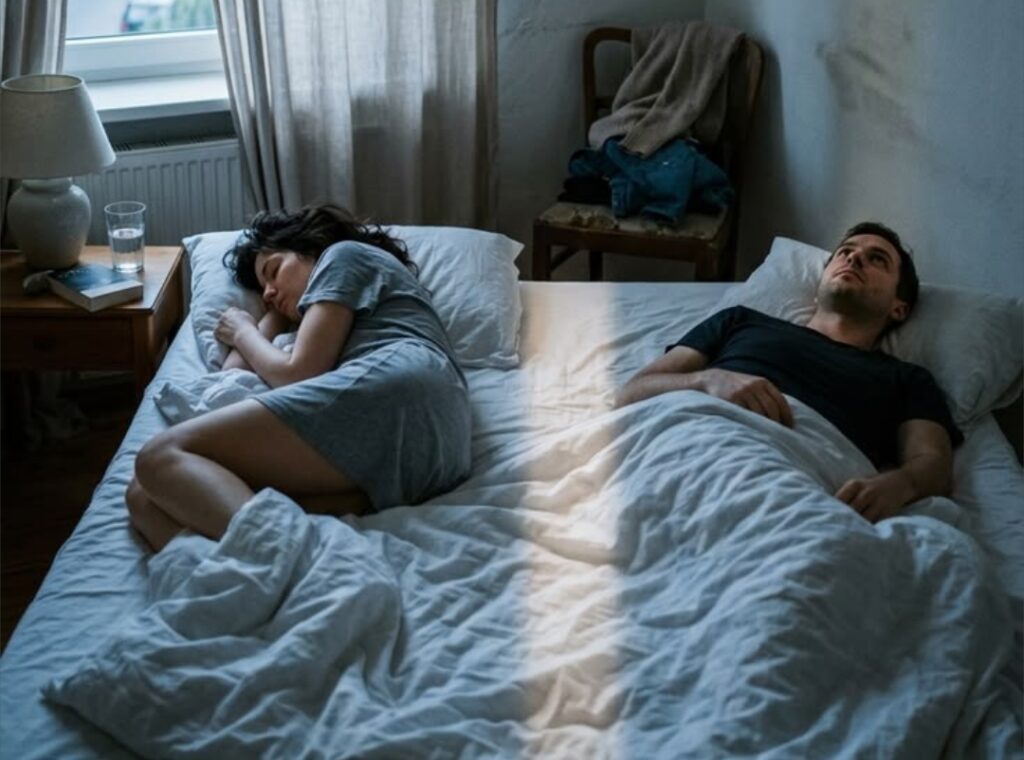
Simple sleep hygiene tips can have a lasting impact. Excellent read!
Great ful Stella……hope to explore more;;;;;;;