





By mindnesto Editorial Team · Updated November 2026 · 11 min read
Sources include the journal Sleep, the Journal of Clinical Sleep Medicine, the Cleveland Clinic, the Sleep Foundation, the NHS and the American Academy of Sleep Medicine.
You sleep for ten hours. You wake up heavy, foggy, and still tired. By mid-afternoon, your eyes are closing again.
Oversleeping and hypersomnia in adults often bring guilt, as if you were simply lazy. That belief is wrong. Needing far more sleep than usual can be a signal from your body or mind.
This guide explains what counts as too much sleep, which causes are most common, and how hypersomnia differs from being a natural long sleeper. It also shows what genuinely helps. It sits within our wider guide to sleep problems in adults.
⚠️ Medical Disclaimer: This article is for information only. It does not replace advice from your GP or a sleep specialist. Please see a doctor if you are sleeping far more than usual or cannot stay awake in the daytime.
What Are Oversleeping and Hypersomnia in Adults?
Oversleeping means regularly sleeping more than about nine hours a night. Hypersomnia is a medical term for excessive sleepiness or an excessive need for sleep, even after a long night. It can be a symptom of depression, sleep apnea, medication effects, or a medical illness. Rarely, it is a primary sleep disorder such as idiopathic hypersomnia or narcolepsy.
Most adults need between seven and nine hours. An occasional long lie-in is normal. A new or lasting pattern of heavy sleep is different.
Doctors use the term hypersomnolence disorder in the DSM-5. It describes excessive sleepiness despite at least seven hours of sleep. It involves symptoms such as very long, unrefreshing sleep or trouble waking fully. It must happen at least three times a week for three months and cause real distress.
How Much Sleep Is Too Much?
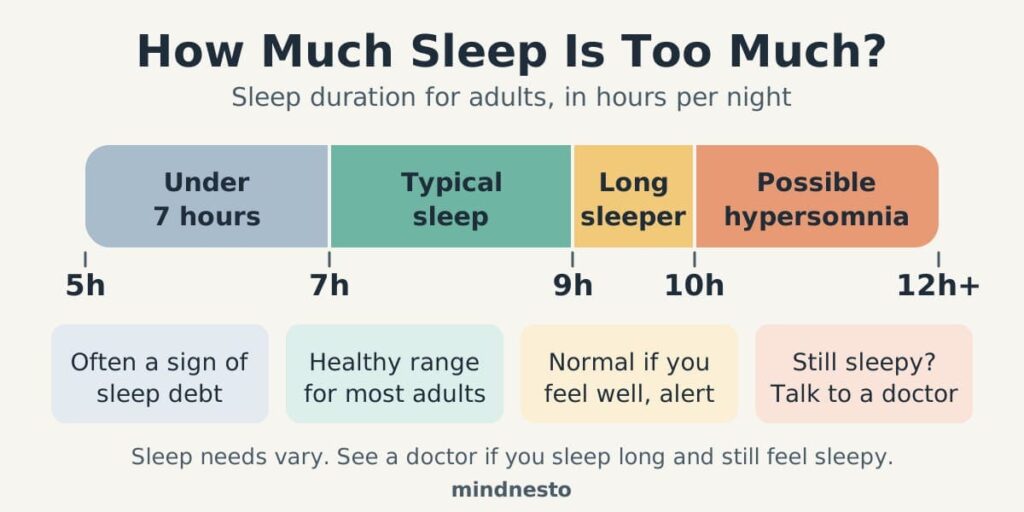
Researchers usually label nine or more hours as long sleep. Sleep medicine treats a regular need for ten or more hours, with ongoing daytime drowsiness, as possible hypersomnia.
| Pattern | Typical sleep | What it may mean |
|---|---|---|
| Typical sleep | 7 to 9 hours | Healthy for most adults |
| Long sleeper | 9 to 10 hours, feeling well | Can be a normal personal trait |
| Possible hypersomnia | 10 or more hours, still sleepy | Needs medical review |
| Sudden change | Much more than your usual | Look for a cause, such as low mood |
Long Sleeper or Hypersomnia?
A small minority of adults are natural long sleepers. They need ten to twelve hours and feel well and alert. For them, long sleep is a trait, not a symptom.
The key question is how you feel. Natural long sleepers wake refreshed and function well. People with hypersomnia stay sleepy and foggy despite long sleep.
Types of Hypersomnia
The Cleveland Clinic describes hypersomnia as any condition that makes you extremely sleepy during the day. There are two broad groups.
Primary Hypersomnia
These are disorders of the brain’s sleep-wake system. The main types are:
- Idiopathic hypersomnia: sleepiness with no known cause, and the most common type
- Narcolepsy: the brain cannot reliably control sleep and wake states
- Kleine-Levin syndrome: extremely rare, with episodes of sleeping up to 20 hours a day
Secondary Hypersomnia
Here, another condition or substance drives the sleepiness. Examples include depression, sleep apnea, thyroid disease, and medication effects. This group is far more common in everyday practice.
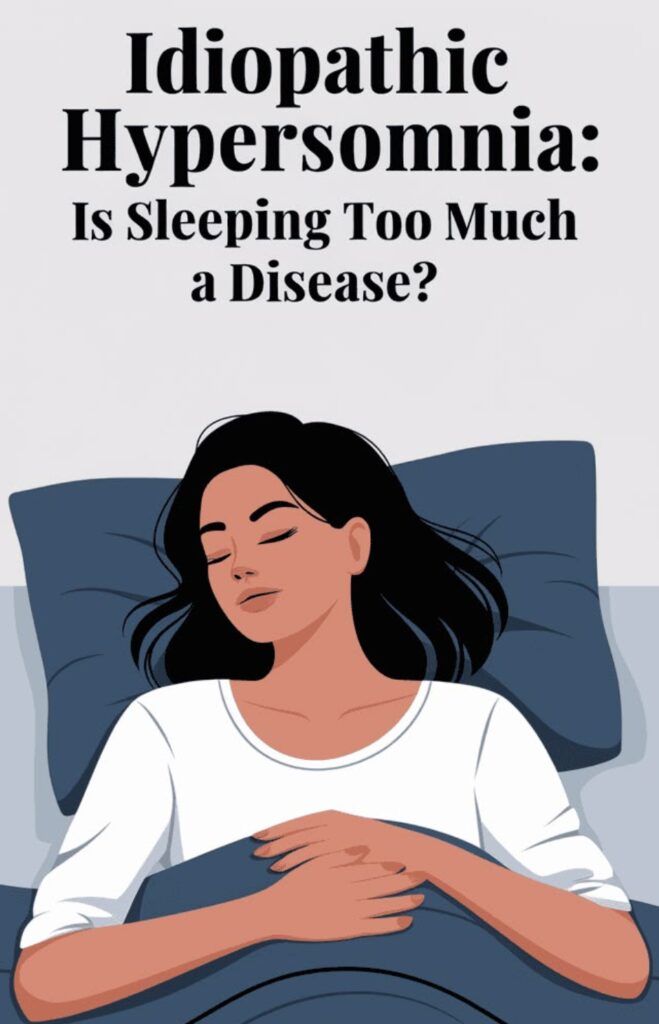
Idiopathic Hypersomnia Is a 24-Hour Disorder
A 2026 review in the Journal of Clinical Sleep Medicine describes idiopathic hypersomnia as a 24-hour disorder. Symptoms continue through day and night. They include excessive daytime sleepiness, unrefreshing naps, and long nighttime sleep.
About half of people with the condition sleep ten hours or more at night. It mainly affects young adults, predominantly women. Another feature is sleep inertia, which means serious difficulty waking up after sleep.
What Causes Oversleeping in Adults?
1. Depression and Anxiety
Depression is one of the most common causes of oversleeping. Some people with depression cannot sleep. A sizeable minority sleep far too much instead, and this is more common in younger adults and in seasonal depression.
The National Institute of Mental Health notes that adolescents and young adults with depression are most likely to feel excessively sleepy. One study found that people sleeping longer than eight hours had 1.49 times higher odds of feeling depressed. Because this is observational, it shows a link, not a cause.
A 2026 study of idiopathic hypersomnia also found links between sleep inertia, depression, and anxiety. A preliminary 2026 conference abstract suggested depression severity tracked closely with hypersomnia severity. Our guide to depression and sleep explains this relationship in depth.
2. Stress and Burnout
Ongoing stress causes deep mental and physical exhaustion. Extra sleep often helps only partly. Learn more in our stress management guide.
3. Sleep Apnea
In sleep apnea, breathing repeatedly pauses during sleep. Sleep becomes fragmented, so you feel exhausted despite long nights. Loud snoring, gasping, and morning headaches are clues.
4. Sleep Debt and an Irregular Body Clock
Chronic short sleep builds sleep debt. Weekend catch-up sleep and shift work disrupt your body clock further. As a result, you may sleep long and still feel unrefreshed.
5. Medications, Alcohol, and Substances
Some medicines cause drowsiness as a side effect. Alcohol also disrupts sleep quality. Never stop a prescribed medicine on your own. Ask your prescriber for advice.
6. Medical Conditions
An underactive thyroid, chronic illness, anaemia, and infections can all raise your need for sleep. Blood tests can check many of these causes.
7. Neurological and Other Causes
Researchers are studying several possible causes of primary hypersomnia. These include immune overactivity after some viral infections, brain changes, genetic differences, and problems with brain chemicals. This area of research is still developing.
The Depression and Oversleeping Cycle
Oversleeping and low mood can feed each other. Heavy sleep reduces daylight, movement, and social contact. Those losses can deepen low mood.
Low mood then raises the urge to sleep. The cycle can quietly continue for months. Breaking it usually means treating the mood and rebuilding daytime routine together.
Is Oversleeping Bad for Your Health?
Studies link regular long sleep with heart disease, type 2 diabetes, cognitive decline, and higher mortality. These studies are observational. They do not prove that long sleep causes these problems.
Experts think undiagnosed illness often explains the link. In other words, long sleep may signal that something else is wrong. This is why a medical check matters more than worry.
How Doctors Diagnose Hypersomnia
A doctor will start with your story. They will ask about your sleep length, daytime sleepiness, mood, medicines, snoring, and alcohol use.
Expect some of these steps:
- Sleep diary: two weeks of bedtimes, wake times, and naps
- Epworth Sleepiness Scale: a short questionnaire about daytime sleepiness
- Blood tests: checks for thyroid problems, anaemia, and other causes
- Mood and anxiety screening: validated questionnaires are recommended
- Sleep study: overnight polysomnography, often followed by a Multiple Sleep Latency Test the next day
A sleep specialist may use these tests to separate sleep apnea, narcolepsy, and idiopathic hypersomnia.
Treatment: What Actually Helps
Treatment depends on the cause. Therefore, finding the cause comes first.
Treat the Underlying Condition
Depression and anxiety respond well to therapy and medication. Treating mood often reduces oversleeping. Sleep apnea is commonly treated with CPAP, a device that keeps the airway open. Thyroid problems are corrected with appropriate medical care.
Cognitive Behavioural Therapy
CBT helps break the habits that keep oversleeping going. It also supports mood and motivation. A therapist can tailor it to your situation.
Light Therapy for Seasonal Patterns
If oversleeping worsens in winter, bright light therapy is often used. Speak to your GP about whether it suits you.
Specialist Care for Primary Hypersomnia
For narcolepsy or idiopathic hypersomnia, a sleep specialist leads treatment. This may include wake-promoting medication. Do not self-treat these conditions.
A Practical Self-Help Plan
These steps support medical care. They do not replace it.
- Fix your wake time. Get up at the same time every day, including weekends.
- Get morning light. Step outside within an hour of waking.
- Move your body. Even a ten-minute walk helps your body clock.
- Limit naps. Keep any nap under 30 minutes, before mid-afternoon.
- Protect your evenings. Follow our sleep hygiene guide.
- Cut alcohol and late caffeine. Both disturb sleep quality.
- Write down worries early evening. Our anxiety journaling prompts can help.
- Keep a sleep diary. Bring it to your appointment.
Be gentle with yourself. Change usually comes in small steps, not overnight.
When to See a Doctor
Book an appointment with your GP if:
- You regularly sleep ten or more hours and still feel sleepy
- You doze off during work, meals, or conversations
- Your sleep need changed suddenly
- You snore loudly, gasp, or wake with headaches
- You feel low, hopeless, or have lost interest in life
- Oversleeping affects work, study, or relationships
Drive Safely
Excessive sleepiness raises accident risk. Do not drive or use machinery if you feel drowsy. Pull over safely and rest.
Oversleeping, Depression and Suicidal Thoughts
If you are having thoughts of ending your life, please reach out now. You deserve support, and help is available.
- UK: Samaritans, call 116 123 (free, 24/7)
- USA and Canada: call or text 988
- Australia: Lifeline, call 13 11 14
Oversleeping and Hypersomnia in Adults: Key Takeaways
- Most adults need seven to nine hours; regularly sleeping over nine hours is oversleeping
- Hypersomnia means excessive sleepiness or sleep need, even after a long night
- Natural long sleepers feel well; people with hypersomnia stay sleepy
- Depression, sleep apnea, medications, thyroid problems, and sleep debt are common causes
- Idiopathic hypersomnia is rare and is described as a 24-hour disorder
- Studies linking long sleep to illness are observational and may reflect hidden disease
- Diagnosis may include a sleep diary, blood tests, and a sleep study
- Treatment targets the cause, with CBT, light therapy, and specialist care where needed
A Word From mindnesto
Sleeping a lot is not a character flaw. Your body or mind may be asking for help.
With the right assessment and support, most people find a path back to steadier energy. Reaching out is the first step. 💙
→ Read next: Sleep Problems in Adults: The Complete Guide
→ Also read: Depression and Sleep
Frequently Asked Questions
Why am I sleeping so much all of a sudden?
A sudden rise in sleep need often points to depression, stress, sleep apnea, a medication change, or a medical issue such as thyroid disease. See your GP if it lasts more than a couple of weeks.
How much sleep is too much?
Most adults need seven to nine hours. Regularly sleeping over nine hours is oversleeping. Needing ten or more hours with daytime sleepiness may signal hypersomnia.
What is hypersomnia?
Hypersomnia is excessive daytime sleepiness or an excessive need for sleep, even after a long night. It can be a symptom of another condition or a primary sleep disorder.
Can depression make you oversleep?
Yes. Some people with depression sleep far more than usual instead of less. It is more common in younger adults and in seasonal depression. Treating the depression often helps.
What is idiopathic hypersomnia?
It is a rare sleep disorder with no known cause. It brings excessive daytime sleepiness, long unrefreshing naps, and severe sleep inertia. A sleep specialist makes the diagnosis.
Where to Get Help
- UK: NHS: Sleep and Tiredness | NHS: Narcolepsy | NHS Talking Therapies
- USA: AASM Sleep Education | ADAA
- Canada: CAMH
- Australia: Sleep Health Foundation | Beyond Blue
Sources and External References
- Sleep (journal), 2026: Depressive Symptoms and Suicidal Thoughts in Idiopathic Hypersomnia
- Journal of Clinical Sleep Medicine, 2026: Idiopathic Hypersomnia Is a 24-Hour Disorder
- Sleep (journal), 2026 abstract: Depression Severity in Idiopathic Hypersomnia
- Cleveland Clinic: Hypersomnia
- Sleep Foundation: Oversleeping
- NHS: Sleep and Tiredness
- NHS: Narcolepsy
- AASM Sleep Education
- NHS Talking Therapies
- Sleep Health Foundation Australia