




A panic attack can arrive without warning.
One moment, you may feel completely fine. Then your heart starts racing. Your breathing changes. You may feel dizzy, shaky, trapped, or suddenly convinced that something terrible is happening.
The experience can feel frighteningly physical.
You might even wonder, “Am I having a heart attack?”
Panic attacks can cause intense physical and emotional symptoms. However, a panic attack is different from panic disorder, and experiencing one panic attack does not automatically mean you have a mental health disorder.
The good news is that panic attacks are treatable. Understanding what is happening can make the experience less confusing. Professional treatment can also reduce recurring attacks and the fear surrounding them.
This guide explains panic attack symptoms, causes, triggers, what to do during an attack, treatment options, and when to seek medical help.
⚠️Medical disclaimer: This article is for general educational purposes. It does not diagnose, treat, or replace advice from a qualified healthcare professional. Panic symptoms can resemble serious medical conditions. If symptoms are new, severe, unusual, or you are unsure what is causing them, seek appropriate medical evaluation rather than assuming they are caused by anxiety.
Key Takeaways
- A panic attack is a sudden episode of intense fear or discomfort.
- Physical symptoms can include a racing heart, sweating, shaking, dizziness, nausea, chest discomfort, and shortness of breath.
- Panic attacks can happen with or without an obvious trigger.
- One panic attack does not necessarily mean you have panic disorder.
- Slow breathing and reminding yourself that the episode will pass may help you manage the experience.
- Cognitive behavioral therapy is an evidence-based treatment for panic disorder.
- Recurring attacks can lead to avoidance and fear of future attacks.
- New or severe symptoms should be medically assessed because other conditions can produce similar symptoms.
What Is a Panic Attack?
A panic attack is a sudden wave of intense fear, discomfort, or a feeling of losing control.
It can happen when there is no obvious danger.
The body’s natural fight-or-flight response becomes highly activated. Your heart rate may increase. Your breathing may change. Muscles can tense. You may sweat or feel lightheaded.
These reactions can create a frightening feedback loop.
For example, you may notice your heart beating rapidly. You may then think something is seriously wrong. That thought can increase fear. The increased fear can intensify your physical sensations.
NIMH describes panic attacks as sudden periods of intense fear or discomfort that can occur even without a clear danger or trigger.
Importantly, a panic attack is not the same thing as panic disorder.
Panic disorder involves recurrent and unexpected panic attacks plus ongoing concern about additional attacks or significant changes in behavior because of them.
What Does a Panic Attack Feel Like?
A panic attack can feel different from person to person.
Some people notice physical sensations first. Others experience a sudden rush of fear.
Common experiences include:
- Racing or pounding heartbeat
- Sweating
- Trembling or shaking
- Shortness of breath
- Feeling unable to get enough air
- Chest discomfort
- Dizziness or lightheadedness
- Nausea
- Chills or hot sensations
- Tingling or numbness
- Feeling detached from your surroundings
- Feeling out of control
- Fear of dying
- Fear that something terrible is about to happen
These symptoms can be extremely convincing.
That is why people experiencing a panic attack for the first time may believe they are having a serious physical emergency.
Panic Attack Symptoms You Should Know
Physical Symptoms
The body’s alarm system can produce strong physical reactions.
You may experience:
- Rapid heartbeat
- Sweating Shaking
- Muscle tension
- Dizziness
- Nausea
- Chills
- Hot flashes
- Tingling
- Numbness
- Breathing difficulty
- Chest discomfort
The NHS notes that many panic attacks last around 5 to 20 minutes, although some may last longer.
However, symptom duration alone cannot confirm that an episode is a panic attack.
What Is the Heart?
The heart is a muscular organ that pumps blood throughout the body. It sends oxygen-rich blood to the brain, muscles, and other organs while helping maintain circulation.
The heart receives blood through the coronary arteries. These blood vessels supply the heart muscle with oxygen and nutrients. When blood flow through a coronary artery becomes blocked, part of the heart may not receive enough oxygen. This can cause a heart attack, also called a myocardial infarction.
A heart attack is different from cardiac arrest. A heart attack is mainly a circulation problem caused by reduced or blocked blood flow. Cardiac arrest is an electrical problem that causes the heart to stop pumping effectively.
What Is a Heart Attack?
A heart attack happens when blood flow to part of the heart muscle is blocked or severely reduced. Without enough oxygen, heart tissue can become damaged and begin to die.
One common cause is coronary artery disease. Fatty deposits called plaque can build up inside the coronary arteries. If a plaque ruptures, a blood clot can form and obstruct blood flow.
A heart attack can develop suddenly. However, symptoms may also begin gradually and become more intense over time.
That is why unexplained chest discomfort should not automatically be blamed on anxiety.
What Does a Heart Attack Feel Like?
A heart attack does not feel exactly the same for everyone. Some people experience intense chest pressure, while others notice less obvious symptoms.
Common sensations can include:
- Pressure,
- squeezing,
- heaviness, or discomfort in the chest
- Pain or discomfort spreading to one or both arms
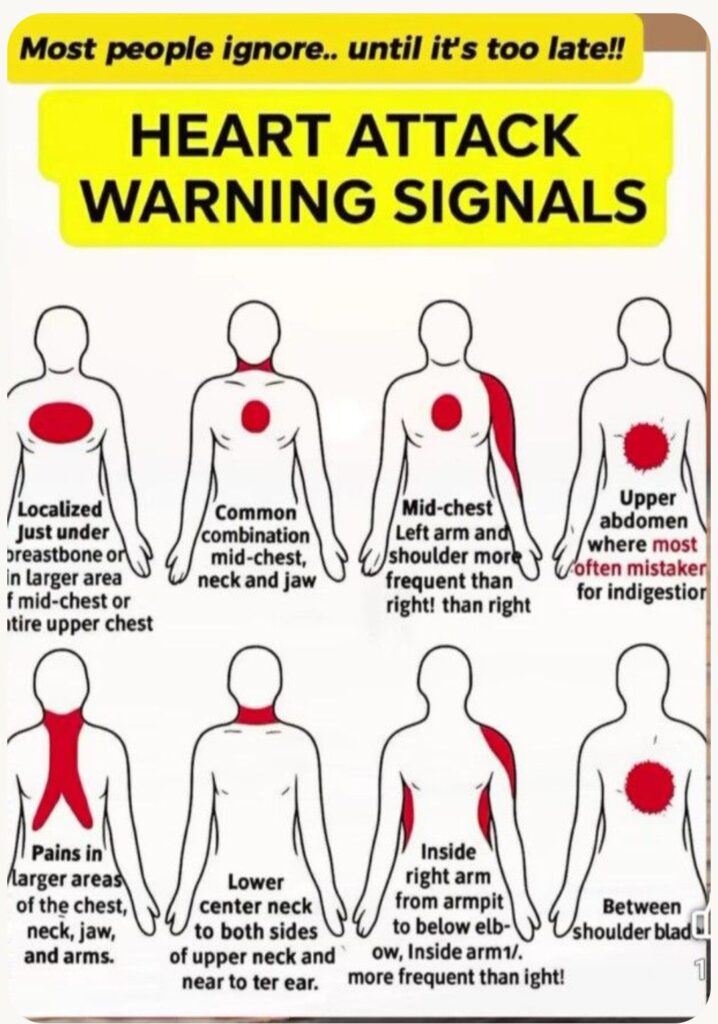
- Pain in the shoulder, back, neck, jaw, or upper abdomen
- Shortness of breath
- Cold sweating
- Nausea or vomiting
- Lightheadedness or dizziness
- Unusual weakness or fatigue
- A rapid or irregular heartbeat
The American Heart Association notes that women may also experience symptoms such as upper-back discomfort, nausea, unusual tiredness, weakness, or anxiety. These symptoms should not be dismissed simply because they do not match the “classic” image of a heart attack.
What Does Heart Attack Chest Pain Feel Like?
Heart attack chest discomfort is often described as pressure, squeezing, fullness, tightness, or heaviness rather than a sharp pain.
The discomfort may remain in the chest or spread to the arm, shoulder, back, neck, jaw, or upper abdomen. Shortness of breath can occur with or without chest discomfort.
However, symptoms vary widely.
You should not try to diagnose a heart attack based only on how the pain feels.
If chest pain or other concerning symptoms are new, severe, persistent, or unexplained, seek emergency medical care immediately. The American Heart Association recommends urgent evaluation for acute chest-pain symptoms because potentially life-threatening causes need to be ruled out.
What Causes a Heart Attack?
The most common underlying cause is coronary artery disease.
Over time, plaque can accumulate inside the coronary arteries. This process can narrow the arteries and restrict blood flow. If plaque breaks open, a blood clot may form and suddenly block the artery.
Factors associated with cardiovascular risk include:
- High blood pressure
- High cholesterol
- Smoking or tobacco exposure
- Diabetes
- Obesity
- Physical inactivity
- Unhealthy dietary patterns
- Increasing age
- Family history of cardiovascular disease
- Existing coronary artery disease
Not everyone with a heart attack has the same risk factors. Therefore, the absence of obvious risk factors does not make chest symptoms automatically safe to ignore.
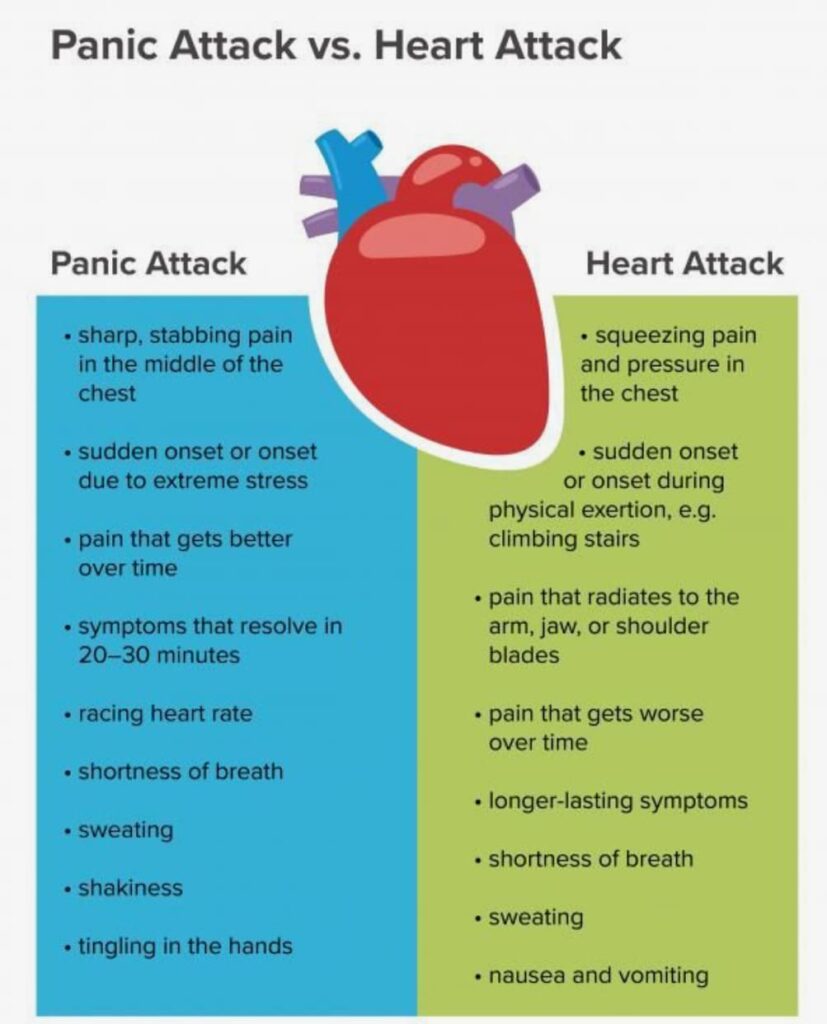
Panic Attack vs. Heart Attack: Why They Can Feel Similar
A panic attack is a sudden episode of intense fear or discomfort that can produce powerful physical symptoms. These may include a racing heart, sweating, trembling, dizziness, shortness of breath, nausea, tingling, and chest pain.
That overlap explains why someone having a panic attack may genuinely believe they are having a heart attack.
A panic attack can feel extremely frightening. However, a panic attack and a heart attack have different underlying mechanisms.
| Panic attack | Heart attack |
|---|---|
| Sudden intense fear or discomfort | Reduced or blocked blood flow to heart muscle |
| Rapid or pounding heartbeat may occur | Chest pressure or discomfort may occur |
| Shortness of breath is common | Shortness of breath may occur |
| Trembling, sweating, chills or tingling may occur | Sweating, nausea and lightheadedness may occur |
| Chest pain can occur | Chest pain or pressure can occur |
| Fear of dying may occur | Serious medical emergency |
| Symptoms may peak within minutes | Symptoms can develop suddenly or gradually |
| Requires assessment when symptoms are new or uncertain | Requires emergency medical evaluation |
Important: this table is for education, not self-diagnosis. There is no reliable symptom checklist that can safely rule out a heart attack at home.
Can a Panic Attack Feel Like a Heart Attack?
Yes.
During a panic attack, the body’s threat-response system can produce intense physical sensations. Your heart may race, breathing may become difficult, your chest may hurt, and you may feel dizzy or lightheaded.
NIMH specifically notes that panic attacks can include physical symptoms that feel like a heart attack, including rapid heart rate, chest pain, difficulty breathing, trembling, tingling, and dizziness.
Still, you should not assume that chest pain is “just anxiety,” particularly if it is your first episode or the symptoms feel different from anything you have experienced before.
When Chest Pain Needs Emergency Attention
Seek emergency medical care immediately if you experience unexplained chest pressure or pain, especially when it occurs with:
- Shortness of breath.
- Cold sweating
- Nausea or vomiting
- Fainting or severe dizziness
- Pain spreading to the arm, back, neck, jaw, or shoulder
- Severe weakness
- Symptoms that are new, worsening, or persistent
Do not delay emergency evaluation because you suspect anxiety.
Heart Attack Symptoms in Women
Heart attack symptoms can be less obvious in women.
Women may experience chest pressure, but they can also experience symptoms such as unusual tiredness, nausea, dizziness, shortness of breath, back discomfort, or stomach symptoms.
This does not mean that women experience completely different heart attacks.
Rather, the symptoms can vary from person to person.
Therefore, women should not wait for severe chest pain before seeking emergency care.
Panic Attack vs Heart Attack: The Key Differences
The symptoms overlap, which explains why people often confuse them.
However, there are some patterns that may help explain the difference.
| Feature | Panic Attack | Heart Attack |
|---|---|---|
| Main process | Intense fear and fight-or-flight response | Reduced or blocked blood flow to heart muscle |
| Chest symptoms | Pain, tightness, or discomfort may occur | Pressure, squeezing, tightness, aching, or discomfort may occur |
| Heart rate | Often rapid or pounding | May be rapid or irregular |
| Breathing | Shortness of breath or rapid breathing | Shortness of breath is common |
| Emotional symptoms | Intense fear or impending doom may be prominent | Fear can occur, but physical symptoms may dominate |
| Tingling | Can occur, especially with rapid breathing | May occur but is not a defining symptom |
| Radiation | Less typical | Discomfort may spread to arm, shoulder, back, neck, or jaw |
| Timing | Often peaks within minutes | May persist, recur, or develop gradually |
| Cause | Stress response and other contributing factors | Usually coronary artery disease or another cardiovascular mechanism |
| Emergency? | Usually not life-threatening itself | Yes |
These differences are useful for education, but they cannot reliably rule out a heart attack.
Medical professionals may need an examination, ECG, blood tests, and other investigations to determine what is happening.
Can a Panic Attack Feel Like a Heart Attack?
Yes.
A panic attack can feel remarkably similar to a heart attack.
Both can involve:
- Chest discomfort
- Shortness of breath
- Sweating
- Dizziness
- Nausea
- Racing heartbeat
- A feeling that something is seriously wrong
A panic attack may also create an intense fear of dying.
That experience can make the symptoms feel even more threatening.
However, similarity does not mean equivalence.
A panic attack does not cause the same type of heart-muscle damage as a heart attack.
If the symptoms are new or uncertain, medical evaluation is the safer choice.
How Chest Pain May Differ
Chest pain is one of the most confusing symptoms because it appears in both conditions.
During a panic attack, chest discomfort may occur alongside intense fear, rapid breathing, trembling, tingling, or a racing heartbeat.
During a heart attack, chest discomfort may feel like pressure, squeezing, tightness, or aching. It may spread to other parts of the upper body.
Still, there is no universal rule.
A heart attack does not always cause severe pain.
Likewise, a panic attack does not always look exactly the same.
Never use the type of pain alone to decide that you are having a panic attack.
When Chest Pain Is an Emergency
Seek emergency medical help immediately if you think you may be having a heart attack.
Warning signs can include:
- Chest pressure or squeezing
- Chest discomfort that persists or returns
- Pain spreading to the arm, shoulder, back, neck, or jaw
- Shortness of breath
- Cold sweating
- Severe dizziness
- Fainting
- Nausea with concerning chest symptoms
- Sudden unexplained weakness
- New or unexplained chest symptoms
Heart attacks can present differently among individuals, including women, older adults, and people with diabetes
Do Not Drive Yourself If You Think You Are Having a Heart Attack
Emergency medical services can begin assessment and care while transporting you.
For people in the United States, call 911.
In other countries, use your local emergency number.
If you are in another country, do not rely on a U.S.-specific emergency number.
How Doctors Tell a Panic Attack From a Heart Attack
Symptoms alone may not provide enough information.
When someone arrives with concerning chest symptoms, healthcare professionals may consider:
Medical History
A clinician may ask about:
- When symptoms started
- What the discomfort feels like
- Whether symptoms spread
- Previous heart problems
- Medications
- Medical conditions
- Family history
- Anxiety or panic history
Physical Examination
The healthcare team may check vital signs and perform a physical examination.
Electrocardiogram
An ECG/EKG records the electrical activity of the heart.
It can provide important information when a heart attack is suspected.
Blood Tests
Blood tests can help identify evidence of heart-muscle injury.
The healthcare team may also use additional tests depending on the situation.
This is why an internet symptom comparison cannot replace medical assessment.
What Should You Do During a Possible Panic Attack?
If a healthcare professional has already evaluated you and determined that your symptoms are consistent with panic attacks, treatment can help.
During an established panic episode, you can try:
Slow Your Breathing
Rapid breathing can intensify uncomfortable sensations.
Try to breathe slowly and gently rather than forcing very deep breaths.
Ground Yourself
Focus on things you can see, hear, and physically feel.
This can help shift attention away from frightening thoughts.
Remind Yourself of What You Know
If a healthcare professional has previously evaluated your episodes, remind yourself that panic symptoms can feel intense without necessarily being dangerous.
However, do not use this reassurance to dismiss new or different chest symptoms.
Seek Professional Support
Recurring panic attacks may indicate panic disorder or another anxiety-related condition.
Effective treatment can include psychotherapy and, when appropriate, medication.
When Panic Attacks Keep Happening
One panic attack does not automatically mean that you have panic disorder.
However, repeated unexpected attacks combined with ongoing fear about having another attack can be associated with panic disorder.
You may notice that you:
- Avoid certain places
- Avoid exercise because of fear
- Constantly monitor your heartbeat
- Fear being alone
- Worry about another attack
- Frequently seek reassurance about physical symptoms
- Change your daily routine because of panic
If this pattern continues, speak with a qualified mental health professional.
You do not have to manage recurring panic symptoms alone.
Heart Attack vs Panic Attack in Women
Women deserve particular attention in this comparison.
Heart attack symptoms in women may sometimes be less obvious than expected.
Possible symptoms include:
- Chest pressure
- Shortness of breath
- Nausea
- Unusual fatigue
- Dizziness
- Back discomfort
- Neck or jaw discomfort
- Upper abdominal symptoms
The American Heart Association’s recent patient guidance also highlights symptoms such as upper-back pressure, anxiety, upset stomach, unusual tiredness, and weakness in women with acute coronary syndromes.
Therefore, anxiety should not automatically be blamed when a woman develops new physical symptoms.
Common Mistakes People Make
Mistake 1: Assuming Chest Pain Is Anxiety
A history of anxiety does not make every episode of chest pain a panic attack.
Mistake 2: Waiting for Severe Pain
Heart attacks do not always cause dramatic symptoms.
Some can begin gradually or cause mild discomfort.
Mistake 3: Assuming Young People Cannot Have Heart Problems
Age affects risk, but it does not provide a diagnosis.
Some cardiovascular conditions can occur in younger adults as well.
Mistake 4: Assuming a Panic Attack Is “Just in Your Head”
Panic attacks can produce real physical symptoms.
The body is responding to an intense threat response.
Mistake 5: Using an Online Checklist as a Diagnosis
Online information can improve awareness.
It cannot replace emergency assessment when serious symptoms are present.
Frequently Asked Questions
Can anxiety cause chest pain?
Yes. Anxiety and panic attacks can cause chest discomfort, rapid heartbeat, shortness of breath, sweating, dizziness, and other physical symptoms. However, new or unexplained chest pain should not automatically be attributed to anxiety.
Can a panic attack cause a heart attack?
A panic attack is not the same condition as a heart attack. Panic attacks involve an intense fear response, while a heart attack involves impaired blood flow to heart muscle.
If you have concerning chest symptoms, seek medical assessment rather than trying to determine the cause yourself.
How long does a panic attack last?
Panic attacks usually reach their peak within minutes. Symptoms can vary between people, and some effects may continue after the peak has passed.
How long does heart attack chest pain last?
Heart attack symptoms vary. Chest discomfort may persist, recur, or develop gradually. Some people experience warning symptoms before the heart attack itself.
Can a heart attack happen without chest pain?
Yes.
Some people have mild symptoms or no obvious chest pain. This can be more common in certain groups, including older adults and people with diabetes.
Is a panic attack dangerous?
A panic attack itself is generally not life-threatening. However, its symptoms can resemble serious medical conditions. Recurring panic attacks can also significantly affect quality of life.
Should I go to the emergency room for chest pain?
If you think you may be having a heart attack, seek emergency medical help immediately. Do not wait for symptoms to become severe or try to diagnose the cause at home.
At word mindnesto
At mindnesto we believe A panic attack and a heart attack can feel frighteningly similar.
Both may involve chest discomfort, a racing heartbeat, sweating, dizziness, nausea, and difficulty breathing.
The difference is not simply about how severe the symptoms feel.
A heart attack involves damage to heart muscle caused by inadequate blood flow and is a medical emergency. A panic attack involves an intense fear response and can produce powerful physical symptoms without the same type of heart-muscle injury.
The safest rule is also the simplest:
If you have new, severe, persistent, or unexplained chest symptoms, seek emergency medical care rather than assuming it is anxiety.
Your health is more important than getting the diagnosis right from a search result.