




By mindnesto Editorial Team · Updated June 2026 · 12 min read
Reviewed for medical accuracy — sources cited from NHS, NICE, APA, DSM-5, Cleveland Clinic and peer-reviewed clinical psychology research
Key Takeaways
- Health anxiety involves persistent fear about having or developing a serious illness.
- Physical sensations can feel very real even when anxiety is contributing to them.
- Body checking, repeated reassurance, and symptom searching can keep the anxiety cycle going.
- Illness Anxiety Disorder is the clinical diagnosis used for some people with severe health-related preoccupation.
- Health anxiety can involve either repeated healthcare seeking or avoiding medical care.
- Cognitive behavioral therapy can help reduce health anxiety and related safety behaviours.
- New or concerning physical symptoms should still receive appropriate medical attention.
⚠️Medical Disclaimer: This article is for educational purposes only. It does not diagnose, treat, or rule out any medical or mental health condition. Health anxiety can occur alongside genuine physical illness, so new, severe, unusual, or persistent symptoms should be assessed by a qualified healthcare professional. If you believe you may be experiencing a medical emergency, seek urgent medical care rather than relying on online information.
What Is Health Anxiety?
Health anxiety is persistent worry about having, developing, or missing a serious illness.
Some health worry is completely normal. A new symptom can make anyone concerned. The difference is what happens next.
With health anxiety, the concern can become difficult to control. A small sensation may trigger hours of searching, checking, or reassurance seeking.
You might notice a headache and fear a serious neurological condition. A fast heartbeat may suddenly feel like a heart problem. A small skin change may become a source of intense worry.
The sensation itself may be real. However, anxiety can influence how you interpret and respond to that sensation.
The NHS describes health anxiety as worry about being ill that becomes significant enough to take over daily life. Common patterns include body checking, reassurance seeking, online health searches, and avoiding activities because of health fears.
Health Anxiety vs Normal Health Worry
Not every concern about your health means you have health anxiety.
Normal health worry usually has a clear endpoint. You notice something unusual, seek appropriate advice, and continue with your day.
Health anxiety often follows a different pattern:
Sensation → frightening interpretation → anxiety → checking → temporary reassurance → renewed doubt
For example:
“My heart feels fast. What if something is seriously wrong?”
You then check your pulse.
The number makes you nervous.
You search the symptom online.
You find a serious condition.
Your anxiety rises again.
You ask someone for reassurance.
You feel better briefly.
Then another question appears:
“But what if the doctor missed something?”
That cycle can repeat for hours, days, or longer.
Research describes reassurance seeking, body checking, online searching, and avoidance as common behaviours that can maintain health anxiety.
Health Anxiety Symptoms
Health anxiety does not look exactly the same for everyone.
Some people constantly seek medical reassurance. Others avoid doctors because they fear discovering an illness.
Common signs include:
1. Constantly Worrying About Serious Illness
You may spend a large amount of mental energy wondering whether something is wrong.
The fear may focus on cancer, heart disease, neurological conditions, infections, or another serious illness.
2. Checking Your Body Repeatedly
You might repeatedly:
- Check your pulse.
- Examine your skin.
- Feel your lymph nodes.
- Measure your temperature.
- Check your blood pressure.
- Compare symptoms from one day to another.
- Look for changes in your body.
Checking may feel responsible at first.
However, repeated checking can increase your attention toward normal sensations.
3. Googling Symptoms
One of the most recognisable patterns is repeated online searching.
You may search:
“Headache and brain tumour.”
Then:
“Chest pain heart attack.”
Then:
“Can anxiety cause chest pain?”
The search may provide relief for a few minutes.
Soon, however, another doubt appears.
This behaviour is often called cyberchondria when excessive health-related searching becomes linked with health anxiety.
4. Repeatedly Asking for Reassurance
You may ask:
“Do I look okay?”
“Do you think this is serious?”
“Are you sure the doctor didn’t miss something?”
You may ask the same question after receiving an answer.
Unfortunately, reassurance often provides only temporary relief.
5. Distrusting Normal Test Results
A normal medical test may initially calm you.
Then your mind may respond:
“But what if the test was too early?”
“What if something was missed?”
“What if I need another test?”
This does not mean you are deliberately being difficult.
It can be part of the health-anxiety cycle.
6. Avoiding Medical Care
Health anxiety does not always create excessive appointments.
Some people avoid doctors completely.
They may fear receiving bad news.
Others avoid hospitals, medical programmes, health articles, or conversations about disease.
Both patterns can occur with illness anxiety disorder.
Can Health Anxiety Cause Physical Symptoms?
Yes, anxiety can produce genuine physical sensations.
That does not mean every physical symptom is caused by anxiety.
Anxiety activates the body’s stress response. This can affect heart rate, breathing, muscle tension, digestion, sweating, dizziness, and other sensations.
Those sensations can then become another source of fear.
For example:
Anxiety → faster heartbeat → noticing heartbeat → fear → more anxiety → faster heartbeat
This can create a self-reinforcing cycle.
The NHS also notes that anxiety itself can cause symptoms such as headaches and a racing heartbeat.
However, there is an important safety rule:
Never assume a new or serious physical symptom is “just anxiety” without appropriate medical assessment.
Why Does Health Anxiety Make You Feel Worse After Googling Symptoms?
This is one of the biggest questions people ask.
The internet gives you access to enormous amounts of medical information.
That sounds helpful.
However, health anxiety can turn information into a reassurance-seeking behaviour.
You search for an answer.
You find ten possible causes.
Nine sound harmless.
One sounds frightening.
Your attention immediately focuses on the frightening possibility.
You search again.
The cycle continues.
Research on health anxiety identifies excessive health-information searching as one of the behaviours that can maintain illness-related fear.
The Better Approach
Do not use Google as a substitute for medical assessment.
Instead:
- Notice the urge to search.
- Pause before opening another result.
- Ask whether you are seeking information or reassurance.
- Use trusted medical sources for general education.
- Speak with a healthcare professional when assessment is needed.
This is especially important when online searching has become repetitive and distressing.
What Is Illness Anxiety Disorder?
Illness Anxiety Disorder (IAD) is the clinical term for a pattern involving significant preoccupation with having or developing a serious illness.
The person may have few physical symptoms or none at all.
The main problem is the persistent fear surrounding illness.
The Diagnostic and Statistical Manual of Mental Disorders uses Illness Anxiety Disorder within the category of somatic symptom and related disorders.
Mayo Clinic explains that people with IAD may interpret normal sensations or minor symptoms as signs of serious disease.
The condition can also interfere with work, relationships, healthcare decisions, and daily activities.
Health Anxiety vs Somatic Symptom Disorder
These conditions can look similar.
However, they are not identical.
Illness Anxiety Disorder
The main concern is the possibility of having or developing a serious illness.
Physical symptoms may be absent or mild.
Somatic Symptom Disorder
The person experiences significant physical symptoms.
The distress and preoccupation surrounding those symptoms become excessive or disruptive.
Because the distinction can be complicated, self-diagnosis is not recommended.
A qualified healthcare professional can assess the full pattern.
What Causes Health Anxiety?
There is no single cause.
Health anxiety can develop through a combination of psychological, behavioural, environmental, and personal factors.
Previous Illness Experiences
A serious illness in your own life can increase health-related fear.
The same can happen after watching someone close to you become seriously ill.
Anxiety Sensitivity
Some people are highly alert to physical sensations.
A normal heartbeat may therefore receive much more attention.
That attention can increase perceived threat.
Difficulty With Uncertainty
Health anxiety often involves an intense need for certainty.
The mind wants a guarantee:
“Tell me with 100% certainty that nothing is wrong.”
Unfortunately, medicine cannot provide absolute certainty about every future health event.
Learning to tolerate reasonable uncertainty can therefore become an important part of recovery.
Family and Learning
Health-related fear can also be influenced by family experiences and learned patterns.
For example, someone raised in an environment where every symptom was treated as dangerous may become highly alert to bodily changes.
Mayo Clinic lists beliefs, family influences, and previous illness experiences among factors that may contribute to illness anxiety disorder.
The Health Anxiety Cycle
Understanding the cycle is one of the most useful steps.
Step 1: You Notice a Sensation
Perhaps your chest feels tight.
Step 2: Your Brain Searches for Meaning
You wonder whether it could indicate a serious illness.
Step 3: Anxiety Increases
Your body responds to the perceived threat.
Step 4: You Check
You measure your pulse or search your symptoms.
Step 5: You Seek Reassurance
You ask someone or contact a healthcare provider.
Step 6: Relief Arrives
For a short time, you feel better.
Step 7: Doubt Returns
You wonder whether the reassurance was enough.
Then the cycle begins again.
The goal of treatment is not to ignore genuine medical symptoms.
Instead, treatment helps reduce the repetitive anxiety behaviours that keep the cycle active.
How to Stop Health Anxiety From Taking Over Your Day
You do not need to solve every health worry immediately.
Instead, work on changing your response to uncertainty.
1. Reduce Repetitive Symptom Searching
Before searching, ask:
“Am I looking for useful information, or am I trying to make my anxiety disappear?”
If you already have an appropriate medical plan, another search may provide temporary relief without solving the underlying fear.
2. Delay Body Checking
Do not expect yourself to stop every checking behaviour immediately.
Start small.
If you normally check your pulse every ten minutes, delay the next check.
Then extend the gap gradually.
This approach can help you learn that anxiety can rise and fall without immediate checking
3. Stop Asking for Reassurance Repeatedly
Reassurance can feel comforting.
However, repeated reassurance may become part of the anxiety cycle.
Instead, try saying:
“I have already received appropriate reassurance. I can allow this uncertainty to pass.”
That does not mean ignoring medical advice.
It means avoiding endless reassurance after appropriate evaluation..
4. Challenge Catastrophic Thinking
When your mind jumps to the worst diagnosis, pause.
Ask:
- What exactly am I noticing?
- What am I assuming it means?
- Is there another reasonable explanation?
- Am I treating possibility as probability?
- Have I already received appropriate medical advice?
This is not about convincing yourself that nothing could ever be wrong.
It is about thinking proportionately.
5. Keep a Health-Anxiety Journal
Write down:
Trigger → Thought → Feeling → Behaviour → Result
For example:
Trigger: Headache
Thought: “This could be a brain tumour.”
Feeling: Fear
Behaviour: Googling symptoms
Result: Temporary relief followed by more fear
Over time, you may notice patterns.
You can also use your existing Mindnesto content on anxiety journaling as an internal resource.
When Should You See a Doctor?
Health anxiety should never become a reason to ignore genuine medical concerns.
Seek medical advice when you have a new, persistent, worsening, unusual, or concerning physical symptom.
You should also seek professional help when health worries:
- Interfere with work.
- Affect relationships.
- Disrupt sleep.
- Cause repeated medical appointments.
- Lead to constant symptom searching.
- Cause you to avoid necessary healthcare.
- Make everyday activities difficult.
The NHS recommends speaking with a GP when health worries prevent normal life or self-help has not helped.
How Is Health Anxiety Treated?
Health anxiety is treatable.
Treatment depends on the person’s symptoms and circumstances.
Cognitive Behavioral Therapy
Cognitive behavioral therapy (CBT) is one of the best-supported psychological treatments for health anxiety.
CBT can help people identify catastrophic interpretations of bodily sensations.
It can also address checking, reassurance seeking, avoidance, and repeated health searching.
What CBT May Help You Learn
CBT may help you:
- Recognise anxious interpretations.
- Understand the reassurance cycle.
- Reduce excessive checking.
- Reduce reassurance seeking.
- Tolerate uncertainty.
- Respond differently to physical sensations.
- Return to activities that anxiety has restricted.
Can Medication Help Health Anxiety?
Sometimes.
Medication decisions should be made with a qualified healthcare professional.
Mayo Clinic notes that psychotherapy can be helpful for illness anxiety disorder, while medication may sometimes be added.
Do not start, stop, or change psychiatric medication based on an online article.
Your healthcare professional can consider your symptoms, medical history, other medications, and individual risks.
Health Anxiety and Panic Attacks
Health anxiety and panic attacks can overlap.
A panic attack may produce intense physical sensations.
These can include:
- Racing heartbeat.
- Chest discomfort.
- Dizziness.
- Trembling.
- Shortness of breath.
- Sweating.
- A feeling of impending danger.
Someone with health anxiety may interpret these sensations as evidence of a dangerous medical condition.
However, panic symptoms and medical emergencies can sometimes feel similar.
If you are unsure what is happening, seek appropriate medical assessment.
For a deeper comparison, link this section to your published Panic Attack vs Heart Attack article.
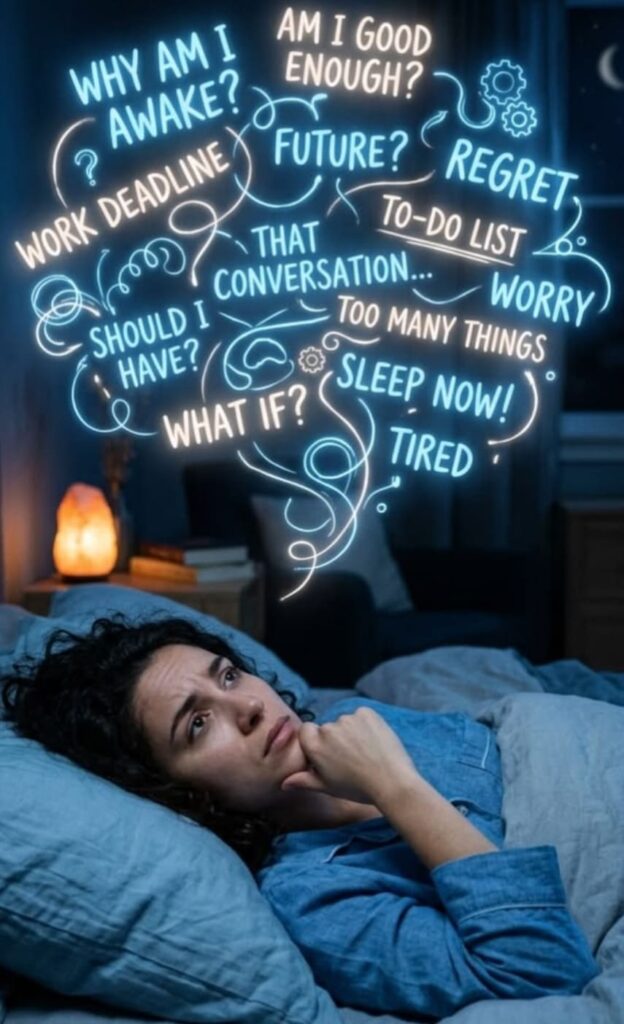
Health Anxiety and Sleep
Health anxiety can also interfere with sleep.
At night, there are fewer distractions.
As a result, physical sensations and health-related thoughts may become more noticeable.
You may start monitoring your heartbeat.
Then you may search symptoms.
Your anxiety increases.
Sleep becomes even harder.
This can create another cycle.
For readers struggling with sleep, link naturally to your Mindnesto guide:
Insomnia and Mental Health: Understanding the Connection
Health Anxiety and Cyberchondria
The internet has changed how people respond to health fears.
Years ago, someone might have searched medical books.
Today, they can search symptoms instantly.
They can also read forums, social media posts, videos, and AI-generated health information.
That accessibility can be useful.
However, for someone with health anxiety, constant searching can become a safety behaviour.
Research describes cyberchondria as excessive or repeated health-information searching associated with health anxiety.
A Simple Rule
Use the internet to learn. Do not use it to repeatedly prove that you are safe.
Those are very different behaviours.
How to Support Someone With Health Anxiety
If someone you love has health anxiety, reassurance may seem like the obvious solution.
Sometimes, however, constant reassurance can become part of the cycle.
Instead:
Listen Without Judging
Avoid saying:
“You are imagining everything.”
Try:
“I can see that this feels frightening for you.”
Encourage Professional Support
Support them in finding a qualified healthcare professional.
Avoid Becoming Their Reassurance Service
You can show compassion without answering the same health question repeatedly.
Encourage Normal Activities
Help them return to everyday activities when anxiety encourages avoidance.
Most importantly, do not shame them.
Health anxiety is not attention-seeking.
It is a real and treatable mental health problem.
Frequently Asked Questions
Is health anxiety a real condition?
Yes.
Health anxiety can become clinically significant and may be diagnosed as Illness Anxiety Disorder when diagnostic criteria are met.
Can health anxiety cause real symptoms?
Anxiety can produce genuine physical sensations.
However, not every symptom is caused by anxiety. New or concerning symptoms still require appropriate medical evaluation.
Why does health anxiety make me Google symptoms?
Searching can temporarily reduce uncertainty.
That temporary relief can encourage another search later. Repeated searching can therefore become part of the anxiety cycle.
How do I stop Googling symptoms?
Start by identifying when you search for reassurance.
Then delay the search and practise tolerating the uncertainty.
If the behaviour is difficult to control, CBT can provide structured support.
Can health anxiety go away?
Health anxiety can improve significantly with appropriate treatment.
Some people need ongoing support, while others experience substantial improvement.
What is the best treatment for health anxiety?
CBT is one of the most strongly supported psychological treatments.
A healthcare professional can help determine whether therapy, medication, or a combination is appropriate.
Is health anxiety the same as hypochondria?
The older term hypochondriasis is no longer the preferred diagnostic term.
Illness Anxiety Disorder is the current clinical terminology for a specific presentation of health-related preoccupation.
A word from mindnesto-
At mindnesto we believe health anxiety can make ordinary sensations feel frightening.
It can turn a quick symptom search into hours of worry.
It can also make reassurance feel necessary again and again.
However, the cycle can be changed.
The goal is not to ignore your body.
The goal is to respond to your body without allowing fear to control every decision.
Appropriate medical care remains important.
At the same time, learning to reduce checking, reassurance seeking, catastrophic interpretations, and compulsive searching can help you regain control.
If health anxiety is affecting your daily life, you do not have to manage it alone.
Professional support can help you build a healthier relationship with uncertainty, physical sensations, and your own thoughts.