





By Mindnesto Editorial Team · Updated June 2026 · 10 min read
Reviewed for medical accuracy — sources cited from NHS, NICE, AASM, Harvard Medical School and peer-reviewed sleep research
Insomnia physical health is one of the most urgent and most underappreciated areas of modern wellbeing. If you are lying awake night after night — watching the hours pass, exhausted but unable to sleep, dreading tomorrow’s fatigue before it has even arrived — you are not imagining the impact this has on every area of your mental and physical health. Insomnia consequences are real, measurable, and serious. And they deserve serious, specific treatment — not simply advice to “try to relax.”
The scale of the insomnia barin healh problem is significant. The American Academy of Sleep Medicine (AASM) estimates that approximately 30% of adults experience insomnia symptoms and 10% meet clinical criteria for chronic insomnia disorder. In the UK, the NHS reports that approximately one in three people will experience insomnia at some point in their lives. Furthermore, research consistently demonstrates that insomnia consequences extend well beyond tiredness — into depression, anxiety, immune dysfunction, cardiovascular risk, and cognitive impairment.
Critically, chronic insomnia is not simply a matter of poor sleep habits. It is a recognised clinical disorder with specific maintaining mechanisms — and those mechanisms respond to specific evidence-based interventions. This guide explains what those mechanisms are, why insomnia mental health is so difficult to resolve through willpower alone, and 10 specific strategies that the research confirms actually work.
We have connected this guide to our related posts on sleep optimization strategies and science-backed ways to calm anxiety — because insomnia mental health, anxiety, and sleep optimisation are so deeply interconnected that understanding one requires understanding all three together.
⚠️ Medical Disclaimer: This article is for informational and educational purposes only. Persistent insomnia is a clinical condition that benefits from professional assessment. If insomnia is significantly affecting your mental health, daily functioning, or quality of life, please consult your GP or a qualified sleep medicine specialist.
What Is Insomnia — The Clinical Definition
Insomnia as a clinical entity is defined by the AASM as difficulty initiating sleep, difficulty maintaining sleep, or early morning awakening — occurring at least 3 nights per week for at least 3 months — that produces significant daytime impairment despite adequate opportunity to sleep.
This clinical definition contains three important elements that distinguish genuine insomnia from ordinary poor nights of sleep.
First, frequency and duration — insomnia is persistent, not occasional. Second, daytime impairment — insomnia brain health produces measurable consequences during waking hours, including fatigue, mood disturbance, cognitive impairment, and reduced functioning. Third, adequate sleep opportunity — insomnia is distinguished from insufficient sleep syndrome, in which poor sleep results from simply not allowing enough time for sleep rather than from a genuine inability to sleep when the opportunity is present.
Types of Insomnia Presentation
Insomnia presents across three distinct patterns, each with different implications for treatment:
Sleep onset insomnia — difficulty falling asleep at the beginning of the night, typically associated with elevated evening cortisol, cognitive hyperarousal, and anxiety. This is the most common insomnia mental health pattern and the most strongly associated with anxiety disorders.
Sleep maintenance insomnia — difficulty staying asleep, with frequent or prolonged nighttime awakenings. This pattern is more strongly associated with depression, stress, and in older adults with pain conditions. It is also commonly produced by alcohol consumption — as detailed in our sleep optimization guide.
Early morning awakening — waking significantly earlier than intended and being unable to return to sleep. This is the insomnia mental health pattern most strongly associated with depression and is often the first sleep symptom to appear as a depressive episode develops.
Latest 2026 Understanding of Insomnia
One of the most important recent developments in insomnia health science is the recognition of hyperarousal — not poor sleep habits or sleep environment problems — as the primary maintaining mechanism of chronic insomnia.
Dr. Allison Harvey of UC Berkeley and Dr. Colin Espie of the University of Oxford have both contributed significantly to the cognitive model of insomnia — which identifies three interacting maintaining factors: arousal and distress (elevated cortisol and amygdala activation), unhelpful beliefs about sleep (catastrophising about consequences of poor sleep), and safety behaviours (strategies like spending extra time in bed that paradoxically maintain the insomnia).
Understanding this maintaining cycle explains a crucial insomnia mental health fact: the harder you try to sleep, the harder it becomes. Sleep effort — the application of conscious will and monitoring to the process of falling asleep — directly inhibits the neurological conditions required for sleep onset. This is why every strategy that increases sleep effort (clock-watching, staying in bed longer, worrying about not sleeping) worsens insomnia — and why effective treatment must target arousal reduction rather than sleep control.
The Insomnia Mental Health Consequences — What Chronic Poor Sleep Actually Does
Understanding the full consequences of insomnia creates the motivation for treatment — and removes the minimising self-talk (“It is only sleep, I will be fine”) that delays appropriate intervention.
Insomnia and the Brain
Research by Dr. Matthew Walker of UC Berkeley — whose work we reference extensively in our sleep optimization guide — demonstrates that chronic insomnia produces 60% increased amygdala reactivity to anxiety-provoking stimuli, suppressed prefrontal cortex function, and accumulating sleep debt that cannot be fully repaid through occasional longer sleep.
Furthermore, research published in JAMA Internal Medicine found that chronic insomnia is a significant independent risk factor for the development of major depressive disorder — with insomnia sufferers being 2–3 times more likely to develop depression than good sleepers. Additionally, insomnia is a powerful predictor of anxiety disorder development, cognitive decline, and in older adults, dementia risk.
The Daytime Consequences of Insomnia
Beyond its mental health consequences, insomnia produces a predictable cluster of daytime impairments that profoundly reduce quality of life:
- Persistent fatigue that is not relieved by rest — a defining feature of insomnia
- Mood disturbances — irritability, emotional reactivity, and reduced positive affect
- Cognitive impairment — slower processing speed, impaired working memory, and difficulty with sustained attention
- Reduced occupational performance — research published in Sleep journal found insomnia costs US employers approximately $63 billion annually in lost productivity
- Social withdrawal and relationship strain — produced by fatigue, irritability, and the preoccupation with sleep that insomnia generates
The Insomnia Maintaining Cycle — Why It Persists
Understanding why insomnia persists is essential for understanding why standard sleep advice often fails.
The insomnia maintaining cycle typically operates as follows. First, a sleep difficulty occurs — triggered by stress, illness, or a life event. Next, the poor sleep produces anxiety about sleep. Then, the anxiety produces hyperarousal — elevated cortisol and amygdala activation — that makes subsequent sleep more difficult. After that, compensatory behaviours — spending longer in bed, napping, reducing daytime activity — are adopted that further disrupt sleep pressure and circadian rhythm. Finally, the bed becomes associated with wakefulness and anxiety rather than sleep through a process called conditioned arousal — and the insomnia cycle becomes self-sustaining.
This self-sustaining cycle explains why insomnia persists long after the original trigger has resolved — and why addressing only sleep hygiene factors without addressing the hyperarousal and conditioning mechanisms is insufficient for most people with chronic insomnia.
10 Evidence-Based Insomnia Solutions
1. Understand That CBT-I Is the Gold Standard Insomnia Treatment
Cognitive Behavioural Therapy for Insomnia (CBT-I) is the first-line treatment for chronic insomnia condition recommended by NICE, the NHS, the AASM, and the American College of Physicians — consistently shown to produce superior long-term outcomes to sleep medication.
Research by Dr. Charles Morin of Université Laval — published in JAMA Internal Medicine — found that CBT-I produced remission in approximately 70–80% of people with chronic insomnia mental health, with effects maintained at 5-year follow-up. Sleep medication, by contrast, produces dependency, tolerance, and rebound insomnia upon discontinuation.
CBT-I for insomnia addresses all three maintaining mechanism categories: arousal and distress, unhelpful beliefs, and safety behaviours. It typically involves 6–8 sessions and includes five core components: sleep restriction, stimulus control, sleep hygiene education, cognitive restructuring, and relaxation training.
Access CBT-I for insomnia:
- UK: NHS Talking Therapies + Sleepio (digital CBT-I, now NICE-approved and free via some NHS trusts)
- USA: ADAA Therapist Finder — search for CBT-I specialists + Somryst (FDA-cleared digital CBT-I)
- Canada: CAMH sleep resources
- Australia: Beyond Blue sleep and mental health support
2. Implement Stimulus Control — Rebuilding the Bed-Sleep Association
Stimulus control is one of the two most powerful individual CBT-I components for insomnia.It directly addresses conditioned arousal — the learned association between the bed and wakefulness that maintains chronic insomnia mental health.
The principle is straightforward. Your bed has become associated with wakefulness, frustration, and anxiety through repeated experience. Stimulus control systematically rebuilds the association between your bed and sleep by ensuring your bed is used exclusively for sleeping.
Stimulus control insomnia instructions:
- Use your bed only for sleep — no reading, watching, working, scrolling, or lying awake in bed
- Get out of bed if awake for more than 20 minutes — go to another room, do something calm and quiet, return only when sleepy
- Maintain your consistent wake time regardless of how little you slept — this is non-negotiable for insomnia recovery
- Avoid napping — naps reduce sleep pressure and make the following night’s insomnia brain worse in most cases
3. Use Sleep Restriction Therapy — The Most Counterintuitive Insomnia Brain Health Tool
Sleep restriction therapy is the single most effective component of CBT-I for insomnia health — and also the most counterintuitive. It involves temporarily restricting the time in bed to match actual sleep time — typically 5–6 hours initially — to build strong sleep pressure and consolidate fragmented sleep into a shorter but more efficient and deeper period.
Research published in Sleep Medicine Reviews confirms that sleep restriction therapy resolves chronic insomnia mental health in the majority of people who complete it — producing dramatic improvements in sleep efficiency, sleep continuity, and subjective sleep quality within 2–3 weeks.
Important: Sleep restriction therapy for insomnia should ideally be supervised by a CBT-I trained therapist — particularly for people with bipolar disorder, seizure disorders, or safety-critical occupations. Digital CBT-I platforms like Sleepio provide guided sleep restriction with appropriate safety screening.
4. Address Cognitive Hyperarousal — The Mental Dimension of Insomnia
Cognitive hyperarousal — the racing, ruminative, catastrophising thoughts that characterise bedtime for most people with insomnia — is both a symptom and a maintaining mechanism. Addressing it directly is therefore essential for lasting insomnia recovery.
Evidence-based cognitive approaches for insomnia:
- Scheduled worry time — designate a specific 20–30 minute period earlier in the evening to write out all worries, concerns, and to-do lists. This externalises cognitive content before bedtime rather than allowing it to intrude at lights-out
- Cognitive restructuring — identify and challenge specific catastrophic thoughts about insomnia mental health consequences (“If I don’t sleep I will be completely useless tomorrow”) by examining evidence for and against the catastrophe
- Paradoxical intention — deliberately try to stay awake with eyes open in a dark room, without any sleep-inducing effort. This removes sleep effort — the primary insomnia maintaining behaviour — by transforming the goal from sleep to wakefulness
- Mindfulness for insomnia — non-judgmental observation of wakeful experience, including thoughts and physical sensations, without resistance or effort to change them
Our guide on science-backed ways to calm anxiety provides additional techniques directly applicable to the cognitive hyperarousal dimension of insomnia.
5. Optimise Your Pre-Sleep Physiology
Beyond the cognitive mechanisms of insomnia mental health, several specific physiological interventions reduce the arousal that maintains insomnia at the neurobiological level.
Physiological insomnia interventions:
- Warm bath or shower 60–90 minutes before bed — produces core body temperature drop that accelerates sleep onset, supported by research published in Sleep Medicine Reviews
- Progressive muscle relaxation — systematically tensing and releasing muscle groups from feet to head activates the parasympathetic nervous system and counteracts the somatic arousal component of insomnia
- 4-7-8 breathing — as detailed in our anxiety guide — directly stimulates the vagus nerve and reduces the cortisol elevation that drives insomnia
- Bedroom temperature 16–19°C — the physiologically optimal temperature range for sleep onset and maintenance
- Complete darkness — even minimal light exposure maintains cortisol and suppresses melatonin, worsening insomnia
6. Use a Sleep Diary to Track Insomnia
A sleep diary is an essential tool for insomnia assessment and treatment monitoring — used by every CBT-I therapist and recommended by the AASM as a standard clinical tool. It provides the objective sleep data needed to implement sleep restriction accurately and to track improvement over time.
What to record in your insomnia mental health sleep diary:
- Bedtime, lights-out time, estimated sleep onset time
- Number and duration of nighttime awakenings
- Final wake time, out-of-bed time
- Estimated total sleep time
- Subjective sleep quality rating (1–10)
- Daytime fatigue rating (1–10)
- Any caffeine, alcohol, or medication consumed
Reviewing this data weekly reveals patterns, identifies progress, and allows accurate calculation of sleep efficiency (time asleep as a percentage of time in bed) — the primary metric for guiding sleep restriction therapy in insomnia treatment.
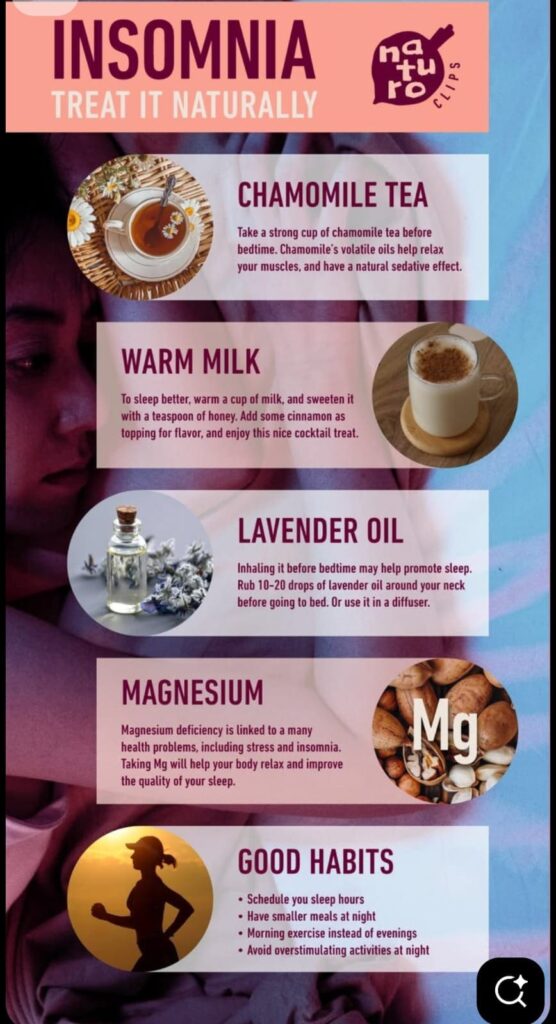
7. Address the Relationship Between Nutrition and Insomnia
Diet and insomnia are interconnected in several specific and actionable ways. As explored in our eating habits and mental health guide, the gut-brain axis directly affects sleep quality through its influence on serotonin and melatonin production.
Nutritional insomnia health care strategies:
- Tryptophan-rich evening foods — turkey, milk, banana, oats, eggs — provide the amino acid precursor to serotonin and melatonin, naturally supporting sleep onset
- Magnesium glycinate (200–400mg before bed) — research in Nutrients Journal confirms magnesium supplementation improves subjective and objective sleep quality in adults with insomnia
- Avoid large meals within 2–3 hours of bedtime — active digestion raises core body temperature and disrupts sleep onset
- Eliminate caffeine after 12–1pm — given caffeine’s 5–7 hour half-life, afternoon caffeine is one of the most common and correctable contributors to insomnia
- Limit alcohol — despite its sedative effect, alcohol fragments REM sleep and produces cortisol rebound, consistently worsening insomnia in the second half of the night
8. Exercise Strategically to Improve Insomnia Mental Health
Regular exercise is one of the most consistently evidence-based insomnia9sleep deprives) interventions. A meta-analysis published in Journal of Sleep Research found that exercise reduced subjective insomnia severity, improved sleep efficiency, and increased slow wave sleep depth significantly across diverse populations.
Exercise improves insomnia through multiple mechanisms — increasing homeostatic sleep pressure (adenosine build-up), reducing cortisol and inflammatory markers, improving mood and reducing anxiety, and promoting the physical tiredness that facilitates sleep onset.
Exercise guidelines:
- Aim for 20–30 minutes of moderate aerobic exercise at least 4 times per week
- Schedule vigorous exercise in the morning or early afternoon — exercise within 2–3 hours of bedtime can worsen insomnia by raising core body temperature
- Morning outdoor exercise combines sleep-beneficial exercise with the circadian-anchoring effects of natural morning light exposure
- Even gentle evening movement — a 15-minute walk after dinner — improves insomnia mental health without the late-night arousal risks of vigorous training
9.Consider Medication as a Short-Term Insomnia Bridge
While CBT-I is the gold standard for long-term insomnia treatment, short-term medication can be appropriate as a bridge during severe acute episodes or while waiting for CBT-I access.
2026 insomnia medication options:
Melatonin — most effective for circadian phase insomnia mental health. Low doses of 0.5–1mg taken 60–90 minutes before desired sleep time are more effective than higher doses and avoid receptor downregulation. Available over-the-counter in the USA and on prescription in the UK.
Orexin receptor antagonists — suvorexant (Belsomra) and lemborexant (Dayvigo) are the newest generation of prescription sleep medications, approved by the FDA and showing clinical promise in insomnia mental health treatment. Unlike older benzodiazepines, they target the orexin wake-promoting system rather than GABA, producing less dependency risk and more natural sleep architecture.
Low-dose doxepin — specifically approved for sleep maintenance insomnia, particularly effective for early morning awakening.
Important: All prescription sleep medications for insomnia should be discussed with your GP or sleep specialist — who will weigh the benefits against dependency risks, drug interactions, and suitability for your specific insomnia brain health present
10.Address Comorbid Mental Health Conditions Alongside Insomnia Mental Health
In the majority of clinical cases, insomnia does not exist in isolation. Research published in Sleep Medicine Reviews found that approximately 40% of people with chronic insomnia have a comorbid mental health condition — most commonly anxiety disorders and depression.
This comorbidity requires a bidirectional treatment approach — addressing both the insomnia mental health and the comorbid condition simultaneously, rather than waiting for one to resolve before treating the other.
Our depression mental health guide explores the relationship between depression and insomnia in depth. For anxiety-driven insomnia mental health, our anxiety guide provides complementary strategies that directly address the hyperarousal mechanism maintaining the insomnia.
Insomnia Key Takeaways — Featured Snippet Optimised
Understanding and treating insomnia :
- Insomnia is a recognised clinical disorder affecting 10% of adults — not simply poor sleep habits
- The primary maintaining mechanism of insomnia is hyperarousal — not sleep hygiene failures
- CBT-I is the gold standard treatment with 70–80% remission rates and lasting effects
- Sleep restriction and stimulus control are the two most powerful CBT-I components for insomnia
- Cognitive hyperarousal — catastrophising about not sleeping — must be directly addressed for lasting insomnia recovery
- Paradoxical intention — trying to stay awake — reduces sleep effort and consistently improves insomnia mental health
- Digital CBT-I platforms (Sleepio, Somryst) are now NICE-approved and clinically validated
- Orexin antagonists represent the most significant advance in insomnia pharmacology in a decade
- Nutrition, exercise, and daily structure all have measurable impacts on insomnia
- 40% of people with chronic insomnia have a comorbid condition — both must be treated simultaneously
A Word From Mindnesto –
At Mindnesto, we understand that insomnia is uniquely exhausting — because it affects every other area of life, because it feels like something you should be able to control but cannot, and because the strategies that seem logical (trying harder, staying in bed longer, taking naps) consistently make it worse rather than better.
The fact that insomnia is counterintuitive does not make it untreatable. Quite the opposite. CBT-I is one of the most effective treatments in all of psychiatry — with remission rates that exceed most pharmacological interventions. Relief is genuinely available for insomnia. And you deserve access to it.
Please do not spend another year fighting insomnia alone. Reach out to your GP, self-refer to NHS Talking Therapies, or access a digital CBT-I programme today.
We are here every step of the way. 💙
→ Read next: Sleep Optimization — 12 Science-Backed Strategies
→ Also read: Depression Mental Health — Understanding and Overcoming
What is the difference between insomnia and just poor sleep?
Poor sleep is a common, often situational experience — produced by stress, environmental disruption, illness, or simply an occasional bad night. Insomnia mental health, by clinical definition, involves difficulty sleeping at least 3 nights per week for at least 3 months that produces significant daytime impairment. The critical distinction is persistence, frequency, and functional impact.
Does insomnia cause depression?
The relationship is genuinely bidirectional. Insomnia mental health is both a symptom and a cause of depression. Research published in JAMA Internal Medicine found that people with chronic insomnia mental health are 2–3 times more likely to develop major depressive disorder.
Is CBT-I better than sleeping tablets for insomnia mental health?
Yes — according to NICE, the NHS, and the American College of Physicians, CBT-I is the first-line treatment for chronic insomnia mental health and produces superior long-term outcomes compared to sleep medication. CBT-I remission rates of 70–80% are maintained at 5-year follow-up, without the dependency, tolerance, or rebound insomnia that accompany most sleep medications.
What is sleep restriction therapy for insomnia ?
Sleep restriction therapy is the most counterintuitive and most effective component of CBT-I for insomnia mental health. It temporarily restricts time in bed to match actual sleep time — typically 5–6 hours initially — building strong homeostatic sleep pressure and consolidating fragmented sleep into a shorter but more efficient and deeply restorative period. Time in bed is gradually extended as sleep efficiency improves.
What is the best supplement for insomnia ?
Magnesium glycinate (200–400mg before bed) has the strongest evidence base for insomnia mental health among supplements — particularly for anxiety-driven insomnia. Low-dose melatonin (0.5–1mg, 60–90 minutes before target sleep time) is effective for circadian phase insomnia mental health. L-Theanine (100–200mg before bed) supports relaxation without sedation. However, no supplement replaces CBT-I for chronic insomnia mental health
Where can I get help for insomnia mental health?
UK: NHS Talking Therapies — free self-referral including sleep therapy | Sleepio — NICE-approved digital CBT-I
USA: ADAA Therapist Finder | Somryst — FDA-cleared digital CBT-I
Canada: CAMH Sleep Resources
Australia: Beyond Blue Sleep Support | GP → Mental Health Care Plan
Sources and External References
- NHS — Insomnia
- NICE — Insomnia Guidelines
- AASM — Clinical Practice Guidelines for Insomnia
- National Sleep Foundation — Insomnia
- JAMA Internal Medicine — CBT-I vs Medication
- Sleep Medicine Reviews — Sleep Restriction
- Journal of Sleep Research — Exercise and Insomnia
- Behaviour Research and Therapy — Cognitive Model
- Sleep Journal — Insomnia and Productivity
- Nutrients Journal — Magnesium and Sleep
- Frontiers in Psychology — Insomnia Mental Health
- NHS Talking Therapies
- ADAA — Sleep Disorders
- Beyond Blue Australia
- CAMH Canada
- Mind UK — Sleep Problems