






By Mindnesto Editorial Team · Updated August 2026 · 10 min read
Reviewed for medical accuracy · Evidence-informed content with references to peer-reviewed research and reputable health organizations
: You can love the person you care for and still feel completely exhausted by caregiving. Feeling overwhelmed does not make you selfish. It may be a sign that your own needs have been pushed aside for too long.
Caregiving can be deeply meaningful.
However, it can also become physically and emotionally demanding, especially when responsibilities continue for months or years.
You may be caring for an aging parent, a partner with a chronic illness, a child with additional needs, or another family member who depends on you.
Over time, constant responsibility can affect sleep, relationships, mood, concentration, and your ability to care for yourself.
This is where caregiver burnout becomes important to understand.
Caregiver burnout is not simply having a difficult day.
It can involve persistent exhaustion, emotional strain, reduced capacity, and feeling overwhelmed by responsibilities that once seemed manageable.
Recent research highlights the significant mental-health burden experienced by informal caregivers. A 2025 umbrella review of meta-analyses found substantial levels of caregiver burden, depression, and anxiety across populations.
⚠️ Medical disclaimer: This article is for educational purposes only and does not diagnose or treat burnout, depression, anxiety, or any other health condition. Caregiver exhaustion can have several causes. If symptoms persist, become severe, or interfere with daily functioning, speak with a qualified healthcare professional.
What Is Caregiver Burnout?
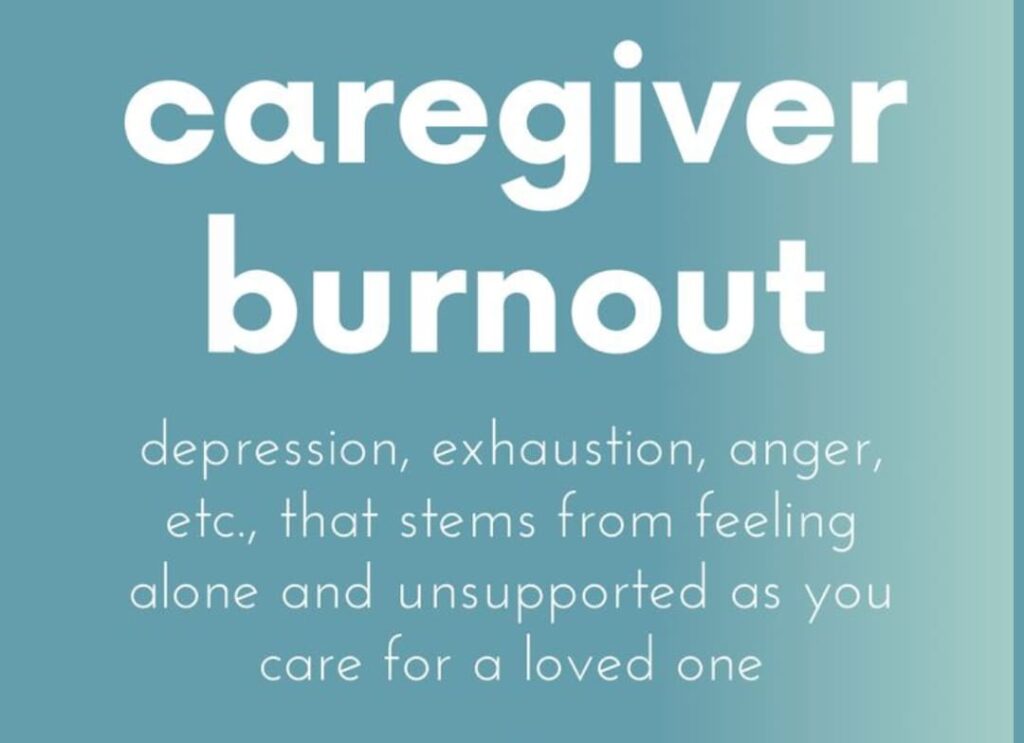
Caregiver burnout is a state of prolonged physical, emotional, or mental exhaustion associated with ongoing caregiving demands.
It can develop when the demands of caregiving consistently exceed the person’s available physical, emotional, financial, or social resources.
Importantly, caregiver burnout is not a formal psychiatric diagnosis.
The term is commonly used to describe severe exhaustion and distress associated with prolonged caregiving.
That distinction matters because similar symptoms can occur with depression, anxiety, sleep disorders, chronic stress, and physical health conditions.
Therefore, persistent symptoms should not simply be dismissed as “caregiver stress.”
What Does Caregiver Burnout Feel Like?
Caregiver burnout can affect different parts of your life.
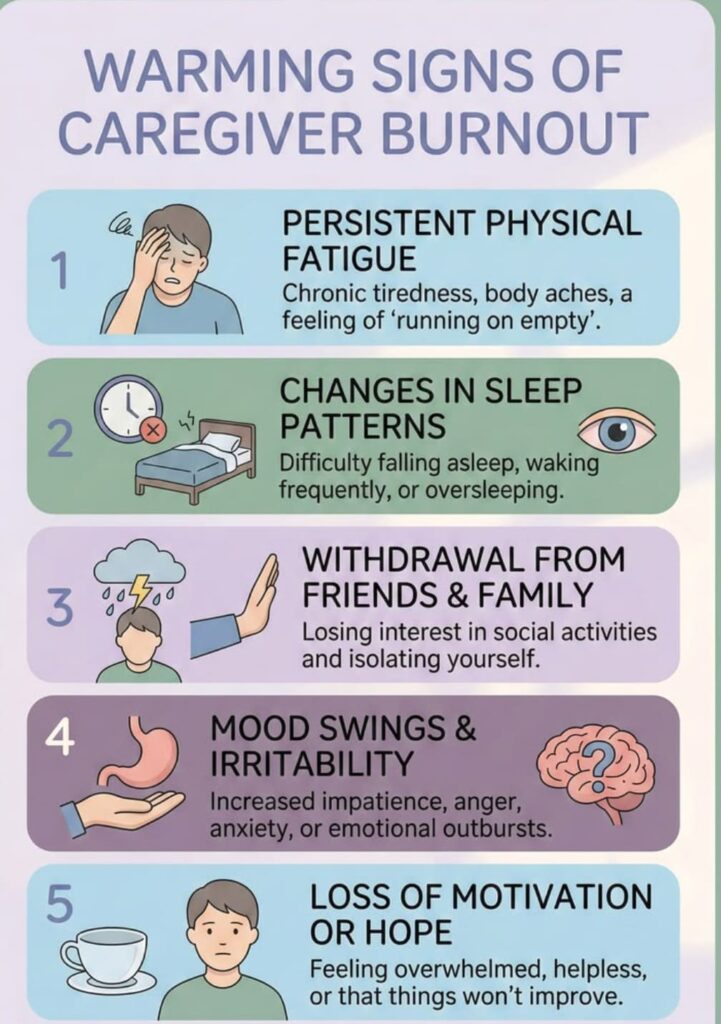
You may notice:
- Constant physical exhaustion
- Emotional numbness
- Irritability
- Difficulty concentrating
- Changes in sleep
- Feeling trapped or overwhelmed
- Losing interest in activities
- Feeling increasingly isolated
- Resenting caregiving responsibilities
- Feeling guilty about needing help
- Difficulty maintaining relationships
- Feeling like you have nothing left to give
One of the most confusing experiences can be having love and exhaustion at the same time.
You can care deeply about someone while still needing support yourself.
10 Signs of Caregiver Burnout
1. You Feel Exhausted Most of the Time
Ordinary tiredness usually improves with adequate recovery.
Caregiver exhaustion can feel different.
You may wake up tired and remain depleted throughout the day.
2. You Become More Irritable
Small problems may suddenly feel enormous.
You might notice yourself becoming impatient with family members, friends, or even the person you care for.
This does not automatically mean you have stopped caring.
It can be a sign that your emotional resources are running low.
3. You Are Sleeping Poorly
Caregiving can disrupt sleep because of nighttime responsibilities, worry, irregular schedules, or difficulty switching off mentally.
Poor sleep can then make stress harder to manage.
This can create a cycle:
Caregiving stress → poor sleep → lower resilience → greater exhaustion → more stress.
If sleep has become a persistent problem, you can also explore Mindnesto’s insomnia and mental health guide.
4. You Stop Doing Things You Enjoy
You may gradually abandon hobbies, friendships, exercise, or personal interests.
At first, this can seem practical.
Eventually, however, your entire identity can become centered around caregiving.
5. You Feel Emotionally Numb
Not every caregiver experiences obvious sadness.
Some people instead feel detached.
You may think:
“I know I should feel something, but I just feel empty.”
Persistent emotional numbness deserves attention.
6. You Feel Guilty About Taking a Break
This is one of the most damaging patterns.
You may believe:
“Someone else needs me, so I cannot focus on myself.”
But recovery is not selfish.
A caregiver who never recovers eventually has fewer resources available for everyone.
7. You Feel Trapped
You may feel as though there is no way to step away from your responsibilities.
This can produce hopelessness and resentment.
8. Your Relationships Are Suffering
Caregiving can consume time that would otherwise go toward partners, children, friends, or other family members.
You may withdraw socially because explaining your situation feels exhausting.
9. Your Health Is Being Neglected
You may postpone:
- Medical appointments
- Exercise
- Regular meals
- Sleep
- Personal hygiene
- Medication routines
- Time outdoors
Your own health still matters.
10. You Feel Like You Cannot Keep Going
If you are reaching a point where you feel unable to continue, do not treat that feeling as something you simply need to tolerate.
Talk to someone you trust and seek professional support.
If you are in immediate danger or experiencing thoughts of suicide or self-harm, seek emergency or crisis support in your country immediately.
What Causes Caregiver Burnout?
Caregiver burnout usually develops through accumulated demands, rather than one isolated event.
Long-Term Caregiving
The longer responsibilities continue without adequate support, the greater the opportunity for exhaustion to accumulate.
Lack of Respite
Without regular opportunities to step away, caregivers may never fully recover.
Even short periods of genuine relief can matter.
Financial Pressure
Medical expenses, reduced working hours, transportation costs, and other financial concerns can increase caregiver stress.
Emotional Responsibility
Caregiving is not only physical.
You may also be managing fear, uncertainty, medical decisions, family conflict, and emotional support.
Lack of Social Support
Isolation can make caregiving feel much heavier.
Support does not necessarily mean someone taking over completely.
Sometimes having someone listen, share practical responsibilities, or provide reliable information can make a difference.
Caregiver Burnout vs. Caregiver Stress
These terms are often used interchangeably, but they can describe different levels of difficulty.
| Caregiver stress | Possible caregiver burnout |
|---|---|
| Can fluctuate | Feels persistent |
| Recovery may help | Recovery may feel insufficient |
| Responsibilities remain manageable | Responsibilities feel overwhelming |
| Motivation remains relatively intact | Motivation may decline |
| You can still maintain personal activities | Personal needs are increasingly neglected |
This is not a diagnostic test.
It is simply a practical way to understand why persistent exhaustion deserves attention.
Who Is Most at Risk of Caregiver Burnout?
Caregiver burnout can affect anyone.
However, risk may increase when someone:
- Provides intensive care
- Has little practical support
- Provides care for a long period
- Has financial difficulties
- Has poor sleep
- Balances employment with caregiving
- Has multiple dependents
- Experiences family conflict
- Has limited access to respite
- Already experiences significant stress or mental-health difficulties
The person’s circumstances matter.
There is no single type of caregiver who develops burnout.
How to Prevent Caregiver Burnout
The goal is not to become a “better” caregiver by sacrificing yourself.
The goal is to create a caregiving arrangement that is sustainable.
1. Stop Trying to Do Everything Alone
Ask:
“What can someone else realistically take over?”
This might include:
- Shopping
- Transportation
- Meal preparation
- Household tasks
- Appointments
- Administrative work
- Companionship
Delegation is not failure.
It is resource management.
2. Build a Caregiving Support Network
Create a list of people who can help.
Instead of waiting until you are overwhelmed, decide beforehand who you can contact for:
- Emergency support
- Transportation
- Meals
- Childcare
- Household tasks
- Emotional support
A written plan can reduce decision fatigue.
3. Schedule Respite Before You Need It
Do not wait until you completely break down before taking a break.
Regular respite can give caregivers an opportunity to recover physically and emotionally.
4. Protect Your Basic Health
Start with the fundamentals:
Sleep. Food. Movement. Medical care. Connection. Recovery.
You do not need a perfect wellness routine.
You need sustainable basics.
5. Set Boundaries
Caregiving does not automatically mean being available every minute.
Where possible, establish predictable periods when you are unavailable unless there is an emergency.
Boundaries can protect both the caregiver and the relationship.
Can Therapy Help Caregiver Burnout?
Professional psychological support can be useful, particularly when caregiving is associated with persistent stress, depression, anxiety, grief, relationship difficulties, or emotional exhaustion.
Research supports several approaches.
A 2024 systematic review of psychological interventions for informal caregivers found that multicomponent approaches, including cognitive-behavioural techniques, psychoeducation, coping strategies, and social support, showed promising results for caregiver burden, depressive symptoms, quality of life, and social support.
Another 2024 systematic review of randomized controlled trials found beneficial effects from psychological interventions for carers of people with severe mental illness, with psychoeducation among the most frequently evaluated approaches.
Therapy is therefore not simply about “learning to cope.”
It can help you understand your emotional responses, establish boundaries, develop coping skills, and identify practical changes.
What Does Research Say About Mindfulness for Caregivers?
Mindfulness can be useful as one component of a broader support plan.
A 2024 systematic review and meta-analysis involving 13 studies and 1,007 informal caregivers found that mindfulness-based interventions were associated with reductions in stress, depression, and caregiver burden, alongside improvements in mindfulness and quality of life. However, the analysis did not find a significant reduction in anxiety, and the researchers noted the need for stronger future studies.
That means mindfulness should not be presented as a cure.
Instead, consider it one possible tool within a larger support strategy.
Does Family Support Reduce Caregiver Burnout?
It can.
A 2024 systematic review and meta-analysis of 20 studies found that family-centred interventions significantly improved caregiver burden, quality of life, depression, and stress, although effects were not significant for every outcome, including anxiety and family functioning.
This highlights an important point:
Caregiver burnout is not always an individual self-care problem.
Sometimes the family system needs to change.
If one person is carrying most of the responsibility, telling them to “take better care of themselves” may not address the underlying problem.
A Simple Caregiver Burnout Prevention Plan
Try this five-part framework:
1. Notice
Identify your biggest sources of exhaustion.
2. Share
Choose one responsibility someone else can realistically handle.
3. Recover
Schedule regular time away from caregiving duties.
4. Connect
Maintain at least one meaningful social connection.
5. Seek support
Talk to a healthcare professional when stress becomes persistent or difficult to manage.
Think of this as a support system, not a checklist you must complete perfectly.
What Not to Do When You Are Burned Out
Avoid turning burnout prevention into another performance goal.
You do not need:
- A perfect self-care routine
- Expensive wellness products
- Hours of meditation
- A strict productivity schedule
- To handle everything positively
Sometimes the most effective intervention is much simpler:
Reduce the workload. Ask for help. Sleep. Recover. Repeat.
When Should a Caregiver Seek Professional Help?
Consider professional support when:
- Exhaustion persists despite opportunities for rest
- Anxiety or sadness becomes difficult to manage
- Sleep problems continue
- You struggle to function normally
- You withdraw from everyone
- You feel hopeless
- Your health is deteriorating
- Caregiving responsibilities feel impossible to sustain
A healthcare professional can help determine whether your symptoms reflect caregiver stress, burnout, depression, anxiety, sleep problems, another health condition, or a combination.
Frequently Asked Questions
What is caregiver burnout?
Caregiver burnout describes significant physical, emotional, or mental exhaustion associated with prolonged caregiving demands. It is not itself a formal psychiatric diagnosis.
What are the first signs of caregiver burnout?
Early warning signs may include persistent tiredness, irritability, sleep problems, reduced motivation, emotional detachment, social withdrawal, and feeling overwhelmed by responsibilities.
How do you prevent caregiver burnout?
Prevention involves sustainable caregiving rather than simply increasing self-care. Sharing responsibilities, building social support, scheduling respite, protecting sleep, setting boundaries, and seeking professional support can help.
Can caregiver burnout cause depression?
Caregiving stress and depression are not the same thing. However, prolonged caregiving strain may be associated with depressive symptoms. Persistent sadness, hopelessness, loss of interest, or difficulty functioning should be professionally evaluated.
Is it normal to resent caregiving?
Difficult emotions can occur during prolonged caregiving. Feeling frustrated or resentful does not automatically mean you do not love the person you care for. It can signal that your own needs or support systems require attention.
How long does caregiver burnout last?
There is no fixed duration. It can persist while the underlying stressors continue, particularly when adequate support and recovery are unavailable.
A wod fom mindnesto-
At mindnesto we believe You can love someone deeply and still need a break from caring for them.
Caregiver burnout is not a character flaw.
It can be a sign that the demands placed on a person have exceeded their available resources for too long.
The most effective prevention strategy is therefore not simply “practice self-care.”
It is to create a sustainable caregiving system that includes practical help, emotional support, adequate recovery, healthy boundaries, and professional care when needed.
Taking care of yourself does not take away from the care you provide to someone else.
It helps make that care more sustainable.