




By Mindnesto Editorial Team · Updated August 2026 · 10 min read
Reviewed for medical accuracy · Evidence-informed content with references to reputable health organizations and peer-reviewed research
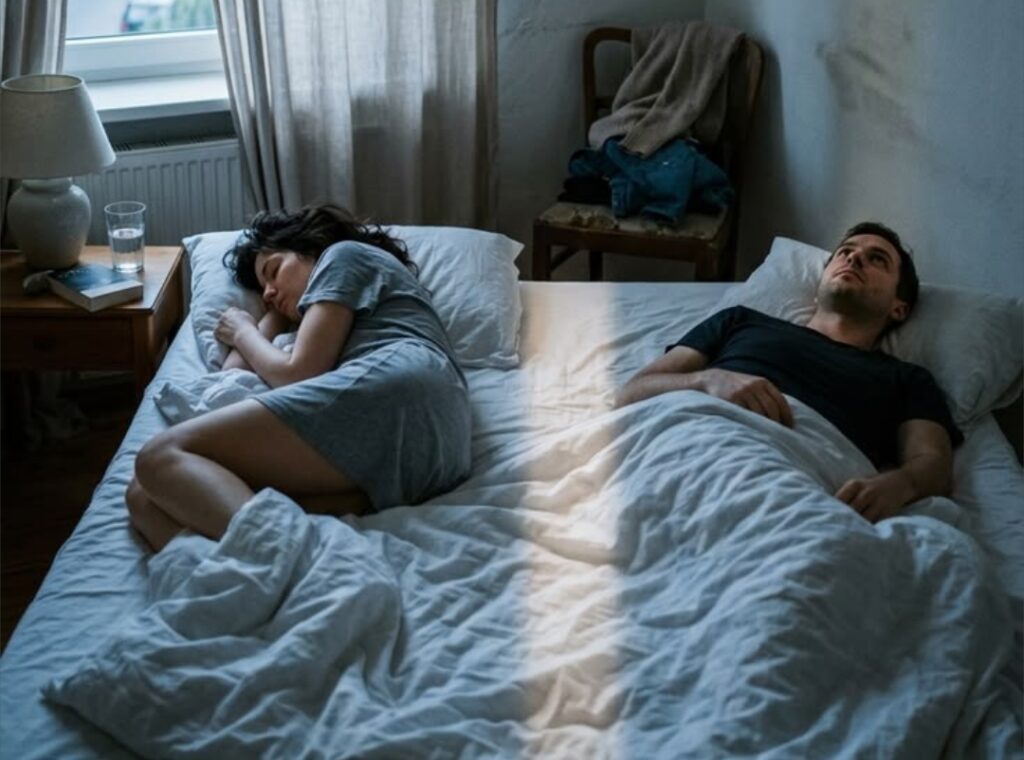
You can finish your workday and still feel like you have another full-time job waiting at home. When responsibilities never seem to end, exhaustion can become more than ordinary stress.
Burnout is often associated with demanding workplaces. However, prolonged stress can also develop around responsibilities at home.
Household management, caregiving, parenting, relationship responsibilities, financial pressure, and professional work can overlap. Over time, this constant load may leave a person emotionally and physically exhausted.
For some women, the problem is not one unusually difficult day.
It is the feeling that every day requires something from you, while there is almost no time left to recover.
This guide explains what burnout at home can look like, why household responsibilities may contribute to chronic stress, and what practical strategies can help reduce the load.
⚠️ Medical disclaimer: This article is for educational purposes only. Burnout can overlap with depression, anxiety, sleep disorders, and other health conditions. It does not diagnose or treat any condition. If exhaustion, low mood, anxiety, sleep problems, or difficulty functioning persist or interfere with daily life, consider speaking with a qualified healthcare professional.
What Is Burnout at Home?
Burnout at home refers to a state of prolonged physical, mental, or emotional exhaustion associated with ongoing responsibilities and stress in a person’s home or personal life.
Unlike ordinary tiredness, burnout may not disappear after one good night’s sleep.
You may technically have free time, yet still feel unable to relax.
You might also notice that activities you once enjoyed now feel like additional tasks.
Burnout is generally associated with chronic stress that has not been successfully managed. The World Health Organization specifically defines burnout as an occupational phenomenon, rather than a medical condition, but prolonged stress outside work can still seriously affect wellbeing.
That distinction matters.
Not every form of exhaustion should automatically be labelled burnout.
What Does Burnout at Home Feel Like?
Burnout can affect your emotions, body, behaviour, and ability to concentrate.
Common experiences can include:
- Feeling exhausted even after resting
- Becoming easily irritated
- Feeling emotionally numb
- Losing motivation
- Difficulty concentrating
- Feeling overwhelmed by ordinary tasks
- Sleeping poorly
- Feeling guilty when taking breaks
- Withdrawing from people
- Losing interest in hobbies
- Feeling like everything depends on you
- Frequently thinking, “I cannot do this anymore”
One difficult day does not necessarily mean burnout.
The bigger concern is a persistent pattern of exhaustion and reduced functioning.
Emotional Signs of Household Burnout
Emotional exhaustion can be one of the most noticeable signs.
You may feel:
Constantly overwhelmed
Small responsibilities can suddenly feel enormous.
A pile of laundry, an unanswered message, or another household request may feel like one more demand you simply cannot handle.
Irritable or emotionally reactive
When your mental resources are depleted, your patience can become shorter.
You may become frustrated over situations that normally would not bother you.
Emotionally disconnected
Some people respond to prolonged stress by shutting down emotionally.
Instead of feeling intensely stressed, they may feel almost nothing.
Guilty about resting
This is particularly important.
If you believe you must constantly be productive before you “deserve” rest, recovery becomes difficult.
Why Women May Experience High Levels of Burnout at Home
Burnout is not exclusive to women.
However, women can face overlapping demands involving employment, household responsibilities, caregiving, parenting, relationships, and emotional labour.
The problem is not simply the number of tasks.
It can also be the invisible responsibility of remembering, organizing, anticipating, and managing those tasks.
For example, one person may physically prepare a child’s school bag.
Another person may be responsible for remembering:
- What needs to be packed
- When school activities happen
- Which forms need signing
- When supplies need replacing
- Whether appointments are scheduled
That mental responsibility is sometimes called the mental load.
When it continues without sufficient recovery, it can contribute to chronic stress and exhaustion.
Household Burnout vs. Everyday Stress
These experiences are related, but they are not identical.
| Everyday stress | Possible burnout pattern |
|---|---|
| Usually temporary | Persists over time |
| You recover after rest | Rest may not feel restorative |
| Motivation returns | Motivation remains low |
| Problems feel manageable | Ordinary tasks feel overwhelming |
| Emotions fluctuate | Emotional exhaustion becomes persistent |
This comparison is not a diagnostic test.
Only a qualified professional can determine whether symptoms are related to burnout, another mental health condition, a physical health issue, or several factors together.
The Hidden Causes of Burnout at Home
Burnout rarely comes from one task.
Instead, several pressures can accumulate.
1. Too Many Responsibilities
When your daily responsibilities consistently exceed your available time and energy, recovery becomes difficult.
This can happen when professional responsibilities continue into personal time.
2. Caregiving Demands
Caring for children, older relatives, or someone with additional needs can require substantial physical and emotional energy.
Caregivers may also struggle to prioritize their own needs.
3. Unequal Household Responsibilities
An unequal division of household work can create resentment and exhaustion.
The solution is not simply telling someone to “practice more self-care.”
Sometimes the workload itself needs to change.
4. Lack of Boundaries
Constant notifications, work messages, family demands, and social expectations can make it difficult to mentally switch off.
Without boundaries, home may stop feeling restorative.
5. Financial Stress
Money concerns can keep the nervous system in a prolonged state of alertness.
Financial pressure can also affect sleep, relationships, and decision-making.
6. Poor Sleep and Inadequate Recovery
Sleep does not solve every form of stress.
However, consistently poor sleep can make emotional regulation, concentration, and coping more difficult.
If sleep has become a recurring problem, see our guide on insomnia and mental health.
How to Prevent Burnout at Home
Prevention is not about creating a perfect morning routine.
It is about reducing unnecessary demands while creating realistic opportunities for recovery.
1. Identify What Is Actually Exhausting You
Before adding another self-care activity to your schedule, ask:
What is consuming most of my energy?
Write down your recurring responsibilities.
Then divide them into:
- Must do
- Can delegate
- Can postpone
- Can eliminate
- Can simplify
This can reveal that the problem is not a lack of productivity.
The problem may be too much workload.
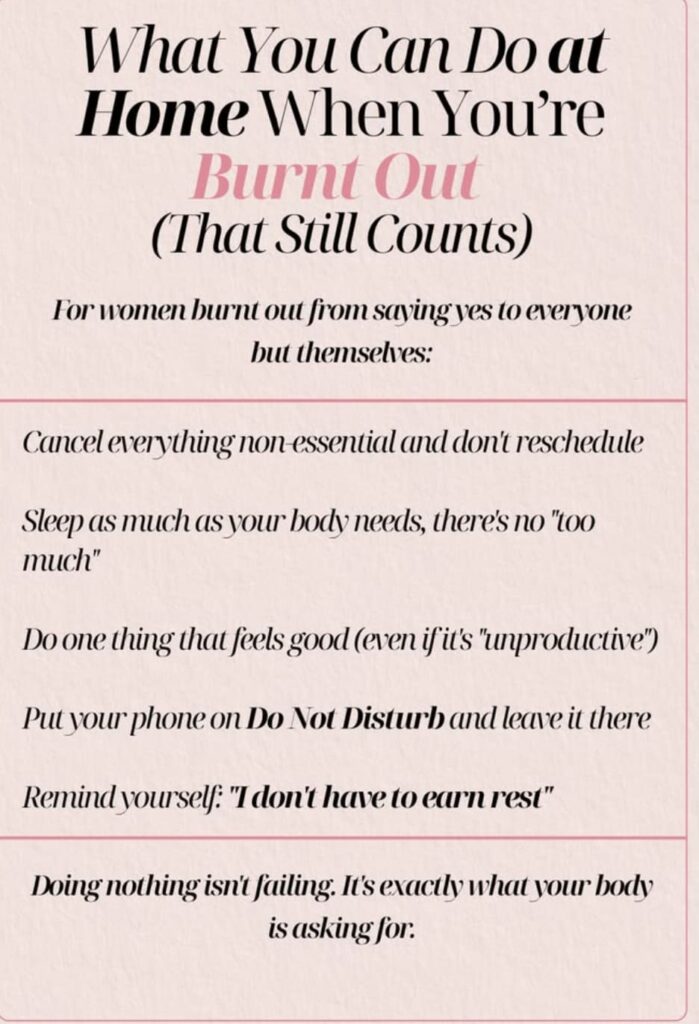
2. Stop Treating Rest as a Reward
Rest is not something you need to earn after completing everything.
There will almost always be another task.
Instead, treat recovery as part of maintaining your ability to function.
Even a short period without work, screens, or household demands can create a psychological boundary between activity and recovery.
3. Create a Household Responsibility Plan
If you live with other adults, discuss responsibilities openly.
Instead of saying:
“I need more help.”
Try:
“Let’s divide the recurring household responsibilities so one person isn’t managing everything.”
Make responsibilities visible.
Include the planning and remembering involved, not only the physical task.
4. Set Work-to-Home Boundaries
If you work from home or frequently bring work home, create a clear stopping point.
For example:
Work ends → notifications off → workspace closed → transition activity → personal time.
A short transition ritual can help your brain recognize that the workday has ended.
5. Protect Your Sleep
A consistent sleep schedule can support emotional regulation and recovery.
Try to avoid turning late-night hours into your only “me time.”
It may feel rewarding initially, but sacrificing sleep for personal time can create another cycle of exhaustion.
What If You Are Already Burned Out?
If you already feel depleted, do not attempt to change your entire life overnight.
Start smaller.
Step 1: Reduce one unnecessary demand
Choose one responsibility that can be postponed, delegated, simplified, or removed.
Step 2: Tell someone
Share what you are experiencing with someone you trust.
Isolation can make overwhelming responsibilities feel even heavier.
Step 3: Rebuild basic routines
Prioritize sleep, regular meals, movement, hydration, and brief periods of genuine recovery.
Step 4: Examine the workload
Ask whether the situation requires lifestyle changes or actual changes in responsibilities.
Step 5: Seek professional support when needed
If symptoms persist or significantly interfere with your daily functioning, speak with a healthcare professional.

Burnout Is Not a Personal Failure
This deserves emphasis.
Feeling overwhelmed does not automatically mean you are lazy, weak, ungrateful, or incapable.
Sometimes exhaustion is information.
It may be telling you that your current demands are greater than your available resources.
The goal is therefore not to become better at tolerating an impossible workload.
The goal is to create a healthier balance between demands, support, boundaries, and recovery.
Frequently Asked Questions
What are the signs of burnout at home?
Common signs can include persistent exhaustion, irritability, emotional detachment, reduced motivation, difficulty concentrating, sleep problems, and feeling overwhelmed by ordinary responsibilities.
Can housework cause burnout?
Housework alone does not automatically cause burnout. However, continuous household demands combined with caregiving, employment, relationship responsibilities, financial stress, and insufficient recovery can contribute to prolonged stress and exhaustion.
Why do I feel burned out after doing nothing?
Feeling exhausted despite having free time can occur for several reasons, including chronic stress, poor sleep, anxiety, depression, physical health conditions, or accumulated mental load. Persistent symptoms deserve professional evaluation.
How can women prevent burnout at home?
Start by identifying the biggest sources of workload, sharing responsibilities, setting boundaries, protecting sleep, scheduling genuine recovery, and seeking support when responsibilities become difficult to manage alone.
Is burnout the same as depression?
No. Burnout and depression can share symptoms such as exhaustion, low motivation, and difficulty concentrating, but they are not the same condition. A healthcare professional can help distinguish between them.
When Should You Seek Professional Help?
Consider speaking with a qualified healthcare professional if exhaustion or emotional difficulties:
- Continue for an extended period
- Interfere with work or relationships
- Affect sleep or appetite
- Make everyday responsibilities difficult
- Cause persistent hopelessness
- Lead to thoughts of self-harm or suicide
If you feel unsafe or are experiencing a mental health emergency, seek immediate local emergency or crisis support.