






By mindnesto Editorial Team · Updated June 2026 · 11 min read
Reviewed for accuracy — sources cited from NHS, NIH, Nutrition Reviews, Human Phenotype Project 2026 and peer-reviewed research
Most mental health content treats sleep, diet, and daily routine as three separate topics. You read an article about sleep. Then you read one about nutrition. Then one about morning routines. Each makes sense in isolation. None of them tells you the most important thing: these three systems do not operate independently. They form a single, deeply interconnected biological trinity — and your mental health is largely determined by how well they align with each other.
Here is what the 2026 research now confirms with striking clarity. A landmark analysis from the Human Phenotype Project — using more than 4,700 person-nights of synchronised dietary and physiological measurements — found that day-to-day variation in nutritional intake and timing directly influences next-night sleep duration, continuity, and emotional balance. Not over weeks or months. The previous day’s food choices shape that night’s sleep architecture. And that sleep architecture then shapes the following day’s food choices, stress response, and cognitive function.
This is the trinity. Each element feeds the others — in both directions. Break one and you destabilise all three. Align all three and you create a biological foundation for mental health that no single intervention can replicate.
This guide covers the science behind all three systems and gives you a practical, daily framework that puts them to work together.
We have linked this to our in-depth sleep optimization guide, our eating habits and mental health guide, and our morning anxiety guide — because each provides the deep dive that this integrated overview introduces.
Note: This article is for informational and educational purposes. Significant mental health challenges alongside these lifestyle factors may warrant professional support. Speak with your GP if you are concerned.
The Biological Trinity — Why Sleep, Diet and Routine Are One System
Every cell in your body runs on a biological clock. Your circadian system — the network of internal clocks that governs nearly every physiological process — does not just regulate your sleep-wake cycle. It coordinates your metabolic function, immune response, hormonal rhythms, gut microbiome activity, and neurotransmitter production across a 24-hour cycle.
Your daily routine determines whether these clocks stay synchronised or fall into conflict. Research published in Nutrients confirms that unbalanced nutrition and irregular meal timing patterns — especially in our modern 24/7 society — are risk factors for circadian disruptions that affect metabolism, neurological function, immune response, and mental health simultaneously.
This trinity concept is not a wellness abstraction. It is hard biology — and understanding it makes sense of why treating any one element in isolation produces limited results.
Chrono-Nutrition — The 2026 Science No Competitor Is Covering
Chrono-nutrition is the emerging scientific discipline that studies the relationship between meal timing and biological rhythms. Research from OneOP published in February 2026 summarises the bidirectional relationship clearly: feeding is a resetting and entraining cue for the circadian clock, while sleep patterns influence eating behaviour, diet quality, and total energy intake in return.
In practical terms, this means that when you eat matters as much as what you eat for mental health outcomes. Irregular meal timing disrupts circadian clocks independently of calorie or nutrient content. Consistent meal timing — eating at roughly the same times daily — sends a powerful entraining signal to your peripheral circadian clocks, supporting metabolic stability, gut health, and the hormonal rhythms that directly underpin mood and anxiety regulation.
Part 1 — Sleep and Mental Health: The Foundation Everything Rests On
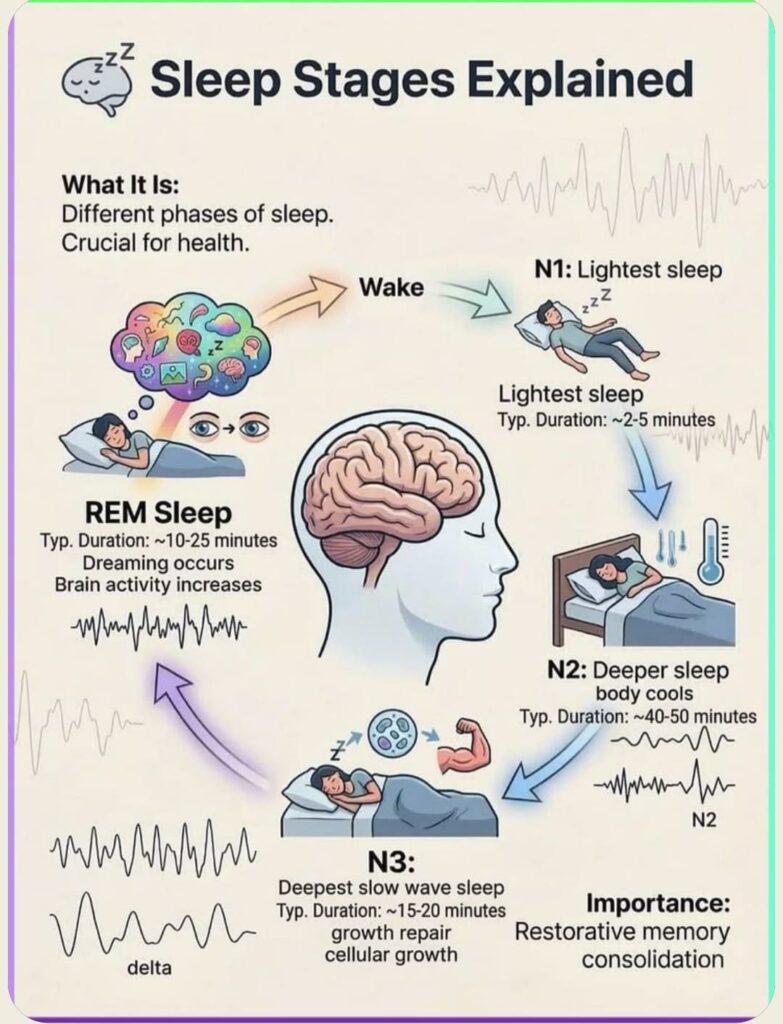
Sleep is the element of the trinity where the mental health consequences of disruption are most immediate and most severe. Dr. Matthew Walker of UC Berkeley has demonstrated comprehensively that sleep deprivation increases amygdala reactivity by 60%, impairs prefrontal cortex function, disrupts cortisol rhythms, and reduces the emotional processing that REM sleep performs.
However, most sleep guidance treats sleep as a standalone behaviour to be optimised in isolation. The chrono-nutrition research changes that framing completely.
How Diet Shapes Your Next Night’s Sleep
The Human Phenotype Project analysis, published as a preprint in February 2026 in medRxiv, is the most comprehensive evidence yet that your dietary choices directly determine your next night’s sleep. Researchers systematically evaluated how prior-day variation in nutritional intake and timing influences next-night sleep duration, continuity, staging, and physiology across more than 4,700 person-nights.
Their findings align with the mechanistic research on nutrition and sleep published in PMC, which identifies the gut microbiome, melatonin precursors, and GABA-modulating nutrients as the primary pathways through which diet influences sleep architecture.
The key dietary factors that shape sleep quality:
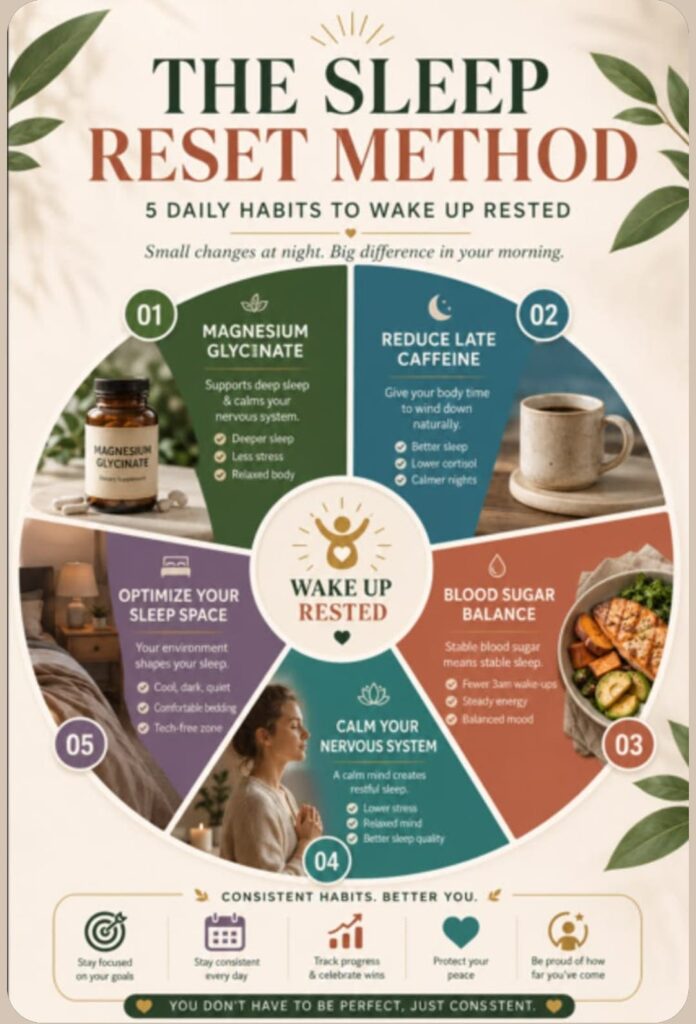
- Tryptophan — the amino acid precursor to both serotonin and melatonin. Found in turkey, eggs, dairy, oats, and bananas. Higher evening tryptophan availability supports faster sleep onset and deeper sleep
- Magnesium — binds to GABA receptors in the brain, producing direct calming effects. Research published in Nutrition Reviews confirms magnesium’s role in both melatonin regulation and sleep quality
- Glycine — an inhibitory amino acid found in collagen-rich foods and supplements that lowers core body temperature and improves sleep quality. A 3g dose before bed shows consistent benefit in research
- Mediterranean dietary patterns — consistently associated with better sleep quality and lower insomnia risk across multiple population studies
Meal Timing and Your Sleep Architecture
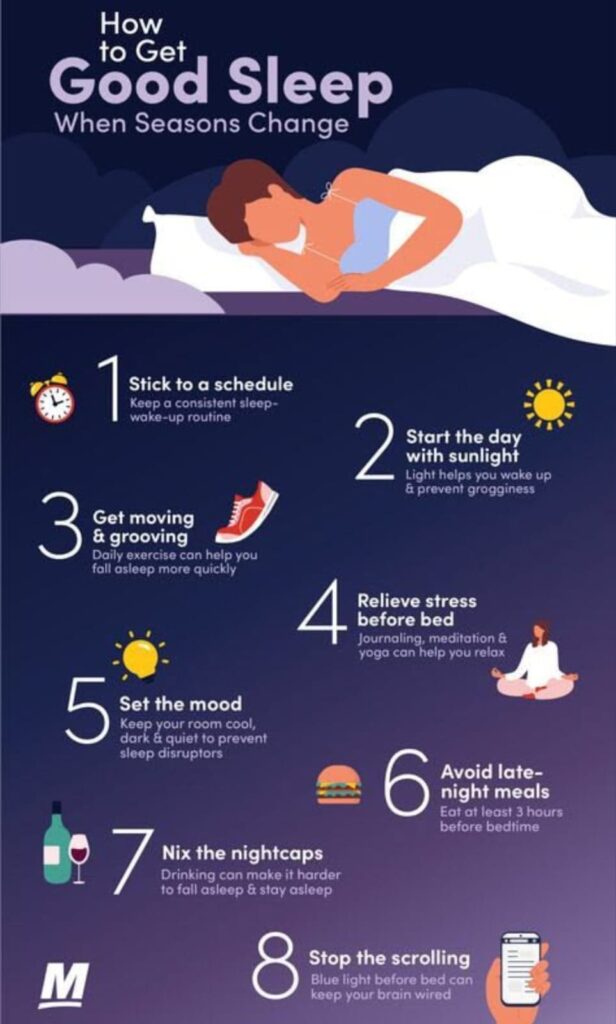
A 2026 clinical trial — CHRONO-MED, registered with ClinicalTrials.gov (NCT07339592) — is actively evaluating how last meal composition and timing affect sleep quality and circadian gene expression. Its preliminary framework aligns with existing evidence: eating the last substantial meal 3–4 hours before your target sleep time allows core body temperature to fall appropriately for sleep onset.
Eating within 90 minutes of bedtime raises core body temperature through thermogenic digestion, delays sleep onset, and fragments the early sleep cycles where slow wave sleep — the most restorative phase — is most concentrated.
Part 2 — Diet and Mental Health: What Your Brain Eats Every Day
Your brain consumes approximately 20% of your total caloric intake despite representing only 2% of your body weight. Every mood, every thought, every emotional regulation attempt, every stress response — all depend on the raw materials your diet provides. Yet most mental health advice treats nutrition as a lifestyle add-on rather than a primary determinant.
Research published in Frontiers in Neuroscience in February 2026 confirms that a healthy diet and robust circadian rhythms reinforce each other: individuals with consistent daily routines and sleep patterns tend to make better dietary choices, while a nutritious diet supports good sleep and the energy to maintain consistent activity rhythms.
The Gut-Brain Axis and Your Daily Mental Health
Your gut produces approximately 90% of your body’s serotonin — yet that fact appears in almost no daily routine or diet-mental health guidance. Professor Tim Spector of Kings College London has demonstrated through large-scale microbiome research that gut bacteria diversity directly influences neurotransmitter production, mood regulation, and stress response.
Daily dietary choices that support microbiome diversity — 30 different plant foods per week, fermented foods, prebiotic-rich vegetables — maintain the gut environment that produces the neurotransmitters underlying your mental health every day. Disrupting this with high-sugar, ultra-processed foods reduces microbiome diversity measurably within days, with corresponding impacts on mood and anxiety.
Chrono-Nutrition Principles for Daily Mental Health
Implementing chrono-nutrition principles in your daily routine produces mental health benefits that dietary quality alone cannot achieve.
Evidence-based chrono-nutrition daily routine:
- Eat breakfast within 60–90 minutes of waking — stabilises cortisol patterns for the day and prevents the blood sugar drops that generate anxiety-like symptoms
- Eat your largest meal mid-day rather than late evening — aligns with circadian metabolic peaks and supports better sleep quality
- Finish eating 3–4 hours before your target sleep time — allows core temperature reduction and prevents sleep architecture disruption
- Maintain consistent meal timing daily — the circadian entraining effect of consistent meal timing may rival that of morning light in anchoring your biological clocks
- Avoid caffeine after 1pm — given its 5–7 hour half-life, afternoon caffeine maintains the cortisol elevation that disrupts sleep and worsens next-day mood and anxiety
Part 3 — Daily Routine and Mental Health: The Architecture of Wellbeing
A consistent daily routine is not a productivity strategy. It is a biological necessity. Your circadian system requires external cues — called zeitgebers, or time-givers — to remain synchronised. The three most powerful zeitgebers are morning light, food timing, and physical activity timing. Your daily routine determines whether your brain receives those cues at consistent times or at unpredictable ones.
Social jet lag — the discrepancy between your biological clock and the social schedule you maintain — is one of the most underrecognised mental health disruptors of modern life. Research published in Current Biology found that even one to two hours of social jet lag per week significantly increases depression risk, fatigue, and metabolic disruption independently of total sleep quantity.
Building a Mental Health Daily Routine — The Evidence-Based Framework
An effective mental health daily routine does not require radical life change. It requires consistent anchoring of the biological cues that your circadian system needs to maintain synchrony. James Clear’s framework from Atomic Habits provides the habit architecture — small, consistent behaviours stacked deliberately — while the chrono-biology provides the biological rationale.
Morning anchor routine for mental health (first 90 minutes after waking):
- Wake at a consistent time — the most powerful single circadian anchor available
- Get 5–10 minutes of outdoor natural light within 30 minutes of waking — sets the circadian timer for cortisol and melatonin release as researched by Dr. Andrew Huberman of Stanford University
- Eat breakfast within 60–90 minutes — stabilises blood sugar and cortisol simultaneously
- Delay caffeine until 90 minutes after waking — allows the natural cortisol peak to resolve before adding stimulant activation
- Brief physical movement — even 10 minutes of gentle movement shifts the nervous system from sleep mode to alert-calm
Mid-day routine anchors for mental health:
- Eat your largest meal at lunchtime where possible
- Take a genuine 20-minute lunch break completely away from your workstation
- Brief outdoor exposure for 5–10 minutes after eating — improves post-meal blood glucose regulation and provides a secondary circadian light signal
Evening routine anchors for mental health:
- Reduce screen brightness and overhead lighting from 8pm onward
- Eat your last meal by 7–8pm for a 10–11pm sleep target
- Introduce a consistent wind-down routine — the same sequence of activities each evening trains the nervous system that sleep is approaching
- Maintain your target sleep time within 30 minutes every day, including weekends
The Mental Health Cost of Routine Inconsistency
Research cited in Nutrients confirms that people with more irregular meal routines have significantly higher risks of metabolic syndrome, poor sleep, and — importantly for mental health — circadian disruptions that affect neurological, immune, and endocrine functions.
The most common routine inconsistency in Tier 1 countries is the weekend schedule shift — sleeping significantly later, eating at different times, and reducing physical activity on Saturday and Sunday. Even a 2-hour shift in sleep and meal timing over a weekend produces measurable circadian disruption — the social jet lag — that takes 2–3 days of the following week to resolve.
Putting the Trinity Together — A Sample Mental Health Week
Here is what an evidence-based sleep-diet-routine trinity looks like in practice:
Consistent daily anchors (every day including weekends):
- Wake at the same time ± 30 minutes
- Morning light within 30 minutes
- Breakfast within 90 minutes of waking
- Last meal 3–4 hours before sleep target
- Bedtime within 30 minutes of your target
Weekly dietary foundations:
- 30 different plant foods across the week
- Oily fish twice weekly for omega-3
- Fermented food daily — yoghurt, kefir, kimchi
- Magnesium-rich foods each evening — dark leafy greens, pumpkin seeds, dark chocolate
- Caffeine eliminated by 1pm
Weekly routine investments:
- 4–5 outdoor walks of 20–30 minutes
- 3 genuinely restorative activities — creative, social, or nature-based
- One complete rest day with no performance demands
This framework requires no radical intervention. It requires consistency. And consistency — applied to all three elements simultaneously — produces compounding mental health returns that no single intervention matches.
Sleep, Diet and Routine Key Takeaways
The science-backed mental health trinity:
- Sleep, diet, and daily routine form one interconnected biological system — not three separate categories
- Chrono-nutrition — aligning meal timing with your circadian clock — produces mental health benefits beyond dietary quality alone
- Day-to-day dietary variation directly shapes next-night sleep — established by the 2026 Human Phenotype Project analysis of 4,700 person-nights
- Consistent meal timing is a circadian entraining cue as powerful as morning light exposure
- Your gut produces 90% of your body’s serotonin — daily food choices directly influence mood regulation
- Social jet lag — weekend schedule shifts of 1–2 hours — produces measurable mental health disruption across the following week
- The most powerful morning routine anchors are: consistent wake time, morning light, breakfast within 90 minutes, and delayed caffeine
- Evening routine anchors that most support mental health: reduced light after 8pm, last meal by 7–8pm, consistent wind-down sequence
- The trinity compounds — aligning all three simultaneously produces benefits unavailable from any single element alone
A Word From mindnesto-
At MindNesto, we believe that mental health is built — not just managed. And the building materials are the things you do every single day: when you wake, what you eat, when you eat it, how you move, and when you sleep. These daily inputs do not produce dramatic overnight change. They produce compounding, structural improvement in the biological systems that underlie your mood, anxiety, resilience, and cognitive clarity.
The most important mental health tool most people have is the one they overlook — their daily routine. Not an elaborate one. A consistent one. 💙
→ Read next: Sleep Optimization — 12 Science-Backed Strategies
→ Also read: Eating Habits and Mental Health — How Your Diet Shapes Your Mind
Frequently Asked Questions
How does sleep affect mental health?
Sleep affects mental health through multiple simultaneous biological mechanisms. During slow wave sleep, the brain clears toxic metabolic byproducts of stress through the glymphatic system. During REM sleep, it processes emotional memories and recalibrates amygdala reactivity. Research by Dr. Matthew Walker of UC Berkeley demonstrates that even partial sleep restriction increases amygdala reactivity by 60%, directly worsening anxiety and emotional dysregulation the following day. Chronic sleep deficiency is strongly linked to increased risks of depression, anxiety, burnout, and cognitive decline.
What is chrono-nutrition and how does it affect mental health?
Chrono-nutrition is the scientific discipline studying how meal timing interacts with biological circadian rhythms to affect health outcomes. Research published in Nutrients confirms that the timing of food intake — not just its composition — acts as a resetting cue for peripheral circadian clocks throughout the body. Irregular meal timing disrupts circadian function in ways that affect neurological, immune, and hormonal systems — with direct mental health consequences. Consistent meal timing at biologically appropriate times supports the circadian synchrony that underlies stable mood, reduced anxiety, and better sleep quality.
What is the best daily routine for mental health?
The most evidence-based daily routine for mental health anchors the three most powerful circadian zeitgebers consistently: morning light exposure within 30 minutes of waking, consistent meal timing starting with breakfast within 90–minutes of waking, and a consistent sleep and wake time maintained within 30 minutes every day including weekends. Layering in daily outdoor movement, reduced evening light exposure, and a consistent pre-sleep wind-down routine creates the complete daily structure that the circadian system needs to maintain the synchrony underlying stable mental health.
How does gut health affect mental health daily?
Your gut produces approximately 90% of your body’s serotonin, and your gut microbiome directly influences neurotransmitter production, mood stability, and stress reactivity. Research by Professor Tim Spector of Kings College London demonstrates that gut bacteria diversity is directly linked to mental health outcomes — with ultra-processed foods reducing microbiome diversity measurably within days. Daily dietary habits that support gut diversity — 30 different plant foods weekly, fermented foods, prebiotic-rich vegetables — create and maintain the gut environment that produces the neurotransmitters underlying your mental health every single day.
Sources and External References
- Human Phenotype Project — Diet and Sleep 2026
- OneOP — Nutrition and Sleep 2026
- Nutrients — Chrono-Nutrition and Circadian Rhythm
- PMC — Nutritional Elements in Sleep
- Nutrition Reviews — Dietary Protocols for Sleep
- Frontiers in Neuroscience — Melatonin Nutrition Aging 2026
- NHS — Sleep and Mental Health
- NHS — Eatwell Guide
- WHO — Nutrition and Health
- Mind UK — Food and Mood
- NHS Talking Therapies
- ADAA — Anxiety Resources
- CAMH Canada
- Beyond Blue Australia



Your content is so fresh and informative, it helped me cope with my issues a lot!