






By mindnesto Editorial Team · Updated June 2026 · 10 min read
Sources cited from Journal of Applied Psychology, Administrative Science Quarterly, APA and peer-reviewed social neuroscience research
Most people approach professional networking backwards. They walk into a room full of strangers, hand out business cards, rehearse their elevator pitch, and then wonder why none of it leads anywhere meaningful. The problem is not their personality or their industry. The problem is that they are treating a fundamentally human, neurologically-driven process as a transaction.
Knowing how to network professionally starts with understanding what actually happens in your brain when genuine professional connection forms — because that understanding changes everything about how you approach it.
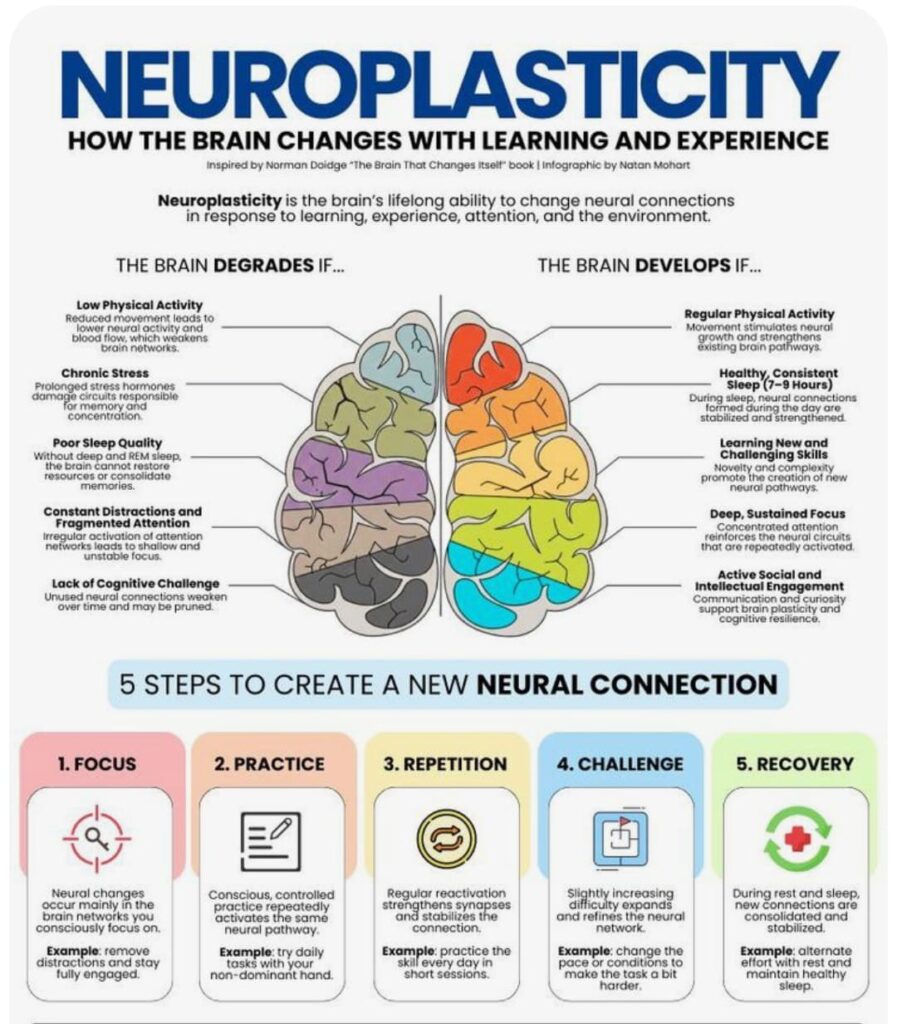
Networking activates the prefrontal cortex, which handles planning and decision-making, the amygdala, which processes emotional responses and social anxiety, and the ventral striatum, which generates feelings of reward and motivation during positive social encounters. When networking feels effortful, exhausting, or fake, it is often because those three systems are working against each other rather than together. FasterCapital
This guide gives you the complete picture — the neuroscience, the social psychology, and 12 specific strategies that work whether you are the most extroverted person in the room or the most quietly introverted one.
We have connected this to our guides on emotional intelligence mental health and social anxiety vs shyness — because the psychological skills that underlie effective networking and those that underlie social confidence and emotional awareness are the same skills, applied in a professional context.
Note: This article is for informational and educational purposes. If networking anxiety significantly impairs your professional life, please consider speaking with a therapist who specialises in social anxiety.
What Professional Networking Actually Is — And Why Most People Get It Wrong
Professional networking is the deliberate cultivation of mutually beneficial relationships that create value for everyone involved over time. That definition matters because it contains three words most networking advice ignores: mutually, beneficial, and time.
Networking is not collecting contacts. It is not attending events to distribute business cards. It is not connecting on LinkedIn and then never speaking again. These activities produce the feeling of networking without any of its substance — and they explain why so many intelligent, capable people believe they are bad at it when they are simply doing the wrong thing.
The most important research on professional networking comes from sociologist Mark Granovetter of Stanford University, whose 1973 paper in American Journal of Sociology — one of the most cited social science papers ever published — introduced the concept of weak ties and transformed how researchers understand professional networks.
Weak Ties Theory — The Most Important Networking Insight You Have Never Heard Of
Granovetter’s research found something deeply counterintuitive. Your close friends and colleagues — your strong ties — rarely help you find new opportunities, new ideas, or new career paths. They inhabit the same information environment as you. They know the same people, move in the same circles, and encounter the same professional opportunities.
Your weak ties — acquaintances, former colleagues, people you met once at a conference, second-degree LinkedIn connections — are where genuine professional opportunity lives. They move in different information environments from yours. They encounter different opportunities, know different people, and can bridge you into worlds your strong ties cannot reach.
This single insight restructures how to network professionally. Rather than deepening existing relationships, effective professional networking deliberately builds bridges to new networks — the weak ties that provide access to information and opportunities your existing circle cannot.
The Dunbar Number — Why Your Network Has a Biological Ceiling
Professor Robin Dunbar of the University of Oxford — whose research on social cognition and network size is among the most influential in social neuroscience — identified that the human brain can maintain meaningful social relationships with approximately 150 people at any one time. Beyond that number, the cognitive load of tracking relationship histories, obligations, and social contexts exceeds what the neocortex can sustain.
This has a critical practical implication for professional networking. Attempting to maintain hundreds of active professional relationships is not a strategy — it is a recipe for superficiality across all of them. The most effective professional networks are not the largest ones. They are the most strategically diverse ones — spanning different industries, geographies, career stages, and functional domains — maintained at a depth that the Dunbar constraint allows.
The Neuroscience of Networking — Why Connection Feels Rewarding or Threatening
Understanding what your brain does during professional networking explains both why it sometimes feels effortless and why it sometimes feels overwhelming.
In networking terms, oxytocin is released during genuine, warm human interaction — when someone makes real eye contact, listens attentively, asks a thoughtful follow-up question, or shares something personal and appropriate. This is why authentic networking feels qualitatively different from transactional networking. The genuine version activates oxytocin. The transactional version does not — and both parties can feel the difference immediately.
Dopamine and the Reward of New Connection
Dopamine — the brain’s reward chemical — is released during pleasurable social experiences, reinforcing the desire to connect with others. Alongside oxytocin, positive social interactions increase the release of dopamine and endorphins, creating feelings of pleasure and satisfaction. CP Mental Wellbeing
Every meaningful new professional connection activates this dopamine circuit. This is why meeting someone genuinely interesting at a conference produces a natural energy that cold emails do not. Effective networking deliberately creates the conditions for this dopamine activation — which means engineering encounters that feel genuinely discovery-like rather than obligatory.
Oxytocin and the Trust Foundation
Oxytocin plays an important role in facilitating network-wide cooperation in human societies by increasing individual cooperation, mitigating noncooperation motives, and facilitating the enforcement of cooperative norms — as well as fostering interpersonal bonding and synchronisation. PubMed
In networking terms, oxytocin is released during genuine, warm human interaction — when someone makes real eye contact, listens attentively, asks a thoughtful follow-up question, or shares something personal and appropriate. This is why authentic networking feels qualitatively different from transactional networking. The genuine version activates oxytocin. The transactional version does not — and both parties can feel the difference immediately.
The Amygdala and Networking Anxiety
For many people — particularly introverts and those with social anxiety — professional networking activates the amygdala’s threat response before the ventral striatum’s reward response has a chance to engage. The anticipation of judgment, rejection, or awkward silence feels physically dangerous to the amygdala even when the rational prefrontal cortex knows it is not.
Understanding this neurologically removes the self-blame that networking anxiety so often generates. The anxiety is not weakness. It is a misfiring biological alarm system — and it responds to the same gradual exposure and cognitive reframing strategies that reduce other forms of social anxiety. Our social anxiety guide covers this in clinical depth.
The Give-First Principle — The Psychology That Changes Everything
Before exploring specific networking tactics, one psychological principle underlies all of them and explains why some people build remarkable professional networks while others do not.
Adam Grant of the Wharton School at the University of Pennsylvania — whose research on professional giving and taking is among the most replicated in organisational psychology — found that the most successful professionals across virtually every industry are givers: people who consistently contribute value to their networks without immediate expectation of return.
Grant’s research, published in Administrative Science Quarterly and subsequently in his book Give and Take, demonstrates that givers build the deepest, most durable, and most mutually beneficial professional networks — and that they experience the highest long-term career success as a result.
Combined with Robert Cialdini’s principle of reciprocity — from his landmark work Influence — this gives professional networking its most important strategic foundation. People feel a genuine, neurologically-driven compulsion to return value to those who have provided value to them. Giving first is not just ethically preferable. It is strategically superior to any other networking approach.
Practical give-first networking:
- Share a relevant article, introduction, or resource with someone before asking anything of them
- Offer a specific, genuine compliment about their work before requesting their time
- Connect two people in your network who would benefit from knowing each other — with no agenda beyond the connection itself
- Volunteer your expertise, feedback, or experience where it is genuinely useful
12 Science-Backed Strategies to Network Professionally
1. Reframe Networking as Curiosity — Not Performance
The single biggest shift that transforms professional networking is cognitive — reframing the goal from impressing people to genuinely learning from them. Curiosity activates the brain’s exploration system, which produces a fundamentally different physiological state than performance anxiety.
Before any networking interaction, replace the question “What will they think of me?” with “What can I genuinely learn from this person that I could not learn elsewhere?” This shift deactivates the amygdala’s social threat response and activates the dopamine-driven exploration circuits that make conversation feel natural and energising.
2.Prioritise Depth Over Volume in Every Interaction
Research on professional relationship quality consistently shows that one genuinely meaningful conversation produces more lasting network value than ten superficial introductions. A 20-minute conversation in which both people feel genuinely heard and curious about each other creates a relational foundation that email threads, LinkedIn connections, and business card exchanges simply cannot replicate.
At any networking event or professional gathering, deliberately aim to have two or three genuine conversations rather than twenty brief exchanges. The weak ties theory does not argue for superficial connections — it argues for connections that bridge different networks, maintained at genuine human depth.
3.Master the Networking Question That Opens Everything
The most effective single networking question is also the simplest. “What are you working on right now that excites you?” sits at the intersection of curiosity and genuine interest — and it reliably produces more animated, authentic conversation than “What do you do?” ever manages.
This question works neurologically because it invites the other person to access their dopamine reward system — talking about something they are genuinely excited about activates the same neural circuits as the excitement itself. You become associated with that positive neurological state. That association is the foundation of a genuinely memorable professional impression.
4.Use Informational Interviews as Your Highest-Value Networking Tool
An informational interview — a 20–30 minute conversation with someone whose career, company, or expertise you genuinely want to learn from — is consistently identified by career researchers as the single most effective professional networking activity available.
Informational interviews work for three neuroscientific reasons. First, they activate the give-first principle — you are asking for knowledge, not favours, which feels less threatening to the other person. Second, they create genuine conversational depth in a structured timeframe. Third, people who teach or share expertise experience a measurable dopamine activation from doing so — making informational interviews pleasant for both parties.
How to request one effectively: “I am genuinely interested in your path into [their field/role]. Would you be willing to share 20 minutes of your experience with me? I am not asking for a job — I am trying to learn from someone who has done what I am hoping to do.”
5.Build Your LinkedIn Presence as a Networking Foundation
LinkedIn remains the most important professional networking platform in 2026 — but most people use it passively rather than as an active networking tool. The distinction matters significantly.
Active LinkedIn networking for professionals:
- Send personalised connection requests that reference something specific — an article they wrote, a talk they gave, a mutual connection who spoke highly of them
- Comment thoughtfully on posts from people in your target network — genuine, specific comments that add to the conversation rather than simply agreeing
- Share content that demonstrates your expertise and perspective — consistently and without expectation of immediate response
- Use LinkedIn’s search function to identify people with specific experience relevant to your current professional challenges, then reach out with a specific, curious question
6.Follow Up Within 24 Hours — Every Time
The follow-up is where most professional networking investments are lost. Research on human memory and social impression formation shows that the emotional impression of a new connection is most vivid within 24 hours of the initial encounter — and that a warm, specific follow-up during that window activates the oxytocin-driven trust circuit that cements a new professional relationship.
An effective follow-up message:
- Reference something specific from your conversation — a detail that demonstrates you were genuinely listening
- Offer something immediately — the article you mentioned, the introduction you suggested, the resource they asked about
- Suggest a specific next interaction — brief, low-commitment, and genuinely useful to them
Generic follow-ups produce generic results. Specific follow-ups produce genuine professional relationships.
7.Attend Events With a Single Specific Goal
Walking into a networking event without a specific goal activates performance anxiety because your brain has no success criterion — it defaults to “impress everyone,” which the amygdala correctly identifies as an impossible and therefore threatening target.
Instead, set one specific, achievable networking goal before every event: “I will have one genuinely curious conversation with someone from a different industry than mine.” That specificity gives your brain a clear, manageable target — which shifts the neurological experience from threat to challenge.
8.Network Upward, Laterally, and Downward Simultaneously
Most professional networking advice focuses exclusively on networking with people more senior or more influential than you. This produces an unbalanced network that lacks diversity, reciprocity, and genuine relationship quality.
The most strategically powerful professional networks span all directions. Upward connections provide mentorship, sponsorship, and access to senior opportunities. Lateral connections — peers in different organisations, industries, or functions — provide the weak tie bridges that Granovetter’s research identifies as the primary source of professional opportunity. Downward connections — mentoring people earlier in their careers than you — activate Adam Grant’s giving principle and produce some of the most loyal, energised relationships in any professional network.
9.Create Your Own Networking Opportunities
The most effective professional networkers do not wait for events — they create them. Hosting a small dinner, a virtual roundtable, a professional book club, or a monthly informal gathering of people with shared interests positions you as a connector rather than a seeker. That positioning fundamentally changes the relational dynamics of every networking interaction.
Research on social capital — the body of work pioneered by Robert Putnam of Harvard University — confirms that people who create shared spaces and shared experiences build denser, more reciprocal, and more durable professional networks than those who simply participate in existing ones.
10.Use the Specific Introvert Protocol
Networking as an introvert requires a different approach — not a lesser one. Introverts consistently build deeper, more lasting professional relationships than extroverts when they play to their strengths rather than attempting to replicate extrovert behaviour.
The introvert professional networking protocol:
- Attend smaller events rather than large ones — quality of connection is higher, sensory overload is lower
- Prepare two or three genuinely curious questions before any networking interaction
- Arrive early rather than late — early arrivals have one-to-one conversations rather than trying to break into established groups
- Follow up more thoroughly than extroverts — introverts’ strongest networking returns come from the post-event relationship building that extroverts often neglect
- Use written communication as a primary networking medium — thoughtful emails, LinkedIn messages, and written introductions play directly to introvert strengths
11.Maintain Your Network Consistently — Not Just When You Need It
The most common professional networking mistake is treating it as something you do when you need something — a job, a client, a reference. Networks built on need feel transactional to everyone involved. Networks built on consistent, low-level care and attention feel genuine — because they are.
Consistent network maintenance:
- Send one genuinely personalised message per week to someone in your network — referencing something specific to them, with no ask attached
- Congratulate people on genuine milestones — not generic LinkedIn prompts, but specific acknowledgments that show you noticed
- Share relevant resources, opportunities, or introductions as you encounter them throughout your normal professional life
- Check in with people you have not spoken to in 3–6 months — briefly, warmly, and without agenda
12.Measure Quality Over Quantity in Every Network Audit
Once per quarter, conduct a brief professional network audit. Review your recent professional interactions and ask three questions. Who did I genuinely help this quarter? Who helped me — and did I express genuine gratitude? Which relationships have I neglected — and does that neglect need addressing?
This audit practice keeps your networking aligned with the give-first principle, identifies relationship drift before it becomes permanent, and maintains the intentionality that separates genuinely productive professional networks from large, inactive contact lists.
How to Network Professionally — Key Takeaways
The complete evidence-based networking framework:
- Weak ties — acquaintances and second-degree connections — provide more career opportunity than strong ties, per Granovetter’s landmark research
- The Dunbar number (150) means network quality and diversity matter more than size
- Oxytocin, dopamine, and the ventral striatum drive the neurological reward of genuine professional connection — authentic networking activates them, transactional networking does not
- Give first — Adam Grant’s research confirms that givers build the deepest, most successful professional networks
- Reciprocity (Cialdini) means giving creates a genuine neurological compulsion to return value — making it strategically superior to asking
- Informational interviews are the single highest-value networking activity available
- Specific follow-ups within 24 hours cement new connections while the oxytocin impression is freshest
- Introverts network most effectively by playing to their strengths — depth, preparation, and post-event follow-through
- Network in all three directions — upward, laterally, and downward — for the most durable social capital
- Maintain your network consistently and without agenda — the best time to build a professional network is before you need it
A Word From mindnesto
At mindnesto, we believe that professional networking — when approached with genuine curiosity, authentic generosity, and a real interest in other people — is one of the most rewarding and mentally nourishing professional activities available.
The anxiety, the awkwardness, and the transactional discomfort that most people associate with networking are not inevitable features of the activity. They are the predictable consequences of approaching it the wrong way. Approach it the right way — with the neuroscience, the psychology, and the give-first mindset this guide provides — and it becomes something entirely different.
You are not networking to impress people. You are networking to find your people. 💙
→ Read next: Emotional Intelligence and Mental Health
→ Also read: Social Care Mental Health — Building Genuine Human Connection
Frequently Asked Questions
How do I start networking professionally with no experience?
Start with informational interviews — request 20-minute conversations with people whose career paths interest you, with no ask beyond their experience and perspective. This approach works at any career stage because it activates the give-first principle and feels genuinely low-stakes for both parties. LinkedIn’s search function and alumni networks from your university or former employers are the two most accessible starting points.
How do introverts network effectively?
Introverts network most effectively by playing to their natural strengths — depth of conversation, thoughtful preparation, and thorough follow-up — rather than attempting to replicate extrovert behaviour. Smaller gatherings, one-to-one informational interviews, written networking through LinkedIn and email, and arriving early to events all suit introvert strengths. Research consistently shows that introverts build deeper, more durable professional relationships than extroverts when they stop apologising for their style and start leveraging it.
What should I say when networking?
The single most effective opening question is “What are you working on right now that excites you?” It immediately creates genuine, animated conversation by inviting the other person to access their enthusiasm rather than their professional biography. Follow it with genuine, specific curiosity — follow-up questions that show you were actually listening to what they said.
How often should I reach out to my professional network?
Research on relationship maintenance suggests that professional relationships require contact roughly every 3–6 months to remain warm and active. Sending one genuinely personalised message per week to different people in your network — brief, specific, and with no ask attached — maintains a surprisingly large network at genuine warmth with minimal time investment.
Why does networking feel fake and how do I fix it?
Networking feels fake when it is transactional — when both parties are performing rather than genuinely connecting. The fix is reorienting your networking goal from self-promotion to genuine curiosity and contribution. When you approach every professional interaction with the question “How can I genuinely help or learn from this person?” the transactional feeling dissolves — because the interaction is no longer transactional.
Sources and External References
- American Journal of Sociology — Granovetter Weak Ties
- Administrative Science Quarterly — Adam Grant Research
- APA — Social Connection and Wellbeing
- Frontiers in Psychology — Neurobiological Bases of Social Networks
- The Neuroscientist — Oxytocin and Social Networks 2025
- Journal of Applied Psychology
- Harvard Business Review — Networking
- LinkedIn — Professional Networking Research
- Mind UK — Social Wellbeing
- NHS — Social Connection and Mental Health
- ADAA — Social Anxiety at Work
- CAMH Canada
- Beyond Blue Australia