






By mindnesto Editorial Team · Updated June 2026 · 10 min read
Reviewed for accuracy — sources cited from PMC, Global Wellness Institute, APA and peer-reviewed neuroscience research
Here is a statistic that should genuinely surprise you. Research from 2026 shows that only 36% of people demonstrate high emotional intelligence — yet the vast majority of adults believe they are self-aware. That gap between perceived and actual emotional intelligence is not a minor inconvenience. It is one of the most significant — and most correctable — predictors of mental health outcomes, relationship quality, and professional wellbeing available.
Emotional intelligence matters to mental health for one fundamental reason: your ability to identify, understand, and work with your emotions determines almost everything that follows. It determines whether stress escalates into anxiety or resolves through healthy processing. It determines whether conflict deepens or heals. It determines whether difficult emotions pass through your system or accumulate into the chronic patterns that underlie depression, burnout, and relationship breakdown.
The good news is significant. Unlike IQ — which remains relatively stable across a lifetime — emotional intelligence is genuinely developable at any age. Research published in PMC confirms that anyone, at any time in life, can grow their EQ. That single finding changes the conversation entirely.
This guide covers the complete picture — the neuroscience of emotional intelligence, what low EQ looks like in practice, and 10 specific, evidence-based strategies to develop yours. We have also linked this to our guides on how to stop overthinking and healthy boundaries mental health — because EQ, overthinking patterns, and boundary capacity are deeply interconnected systems.
Note: This article is for informational and educational purposes. Significant emotional regulation difficulties that affect daily functioning may benefit from professional therapeutic support alongside self-development.
What Emotional Intelligence Actually Is — The 2026 Definition
Emotional intelligence is the ability to identify, understand, manage, and use emotions effectively — both your own emotions and those of the people around you. First formally defined by psychologists Peter Salovey of Yale University and John Mayer of the University of New Hampshire in 1990, and subsequently popularised by Daniel Goleman in his 1995 landmark book Emotional Intelligence, the concept has since accumulated one of the strongest research bases in applied psychology.
The four-branch model proposed by Salovey and Mayer remains the most scientifically validated framework:
- Perceiving emotions — the ability to recognise emotions accurately in facial expressions, tone of voice, body language, and your own physiological states
- Using emotions — the ability to harness emotional information to facilitate thinking, creativity, and problem-solving
- Understanding emotions — knowing how emotions evolve, interact, and influence behaviour over time
- Managing emotions — regulating your own emotional responses and influencing others’ emotional states effectively
Goleman subsequently adapted this into a five-component model — self-awareness, self-regulation, motivation, empathy, and social skills — which remains widely used in applied and organisational contexts.
What is most important to understand about emotional intelligence is this: it is not about being endlessly positive, suppressing difficult emotions, or always staying calm. Genuine EQ involves full, accurate engagement with emotional reality — including difficult, dark, and uncomfortable emotions — combined with the capacity to respond to that reality skilfully rather than reactively.
EQ vs IQ — What the 2026 Research Actually Shows
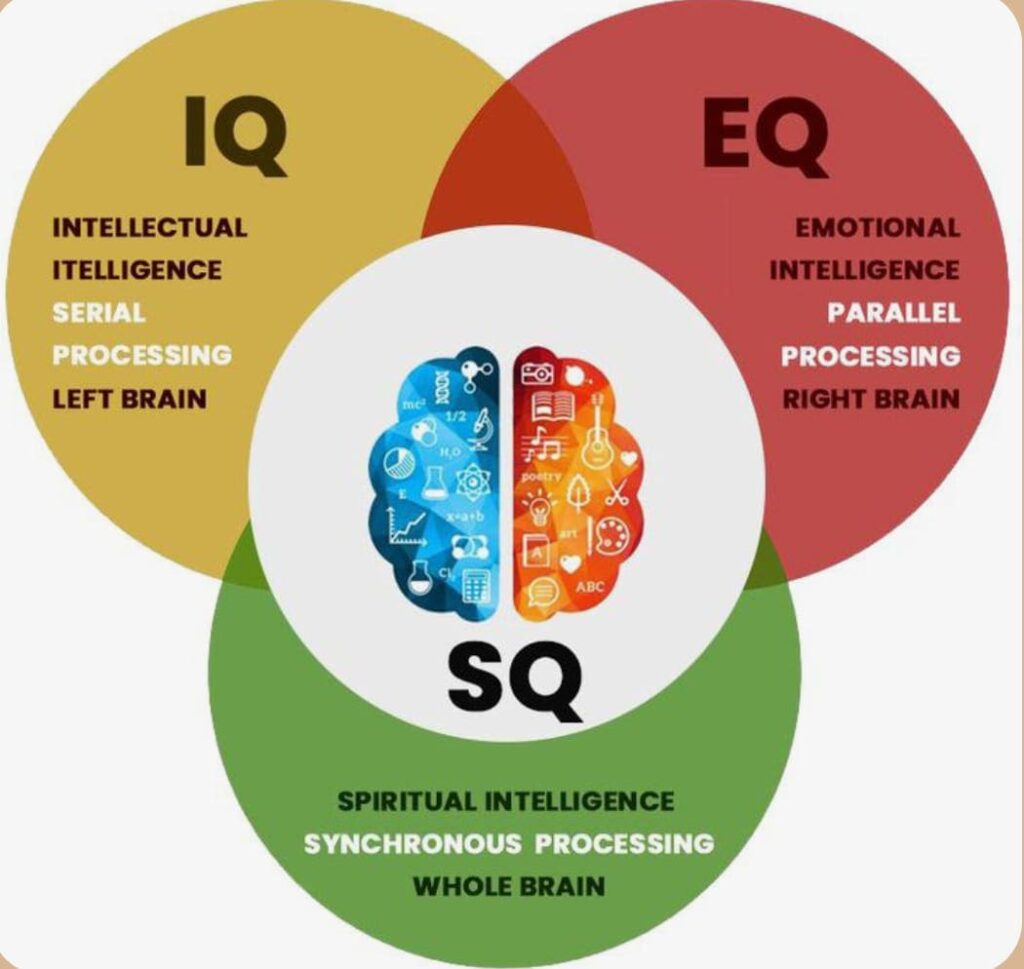
The relationship between EQ and IQ is one of the most frequently misunderstood areas in psychology. EQ and IQ are distinct, largely independent capacities — having high cognitive intelligence does not automatically produce high emotional intelligence, and vice versa.
However, their relative importance for mental health and life outcomes is striking. Research consistently shows that EQ influences job performance more than IQ and is strongly linked to higher earnings, engagement, and leadership effectiveness. More importantly for mental health: studies show that higher EQ leads to lower levels of stress, higher rates of positive emotional states, better health, and greater overall wellbeing — with effect sizes that exceed those of cognitive intelligence across most quality-of-life domains.
The Neuroscience of Emotional Intelligence — What Happens in Your Brain
Understanding the brain science behind emotional intelligence removes it from the abstract world of soft skills and places it firmly in neurobiology — which makes both its importance and its developability far more concrete.
The Amygdala Hijack — When Low EQ Looks Like a Chemical Event
Daniel Goleman introduced the concept of the amygdala hijack — and it remains one of the most practically useful neuroscientific concepts for understanding emotional intelligence.
When your brain perceives an emotional threat — criticism, rejection, conflict, failure — the amygdala fires before the prefrontal cortex has time to process the situation rationally. This produces an immediate emotional reaction — anger, fear, shame, defensiveness — that bypasses considered thought entirely. In moments of amygdala hijack, people say things they later regret, make decisions they would not otherwise make, and experience emotions that feel overwhelming and uncontrollable.
Low emotional intelligence is, in neurological terms, a pattern of frequent, prolonged, and poorly recovered amygdala hijacks. High emotional intelligence involves both a lower threshold for hijack (through better emotional regulation) and a faster, more complete recovery when hijacks do occur.
Neuroplasticity and EQ Development — The 2026 Evidence
The Global Wellness Institute’s Mental Wellness Trends for 2026 report highlights a profound shift in understanding human brain development — noting that new neuroscience research shows the brain continues to develop and reorganise throughout life in ways that make EQ development genuinely possible at any age.
Specifically, just as physical exercise strengthens muscles, practising emotional intelligence skills strengthens the neural pathways that support emotional regulation, empathy, and decision-making. The neural circuits underlying EQ — particularly in the prefrontal cortex and the anterior cingulate cortex — show measurable structural changes in response to consistent practice. This is neuroplasticity in direct service of emotional development.
Emotional Granularity — The Hidden Key to High EQ
One of the most exciting recent developments in emotional intelligence neuroscience is the work of Dr. Lisa Feldman Barrett of Northeastern University on what she calls emotional granularity — the precision with which a person can identify and label their emotional states.
Research by Barrett and colleagues found that people who can distinguish between fine-grained emotional states — the difference between frustration and disappointment, between anxiety and excitement, between loneliness and boredom — show significantly better emotional regulation outcomes than those who experience emotions in broad, undifferentiated categories like simply “bad” or “stressed.”
The practical implication is powerful: developing a richer emotional vocabulary is not merely a linguistic exercise. It is a genuine neurological intervention. Labelling emotions precisely activates the prefrontal cortex and reduces amygdala activation through the mechanism Matthew Lieberman of UCLA identified as affect labelling — naming an emotional state directly reduces its subjective intensity and physiological activation.
What Low Emotional Intelligence Looks Like in Real Life
Understanding the signs of lower EQ is important — not for judgment, but for accurate self-assessment. The following patterns are common and correctable.
Signs of Lower EQ That Affect Mental Health
- Difficulty identifying your own emotional states — frequently not knowing what you feel, or describing everything as simply “stressed” or “fine”
- Emotional reactions that feel disproportionate — becoming more upset than situations seem to warrant, without understanding why
- Difficulty recovering from emotional setbacks — ruminating for hours or days after conflict, criticism, or disappointment
- Tendency to suppress or dismiss emotions — telling yourself you should not feel what you feel, or pushing through without processing
- Difficulty understanding other people’s emotional states — being frequently surprised by others’ reactions, or struggling to read social situations accurately
- Using avoidance as primary emotional regulation — managing difficult emotions primarily through distraction, busyness, alcohol, or withdrawal
- Difficulty with conflict — either avoiding all conflict at the cost of genuine expression, or escalating quickly into reactive anger
Any of these patterns, when recognised honestly, represents a specific and addressable EQ development opportunity — not a character flaw.
10 Evidence-Based Strategies to Build Emotional Intelligence
1. Build Your Emotional Vocabulary — The Fastest EQ Entry Point
Given Barrett’s findings on emotional granularity, expanding your emotional vocabulary is one of the highest-leverage EQ development activities available. Start with the Feelings Wheel — a publicly available tool that maps hundreds of specific emotional states around a central core — and use it daily.
Each morning or evening, spend two minutes identifying your emotional state as precisely as possible. Not “stressed” but “overextended and under-appreciated.” Not “bad” but “disappointed that the conversation did not go the way I hoped.” This precision practice builds the neural granularity that underpins genuine emotional self-awareness.
2. Practise the Pause — Interrupting the Amygdala Hijack
The single most practical EQ skill is also one of the simplest to describe — and genuinely challenging to apply consistently. It is the pause: the deliberate gap between emotional stimulus and response that allows the prefrontal cortex to come back online before you react.
When you notice an emotional reaction beginning — tightening in the chest, rising heat in the face, the impulse to speak or withdraw — pause for 10 seconds. Breathe. Ask: “What am I actually feeling right now? What do I actually want to happen here?” Then respond from that considered position rather than from the initial reactive impulse.
Ten seconds sounds trivially short. In neurological terms, it is enough time for prefrontal processing to engage and reduce the amygdala’s dominance over your response — and it produces measurably different relational outcomes than immediate reaction.
3. Learn to Distinguish Emotions From Facts
One of the most consistent patterns in low EQ is the conflation of emotional experiences with objective facts about reality. “I feel embarrassed” becomes “I am embarrassing.” “I feel anxious about this decision” becomes “This decision will definitely go wrong.” “I feel rejected” becomes “They do not like me.”
This conflation — called emotional reasoning in CBT — is both extremely common and extremely correctable. The corrective practice is simple: whenever you notice yourself drawing a factual conclusion from an emotional state, pause and separate the two. “I notice I feel anxious about this. That feeling is real and worth acknowledging. And the anxiety does not constitute evidence about the actual outcome.”
This skill — taught in both CBT and in Dialectical Behaviour Therapy (DBT) as part of emotion regulation training — is one of the most direct bridges between emotional intelligence and improved mental health.
4. Develop Interoceptive Awareness — Reading Your Body’s Emotional Signals
Your body registers emotional states before your conscious mind does. Heart rate changes, muscle tension patterns, shifts in breathing, gut sensations — these are the body’s emotional language, and learning to read it accurately is one of the most underrated EQ development activities available.
Interoceptive awareness — the accuracy with which you sense your own internal physiological states — is directly linked to emotional intelligence, empathy, and emotional regulation capacity across multiple research studies.
A daily interoceptive practice: Several times throughout the day, pause for 60 seconds and scan your body systematically from head to feet. Notice tension, warmth, heaviness, constriction, and openness without judgment. Ask: “What is my body telling me about what I am feeling right now?”
Over time, this practice builds the body-emotion connection that allows early detection of emotional states — before they escalate into the intensity that makes regulation more difficult. Our anxiety journaling prompts include specific somatic prompts that support this practice.
5. Practise Mindful Emotional Labelling Daily
Drawing directly on Lieberman’s affect labelling research — and on the mindfulness-based emotional intelligence literature — the practice of deliberately labelling your emotional states in the moment produces immediate neurological benefits.
The practice is this: when you notice an emotional state arising, name it specifically and in full sentences. “I am noticing frustration right now.” “There is a feeling of anxiety moving through me.” “I feel genuinely excited and a little scared simultaneously.”
Research confirms that this labelling — done with precision and without judgment — reduces amygdala activation, increases prefrontal engagement, and accelerates emotional processing. It takes 30 seconds and can be done silently throughout any day.
6. Develop Empathy Through Perspective-Taking Practice
Empathy — the ability to accurately understand others’ emotional experiences — is both a core EQ component and one of the most directly trainable. Research on perspective-taking suggests that deliberately and systematically imagining the emotional experience of people you interact with produces measurable increases in empathic accuracy over time.
A daily perspective-taking practice: Once per day, choose one person you interacted with and spend two minutes genuinely imagining their emotional experience. What might they have been feeling? What pressures, fears, hopes, or disappointments might be operating in their life right now? What might your interaction have meant to them from their perspective?
This practice builds the neural empathy circuits progressively — and it simultaneously improves your relationships, your social awareness, and your ability to respond to others in ways that strengthen rather than damage connection.
7. Learn to Process Rather Than Suppress Difficult Emotions
Perhaps the most important single EQ insight is this: emotional suppression does not work, and emotional processing does. Research by James Gross of Stanford University — the most cited researcher in emotion regulation science — consistently finds that emotional suppression increases physiological arousal, impairs memory, damages social relationships, and worsens long-term mental health outcomes.
Emotional processing — allowing yourself to fully experience and express an emotion within appropriate contexts, rather than pushing it down or venting it reactively — is the healthy alternative. This does not mean being endlessly emotive. It means giving difficult emotions the private internal space they need to move through your system rather than accumulate in your body.
Structured journaling provides one of the most effective processing environments. Our anxiety journaling prompts and burnout prevention work in our burnout guide both provide specific tools for this processing work.
8. Build Emotional Regulation Skills From DBT
Dialectical Behaviour Therapy (DBT), developed by Dr. Marsha Linehan of the University of Washington, contains the most extensively validated set of emotional regulation skills in clinical psychology. Several of its core skills are directly applicable as EQ development tools for non-clinical populations.
PLEASE MASTER — the DBT acronym for the physical foundations of emotional regulation:
- PLease treat Physical illness
- Eat balanced meals
- Avoid mood-altering substances
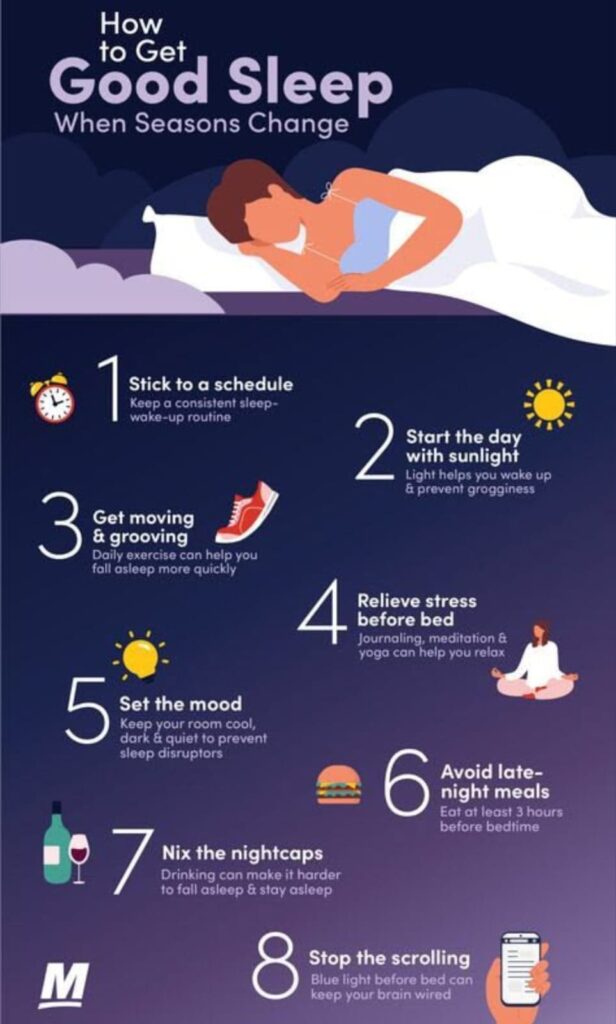
- Sleep adequately (7–9 hours)
- Exercise regularly
- Master one thing that builds competence daily
These physical foundations directly regulate the neurological systems underlying emotional intelligence — because the amygdala’s reactivity is profoundly sensitive to sleep quality, nutrition, and physical health.
9. Seek Feedback on Your Emotional Impact
One of the most significant EQ development blind spots is the gap between your perceived emotional impact and your actual emotional impact on others. Research suggests that people with lower emotional self-awareness are also less accurate at assessing how their behaviour lands on other people.
Seeking honest, specific feedback from trusted people in your life — “How do you experience me when I am under pressure? Am I easy to be around in difficult moments? Is there anything in how I communicate that makes things harder for you?” — provides data that self-reflection alone cannot generate.
This practice requires both the willingness to receive uncomfortable feedback and the self-compassion to hear it without defensiveness — both of which are themselves EQ development challenges that compound over time into genuine growth.
10. Consider Professional Support for Deeper EQ Development
For people whose emotional regulation difficulties are entrenched — particularly those rooted in early developmental experiences or trauma — professional therapeutic support produces the most significant EQ development outcomes.
CBT addresses the cognitive patterns that interfere with accurate emotion identification and regulation. DBT provides structured, evidence-based emotional regulation skills training. Schema therapy addresses the deep relational emotional patterns formed in childhood. All three are available through NHS referral in the UK and through therapist finders in the USA, Canada, and Australia.
Key Takeaways — Featured Snippet Optimised
Why emotional intelligence matters for mental health:
- Only 36% of people demonstrate high emotional intelligence — despite most believing they are self-aware
- EQ predicts mental health, relationship quality, and professional outcomes more consistently than IQ across major life domains
- The neuroscience of EQ involves amygdala regulation, prefrontal cortex engagement, and neuroplasticity — all of which respond to deliberate practice
- Emotional granularity — the precision with which you identify emotional states — directly reduces amygdala activation and improves regulation
- Affect labelling — naming emotions precisely — is a free, 30-second neurological intervention with measurable impact
- EQ is fully developable at any age through consistent, targeted practice
- Emotional suppression worsens mental health — emotional processing improves it
- DBT’s PLEASE MASTER skills address the physical foundations of EQ that are most commonly neglected
- The five core EQ development practices are: vocabulary expansion, the pause, emotion-fact separation, interoceptive awareness, and perspective-taking
- Professional CBT or DBT support produces the most significant EQ development for people with entrenched regulation difficulties
A Word From mindnesto-
At mindnesto, we believe emotional intelligence is the mental health skill that most directly determines the quality of your inner life and your outer relationships — and the one that receives the least specific, practical attention in mainstream mental health content.
You cannot think your way out of an emotion. You cannot suppress your way to stability. But you absolutely can develop a richer, more accurate, more compassionate relationship with your own emotional experience — and that development, pursued consistently, changes everything.
Not all at once. Not in a month. But step by step, practice by practice, over a lifetime. 💙
→ Read next: How to Stop Overthinking — The 2026 Neuroscience Guide
→ Also read: Anxiety Journaling Prompts — 50 Therapist-Backed Questions
Frequently Asked Questions
What is emotional intelligence and why does it matter for mental health?
Emotional intelligence is the ability to identify, understand, manage, and use emotions effectively — both your own and others’. It matters for mental health because research consistently shows that higher EQ leads to lower levels of stress, greater resilience, better coping skills, and more positive mental health outcomes. Studies published in PMC confirm that students with higher EQ have lower levels of anxiety, stress, and depression — with the relationship holding across diverse age groups, cultures, and life contexts. Unlike IQ, EQ is fully developable throughout life through targeted practice.
Can emotional intelligence be improved?
Yes — conclusively. Research published in PMC confirms that while IQ remains relatively stable across a lifetime, emotional intelligence can improve at any age through deliberate practice. Neuroplasticity — the brain’s ability to reorganise and strengthen neural pathways in response to experience — means that consistently practising EQ skills strengthens the neural circuits underlying emotional regulation, empathy, and self-awareness. The Global Wellness Institute’s 2026 report specifically highlights EQ development as one of the most evidence-backed personal mental health investments available.
What are the signs of low emotional intelligence?
Common signs of lower EQ include difficulty identifying your own emotional states accurately, emotional reactions that feel disproportionate to situations, prolonged rumination after setbacks, frequent use of suppression or avoidance to manage difficult emotions, being repeatedly surprised by others’ emotional responses, difficulty with conflict (either chronic avoidance or rapid escalation), and a tendency toward emotional reasoning — concluding facts about reality from emotional states. Each of these patterns is addressable through targeted practice and, where needed, professional therapeutic support.
How does EQ relate to anxiety and depression?
Research consistently finds that lower EQ is associated with higher rates of anxiety and depression — primarily because EQ deficits in emotional regulation allow difficult emotions to escalate, accumulate, and persist rather than being processed and resolved. Conversely, higher EQ provides access to more adaptive coping strategies, better social support mobilisation, and more accurate interpretation of social and emotional situations — all of which act as buffers against both anxiety and depression. Building EQ is therefore both a prevention strategy and a recovery tool for both conditions.
Is emotional intelligence the same as empathy?
Empathy is one component of emotional intelligence — specifically the ability to accurately perceive and understand others’ emotional experiences. EQ is broader: it also encompasses self-awareness (identifying your own emotions), self-regulation (managing your emotional responses), emotional reasoning (using emotions to facilitate thinking), and social skills (managing emotional dynamics in relationships). High empathy without adequate self-regulation — what researchers call empathic distress — can actually worsen mental health by leaving people vulnerable to emotional flooding from others’ pain. Balanced EQ involves both empathy and the self-regulatory capacity to remain grounded while engaging empathically.
Sources and External References
- PMC — EQ and Mental Health Connection
- Global Wellness Institute — Mental Wellness Trends 2026
- APA — Emotional Intelligence
- NHS — Mental Health and Emotional Wellbeing
- Six Seconds — State of the Heart Report 2026
- Frontiers in Psychology — EQ Research
- Journal of Abnormal Psychology — Emotion Regulation
- Mind UK — Emotional Wellbeing
- NHS Talking Therapies
- ADAA — Find a Therapist
- CAMH Canada
- Beyond Blue Australia
- Self-Compassion.org