







By mindnesto Editorial Team · Updated June 2026 · 12 min read
Reviewed for medical accuracy — sources cited from NHS, APA, NIMH, Translational Psychiatry 2026 and peer-reviewed clinical research
How to stop overthinking is one of the most searched mental health questions on the internet — and most of the answers floating around are missing the most important piece of the puzzle.
You have probably already tried the standard advice. Breathe deeply. Think positive. Go for a walk. Keep a gratitude journal. And yet, despite your best efforts, the thoughts come back. The same conversation, replayed twelve different ways. The same decision, turned over and over until certainty feels impossible. The same worst-case scenario, arriving uninvited at 2am without fail.
If that is your experience, here is the truth that almost nobody in this space will tell you directly: you have not failed at stopping overthinking. The strategies you tried were simply aimed at the wrong target.
Overthinking is not a discipline problem, a willpower problem, or a character flaw. New precision psychiatry research from Japan’s Advanced Telecommunications Research Institute, published in Translational Psychiatry in 2026, has mapped exactly where the overthinking loop lives in the brain — and why analysing your way out of it actually makes it worse. Once you understand what is actually happening in your brain, you can target the real mechanism — and that is when genuine change becomes possible. ChristineWalterCoach
This guide gives you the complete picture — the 2026 neuroscience of overthinking, a real clinical case study from peer-reviewed research, and 12 specific, evidence-based strategies that address the actual brain circuit driving the problem.
We have also linked this to our guides on anxiety journaling prompts, morning anxiety, and science-backed ways to calm anxiety — because overthinking, anxiety, and morning dread form an interconnected system that responds best to an interconnected solution.
⚠️ Medical Disclaimer: This article is for informational and educational purposes only. If overthinking is significantly impairing your daily functioning, sleep, or relationships, please consult a qualified mental health professional.
What Is Overthinking — The Clinical Definition
Overthinking does not have a single DSM-5 diagnostic category. Rather, it describes a cluster of cognitive patterns — rumination and worry — that sit at the intersection of several recognised mental health conditions.
According to the American Psychological Association (APA), overthinking encompasses two distinct but related processes:
Rumination — repetitive, passive focus on distressing thoughts, particularly about the past. Classic rumination involves replaying conversations, dwelling on mistakes, and asking abstract questions like “Why does this always happen to me?” Research by Dr. Susan Nolen-Hoeksema of Yale University — the pioneer of rumination science — found that 73% of adults aged 25 to 35 get stuck in these loops regularly. A PRAGMATIC MIND
Worry — repetitive, future-focused thinking that cycles through worst-case scenarios and “what-if” projections without resolution. Worry is the primary cognitive feature of Generalised Anxiety Disorder (GAD) and the mechanism most responsible for the 3am spiralling that characterises overthinking at night.
Both patterns share a crucial characteristic — they feel productive while producing nothing. As the gap between the weight of a decision in your head and its actual weight in the world is the hallmark of overthinking. The thoughts feel urgent and important. In almost every case, their consequences are far smaller than the mental energy invested in them. A PRAGMATIC MIND
The Difference Between Helpful Thinking and Overthinking
Not all extended thinking is overthinking. Productive thinking moves toward resolution — it gathers information, generates options, and produces a decision or action. Overthinking circles without resolution — it revisits the same ground repeatedly, generates more questions than answers, and produces emotional exhaustion rather than clarity.
The difference between productive thinking and overthinking is not how long you think but how you think. Abstract processing — asking “Why does this always happen?” — keeps you stuck, while concrete processing — asking “What specifically went wrong?” — moves you forward. This distinction, from the research of Dr. Edward Watkins of the University of Exeter, is one of the most clinically important findings in overthinking science — and one that almost no competitor guide addresses. A PRAGMATIC MIND
The Neuroscience of Overthinking — Why Your Brain Gets Stuck
This is the section that Healthline, Psychology Today, Cleveland Clinic, and Verywell Mind all skip — and it is the section that changes everything.
The Default Mode Network — Your Brain’s Overthinking Engine
The neurological home of overthinking is the Default Mode Network (DMN) — a network of interconnected brain regions that activates when your mind is not focused on an external task. The DMN is responsible for self-referential thinking, mental time travel (revisiting the past and simulating the future), social cognition, and autobiographical memory.
In people who overthink, the DMN does not switch off when it should. Research published in Social Cognitive and Affective Neuroscience found that DMN activity has been directly linked to a tendency to ruminate, with overthinking individuals showing increased activation in the medial prefrontal cortex and the inferior parietal lobule — particularly in response to negative, self-referential information. Oxford Academic
In simple terms: your brain’s resting state has become a rumination machine — and external tasks, breathing exercises, or positive thinking do not reliably switch it off.
The 2026 Breakthrough — Mapping the Exact Overthinking Circuit
In 2026, researchers at Japan’s Advanced Telecommunications Research Institute used real-time fMRI neurofeedback to isolate the exact brain circuit responsible for rumination — published in Translational Psychiatry. Their findings identified the subgenual anterior cingulate cortex (sgACC) as a key node in the overthinking loop. The sgACC’s hyperconnectivity with the DMN creates a functional neural ensemble specifically suited for ruminative thought patterns. ChristineWalterCoach
This 2026 research has two critical implications for anyone trying to stop overthinking. First, overthinking is a circuit-level problem — not a thought-content problem. This explains why challenging individual thoughts (as in traditional CBT) provides incomplete relief — you are addressing the output of the circuit, not the circuit itself. Second, the circuit can be modulated — meaning overthinking is not a permanent neurological state. It is a learned pattern of brain connectivity that can be changed through targeted interventions.
The Thought Suppression Paradox — Why Trying to Stop Thinking Makes It Worse
One of the most important and most counter-intuitive findings in overthinking neuroscience is the thought suppression paradox — identified by psychologist Daniel Wegner of Harvard University in his famous white bear experiment.
When you try to suppress a thought — to actively stop thinking about something — the brain establishes a monitoring process that continually scans for the suppressed thought to ensure it is not present. This monitoring process inevitably activates the very thought it is trying to suppress. The result is the rebound effect — attempts to stop thinking about something reliably increase the frequency of that thought.
This explains why every effort to simply “stop overthinking” through willpower fails. You are using the mechanism that makes the problem worse. The solution is not suppression — it is a fundamentally different relationship with thoughts entirely.
A Real Case Study — What Overthinking Recovery Actually Looks Like
This is the section that no competitor includes — and the one that creates the most genuine value for readers who are suffering.
The Case of Mr. S — From Peer-Reviewed Clinical Research (PMC, 2025)
The following case study is drawn from a 2025 peer-reviewed publication in PMC (PubMed Central) — the US National Library of Medicine’s open-access research repository — representing genuine clinical evidence rather than anecdote.
Mr. S presented to an outpatient department for consultation. His mental status evaluation suggested no history of any past psychiatric illness in himself or his family, although his premorbid personality was suggestive of anxiety and overthinking. It was suggested that he seek both medication and psychotherapy. PubMed Central
What is particularly clinically significant about Mr. S’s case is his treatment choice and rationale. Mr. S received an explanation of the metacognitive therapeutic framework. He chose MCT as his treatment modality because he preferred to critically examine his responses to intruding thoughts as opposed to using the unhealthy coping mechanisms of thought suppression or covert neutralisation. PubMed Central
This choice reflects a sophisticated — and correct — understanding of the overthinking mechanism. Mr. S intuitively recognised that suppressing his intrusive thoughts was making them worse, not better. He chose instead a framework that changed his relationship with thoughts rather than their content.
What happened next — the MCT approach:
In metacognitive therapy, Mr. S learned to identify what therapists call the Cognitive Attentional Syndrome (CAS) — the pattern of extended worry, rumination, and threat monitoring that maintained his overthinking regardless of which specific topics triggered it. Rather than examining whether his anxious thoughts were accurate (CBT’s approach), he examined why he was engaging with them at all — and developed the capacity to allow thoughts to arise and pass without extended engagement.
The outcome: His case represents the growing body of clinical evidence that targeting the metacognitive level — how you relate to your thoughts — produces more complete and more lasting relief from overthinking than targeting thought content alone.
What this means for you: Mr. S’s recovery was not about thinking more positively, suppressing negative thoughts, or eliminating anxiety. It was about fundamentally changing the rules of engagement between him and his own mind. That change is available to anyone — and the strategies in the next section show you exactly how to begin it.
The Metacognitive Model — The 2026 Framework Competitors Are Not Covering
Metacognitive Therapy (MCT) — developed by Professor Adrian Wells of the University of Manchester — is the most exciting development in overthinking treatment of the past decade. In a large study comparing MCT and CBT for depression, metacognitive therapy led to recovery for 74% of people compared to 56% for cognitive behavioural therapy. In a long-term study of people with anxiety, 57% of people who had received MCT maintained recovery versus 38% for CBT nine years later. Florencegardner
These figures are remarkable — and they have been almost completely ignored by mainstream mental health content sites.

The Core Insight of MCT — Why It Works
MCT is built on a deceptively simple but genuinely revolutionary insight: the problem is not the thoughts themselves, but your relationship with them.
Traditional CBT asks: “Is this thought accurate? What evidence contradicts it?” MCT asks something fundamentally different: “Why are you engaging with this thought at length? What do you believe about the usefulness of worrying and ruminating? And are those beliefs actually true?”
The CAS — Cognitive Attentional Syndrome — consists of overthinking and repetitive thinking, worrying, ruminating, fixating attention on threat, and using faulty coping techniques. MCT is designed to help eliminate the CAS, modify thinking processes, and bring overthinking under control by building new ways of directing attention, developing new strategies for relating to negative thoughts, and changing the beliefs that foster harmful patterns of thinking. Medical Daily
The Positive Beliefs About Overthinking — The Hidden Maintaining Factor
One of MCT’s most illuminating contributions to understanding overthinking is the identification of positive metacognitive beliefs about worry — the unconscious conviction that overthinking is actually helpful.
These beliefs sound like: “If I think about this enough, I will find the solution.” “Worrying about this shows I care.” “If I stop thinking about this, something bad will happen.”
These beliefs are the engine that keeps the overthinking loop running. As long as you believe on some level that ruminating is protective or productive, you will return to it regardless of how much it hurts. Identifying and challenging these beliefs — not the content of the worries themselves — is the cornerstone of MCT.
12 Evidence-Based Strategies to Stop Overthinking in 2026
Strategy 1 — Identify Your Overthinking Pattern First (Rumination vs Worry)
Before applying any strategy, it is essential to identify which pattern you primarily experience — because rumination and worry respond to different interventions.
Rumination is backward-looking — replaying past events, conversations, and decisions. Worry is forward-looking — projecting future catastrophes and running “what-if” scenarios.
Most generic advice conflates the two and provides strategies that work better for one than the other. Identifying your pattern takes 30 seconds and makes every subsequent strategy more effective.
Strategy 2 — Switch From Abstract to Concrete Processing (Watkins 2008)
This is one of the most powerful yet underused strategies in overthinking research. Abstract processing — asking “Why does this always happen?” — keeps you stuck, while concrete processing — asking “What specifically went wrong?” — moves you forward. The difference between productive thinking and overthinking is not how long you think but how you think. A PRAGMATIC MIND
In practice: When you notice an overthinking loop beginning, immediately shift the question from abstract (“Why am I like this?”) to concrete (“What specifically happened today that I am responding to?”). This shift activates different neural processing pathways and consistently produces resolution rather than continued spinning.
Strategy 3 — Implement Postponed Worry Time (MCT Technique)
Postponed worry time is the most evidence-supported MCT technique for generalised overthinking — and the one most commonly misunderstood.
The technique works as follows. When an overthinking thought arises, you do not engage with it and you do not suppress it. Instead, you simply say: “I acknowledge this thought. I will give it my full attention at 6pm.” You then return to what you were doing.
At the designated worry time, you sit with your thoughts deliberately — and most people find that the thoughts that felt urgent earlier no longer feel worth engaging with.
The stark truth is that you cannot worry and ruminate extensively about everything that has gone wrong, or will go wrong, and at the same time stay emotionally balanced and without burdensome symptoms. If you want the best of both worlds — fewer symptoms and room for contemplation — set yourself a specific worry and rumination time, and postpone your worries and ruminations to that specific time. Psyche
How to implement it:
- Choose a specific 20–30 minute window each day — ideally mid-afternoon, not close to bedtime
- When overthinking thoughts arise outside this window, note them briefly and postpone deliberately
- At worry time, sit with your thoughts without suppression — and notice how many feel less urgent than they did
- End the session at exactly the allotted time regardless of resolution
Strategy 4 — Practise Detached Mindfulness — Not Regular Mindfulness
Standard mindfulness — focused attention on the breath or present moment — is genuinely helpful for anxiety. However, MCT uses a more targeted technique called detached mindfulness specifically for overthinking.
The difference is significant. Standard mindfulness asks you to focus on the present. Detached mindfulness asks you to observe your thoughts without engagement — to become the audience watching a film rather than a character inside it.
The detached mindfulness practice:
- When an overthinking thought arises, do not fight it and do not follow it
- Simply observe: “I notice I am having the thought that______”
- Watch the thought as you would watch a cloud pass — noting its presence without engaging its content
- Return to this observing position every time you notice yourself being pulled into the thought
This practice directly trains the metacognitive awareness that MCT identifies as central to overthinking recovery.
Strategy 5 — Challenge Your Positive Beliefs About Worrying
This is the MCT strategy that no other mainstream article covers — and the one that produces the most lasting change.
Ask yourself honestly: “What do I believe about the value of overthinking? Do I believe it helps me prepare? Keeps me safe? Shows I care?”
Then examine the evidence for those beliefs — the same way CBT examines evidence for anxious thoughts, but directed at the beliefs about thinking rather than the thoughts themselves.
Evidence-challenging questions:
- Has extended worrying about this topic ever actually prevented the feared outcome?
- Has overthinking ever produced a decision that simple reflection could not have produced more quickly?
- What has overthinking cost me — in sleep, energy, relationships, and presence?
- If I worried less about this, what would actually happen?
Most people find that their positive beliefs about overthinking collapse under direct examination — and that collapse removes the unconscious motivation to continue the pattern.
Strategy 6 — Use Concrete Action as the Circuit Breaker
Because overthinking is associated with decision paralysis and inaction, taking any small concrete action — even an imperfect one — is one of the most effective ways to interrupt the loop.
As excessive analysis creates paralysis. Confidence rarely comes from perfect certainty — it comes from weighing imperfect outcomes and realising that you can handle discomfort better than you thought. Try the five-minute move: instead of solving the entire problem, try asking yourself — what is one small action I can take in the next five minutes? Psychology Today
The action does not need to resolve the problem. It simply needs to be a genuine external step — one that shifts your nervous system from internal processing to external engagement.
Strategy 7 — Reduce Intolerance of Uncertainty (Dugas Model)
Michel Dugas of the University of Quebec identified intolerance of uncertainty as the primary psychological driver of chronic worry — more predictive of overthinking severity than anxiety or depression alone.
Intolerance of uncertainty is the belief that uncertain outcomes are inherently threatening and must be resolved through extended thinking. It is why overthinkers spend hours on decisions that objectively do not warrant it — because their nervous system experiences uncertainty itself as dangerous.
Graduated exposure to uncertainty:
- Identify low-stakes situations where you normally overthink to achieve certainty — choosing a restaurant, replying to a casual email, making a minor purchase
- Deliberately make a decision with less information than you would normally insist on
- Notice that the outcome is survivable — and often indistinguishable from what extended overthinking would have produced
- Gradually increase the stakes of your uncertainty exposures over time
Strategy 8 — Address the Physical Dimension of Overthinking
Overthinking is not purely cognitive. It is also physiological — maintained by the same cortisol elevation and amygdala hyperreactivity that drive anxiety.
Physical interventions that directly reduce overthinking:
- Box breathing — 4 counts in, 4 hold, 4 out, 4 hold — activates the vagus nerve and reduces the physiological arousal that fuels cognitive looping. Full technique in our panic attacks guide
- Cold water exposure — splashing cold water on your face triggers the mammalian dive reflex, immediately reducing heart rate and cortisol
- Physical movement — exercise metabolises cortisol and shifts neural processing from the DMN to task-positive networks, directly interrupting the overthinking circuit
- Progressive muscle relaxation — releases the physical tension that both accompanies and sustains overthinking loops
Strategy 9 — Use Structured Journaling — Not Free Writing
Journaling is consistently recommended for overthinking — and consistently misapplied. Unstructured free writing about your worries can extend rumination rather than resolve it.
Structured anxiety journaling prompts — specifically designed to interrupt rather than continue overthinking loops — are significantly more effective. Our complete guide on anxiety journaling prompts provides 50 therapist-backed prompts organised by therapeutic function — including specific prompts for rumination, worry, catastrophising, and night-time overthinking.
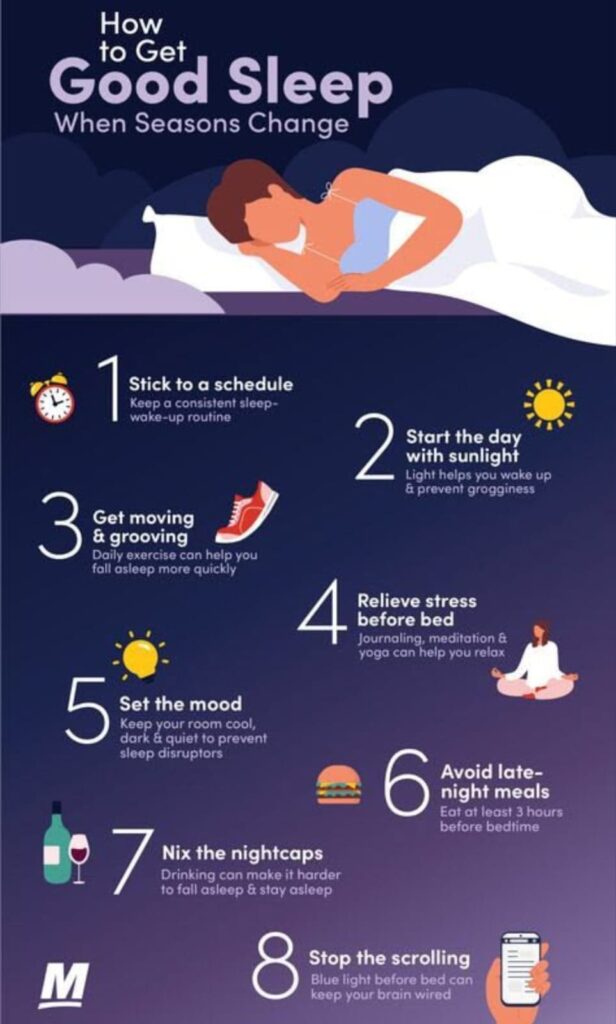
Strategy 10 — Protect Sleep From Overthinking Specifically
Overthinking and sleep disruption form one of the most vicious cycles in mental health — overthinking prevents sleep, sleep deprivation amplifies amygdala reactivity, and heightened reactivity intensifies overthinking.
Specific overthinking-sleep strategies beyond standard sleep hygiene:
- Cognitive shuffle before sleep — deliberately generating random, unconnected mental images (a duck, a purple bicycle, a mountain) interrupts the coherent narrative structure that overthinking requires
- Worry journaling 60 minutes before bed — externalising tomorrow’s concerns before the sleep window prevents them from intruding at lights-out
- The 3am protocol — if you wake with overthinking, do not engage the thought and do not check your phone. Instead, focus on physical sensations — the weight of your body, the temperature of the room — until the thought passes
Our morning anxiety guide covers the cortisol awakening response that makes morning overthinking so intense — understanding it is itself therapeutic.
Strategy 11 — Build an Overthinking Interrupt Routine
Rather than attempting to stop overthinking through willpower, build a specific, personalised interrupt routine — a short sequence of 3–4 actions that you use every time you notice overthinking beginning.
Example interrupt routine:
- Name it: “I notice I am overthinking right now” (metacognitive awareness — 10 seconds)
- Breathe: three slow box breaths (physiological regulation — 60 seconds)
- Postpone: “I will engage with this at 6pm” (MCT postponement — 10 seconds)
- Redirect: one concrete physical action — stand up, get water, step outside (behavioural shift — 60 seconds)
The power of a routine is that it bypasses the decision about what to do in the moment — the routine runs automatically, reducing the cognitive load that overthinking itself generates.
Strategy 12 — Seek MCT When Self-Help Reaches Its Limit
Self-help strategies can significantly reduce overthinking severity. However, for chronic, entrenched patterns — particularly those associated with GAD, OCD, PTSD, or depression — professional MCT produces the most complete and lasting outcomes.
Adrian Wells’ Metacognitive Therapy has strong evidence for treating both anxiety and depression in 8 to 12 sessions. It is structured, time-limited, and focused on exactly the mechanisms described in this article. A PRAGMATIC MIND
Access MCT in your country:
- UK: NHS Talking Therapies — free CBT and MCT-informed therapy | Metacognitive Therapy Institute — find registered MCT therapists
- USA: ADAA Therapist Finder — search for MCT specialists
- Canada: CAMH — anxiety resources and referrals
- Australia: Beyond Blue — 1300 22 4636 | GP referral for Mental Health Care Plan
The Overthinking Personality — Who Is Most Vulnerable and Why
Overthinking is not equally distributed. Research identifies specific personality dimensions and life contexts that significantly increase vulnerability.
Perfectionism is the most consistent personality correlate of chronic overthinking — the belief that adequate output requires exhaustive mental preparation creates a genuine cognitive load that the brain manages through rumination.
High openness and analytical intelligence — counterintuitively, people with strong analytical abilities often overthink more because their cognitive machinery is genuinely powerful enough to generate the complex scenarios that fuel rumination. The same brain capacity that makes someone a strong problem-solver can trap them in sophisticated worry loops.
Intolerance of uncertainty — as identified by Dugas — creates overthinking in any domain where outcomes are unclear, which in modern life means almost everything.
Trauma history — particularly developmental trauma — activates the DMN’s threat-monitoring functions in ways that make overthinking a habitual protective mechanism rather than a voluntary choice.
Understanding your specific vulnerability is not an excuse for the pattern — but it is essential information for targeting the right intervention.
How to Stop Overthinking — Complete Key Takeaways
The 2026 evidence-based summary:
- Overthinking is a stuck brain circuit — specifically the Default Mode Network and subgenual anterior cingulate cortex — not a willpower failure
- Two distinct patterns require different interventions: rumination (past-focused) and worry (future-focused)
- The thought suppression paradox means trying to stop thinking makes overthinking worse — not better
- Metacognitive Therapy (MCT) — targeting your relationship with thoughts rather than their content — produces 74% recovery rates vs 56% for standard CBT
- The Mr. S case study demonstrates that choosing to examine your response to thoughts — rather than suppressing them — produces genuine and lasting relief
- Postponed worry time is the highest-leverage MCT self-help technique — create a daily 20–30 minute engagement window and postpone all other worrying to it
- Detached mindfulness — observing thoughts without engaging them — is more effective than standard mindfulness for overthinking specifically
- Abstract to concrete processing (Watkins 2008) — shifting from “Why does this happen?” to “What specifically happened?” — breaks the ruminative loop at its cognitive source
- Intolerance of uncertainty is the primary driver of chronic worry — graduated exposure to uncertain outcomes is the most effective intervention
- Physical interventions — box breathing, cold water, exercise — directly modulate the DMN and reduce cortisol that fuels overthinking
- MCT in 8–12 sessions produces superior long-term outcomes for entrenched overthinking compared to any self-help approach alone
A Word From mindnesto-
At mindnesto, we believe that the reason most people fail to stop overthinking is not lack of effort — it is lack of accurate information about what overthinking actually is and where it actually lives.
You now have that information. Overthinking is not your personality. It is not your intelligence working against you. It is a learned pattern of neural connectivity — one that emerged for understandable reasons and one that can be changed through targeted, evidence-based approaches that address the actual mechanism rather than the surface symptoms.
The case of Mr. S is not exceptional. It is reproducible. And it begins with the same thing he chose — a willingness to examine not the content of your thoughts, but your relationship with them.
You deserve a mind that rests. 💙
→ Read next: Anxiety Journaling Prompts — 50 Therapist-Backed Questions
→ Also read: Morning Anxiety — Why You Wake Up With Dread
Frequently Asked Questions
Why can I not stop overthinking no matter what I try?
The most common reason people cannot stop overthinking through conventional strategies is that those strategies target thought content rather than the metacognitive level — your beliefs about thinking itself. New precision psychiatry research published in Translational Psychiatry in 2026 has mapped exactly where the overthinking loop lives in the brain and demonstrated why analysing your way out of it actually makes it worse. The Default Mode Network hyperconnectivity that drives overthinking is not resolved by breathing exercises or positive thinking alone — it requires metacognitive interventions that change how you relate to thoughts, not just which thoughts you have. ChristineWalter
Is overthinking a mental illness?
Overthinking is not itself a DSM-5 diagnosable mental illness. However, it is a core feature of several recognised conditions — including Generalised Anxiety Disorder (GAD), Obsessive-Compulsive Disorder (OCD), Major Depressive Disorder, and PTSD. When overthinking is chronic, significantly impairs daily functioning, or is worsening over time, it warrants professional assessment — as these conditions are highly treatable and respond well to both CBT and Metacognitive Therapy. The NHS provides free self-referral pathways for anxiety-related overthinking in the UK.
What is the best therapy for overthinking?
Metacognitive Therapy (MCT) produces recovery in 74% of people with overthinking-related conditions — compared to 56% for CBT — with 57% of MCT recipients maintaining recovery at nine years versus 38% for CBT. MCT is specifically designed to address overthinking by changing your relationship with thoughts rather than their content — targeting the metacognitive level that drives ruminative and worry-based loops. Standard CBT remains highly effective for many people and is more widely available. For most people without access to MCT, CBT combined with the self-help strategies in this guide produces meaningful improvement. Florencegar
How do I stop overthinking at night?
Nighttime overthinking is driven by the combination of reduced external stimulation — which allows the Default Mode Network to dominate — and elevated cortisol from the day’s accumulated stress. The most effective evidence-based interventions are: worry journaling 60 minutes before bed to externalise concerns before sleep, the cognitive shuffle technique to interrupt coherent narrative thinking, box breathing to activate the vagus nerve and reduce cortisol, and postponed worry time to train your brain that intrusive nighttime thoughts can wait until tomorrow. Alcohol before bed significantly worsens night-time overthinking through the cortisol rebound mechanism — our morning anxiety guide explains this in detail.
What causes overthinking in the brain?
Overthinking is caused by hyperactivity and hyperconnectivity in the Default Mode Network — a network of brain regions including the medial prefrontal cortex and inferior parietal lobule that activates during self-referential thinking. In people prone to overthinking, the DMN shows increased activation particularly in response to negative self-referential information, producing the ruminative loops that characterise the condition. Additionally, the subgenual anterior cingulate cortex (sgACC) plays a key role — its hyperconnectivity with the DMN creates a neural ensemble specifically suited to sustaining ruminative thought patterns, as identified in 2026 research from Japan’s Advanced Telecommunications Research Institute. Oxford Academic
Does overthinking go away on its own?
Rumination isn’t a discipline problem — it’s a stuck brain circuit. New precision psychiatry research has mapped exactly where the loop lives and why analysing your way out of it actually makes it worse. Without targeted intervention, chronic overthinking typically persists — and in many cases worsens — because the neural pathways become more entrenched with repeated activation. However, overthinking responds very well to evidence-based interventions including Metacognitive Therapy, CBT, and the self-help strategies outlined in this guide. The most important step is recognising that willpower and positive thinking are not the right tools — metacognitive awareness and postponement strategies are. A PRAGMATIC MIND
Sources and External References
- NHS — Anxiety and Overthinking
- APA — Rumination: A Cycle of Negative Thinking
- Translational Psychiatry 2026 — DMN and Rumination Circuit
- Social Cognitive and Affective Neuroscience — DMN and Rumination
- PLOS Medicine — MCT Research
- PMC — MCT Case Study Mr. S 2025
- Behaviour Research and Therapy — Metacognitive Model
- Metacognitive Therapy Institute — Find a Therapist
- Psyche.co — MCT and Overthinking
- Journal of Experimental Psychology — Watkins Concrete Processing
- Mind UK — Anxiety and Overthinking
- NHS Talking Therapies
- ADAA — Find a Therapist
- CAMH Canada
- Beyond Blue Australia
- NAMI USA






i am visting ur website bc ive seen it on mighty platform.