





By MindNesto Editorial Team · Updated June 2026 · 10 min read
Reviewed for accuracy — sources cited from WHO, NHS, APA and peer-reviewed research
You pick up your phone to check the time. Forty-five minutes later, you are still scrolling — not sure how you got there, not sure why you cannot stop, and feeling somehow worse than when you started.
If that sounds painfully familiar, you are not alone — and you are not weak for experiencing it.
The average adult in 2026 spends over 10 hours per day interacting with screens. That figure includes smartphones, laptops, televisions and tablets — and it represents a scale of daily digital immersion that the human nervous system was simply never designed to handle. Furthermore, the platforms and applications driving most of that screen time were deliberately engineered — by some of the brightest minds in behavioural science — to be as difficult to put down as possible.
Understanding this is important. Because the difficulty you feel putting your phone down is not a personal failing. It is the predictable response of a human brain encountering technology specifically designed to exploit its reward circuitry.
Digital wellness is the practice of intentionally and thoughtfully managing your relationship with technology — so that it serves your life rather than consuming it. This guide will walk you through exactly what screen overuse does to your mental health, why it is so hard to stop, and 10 evidence-based habits that will genuinely help you take back control.
We have also linked this guide to our posts on burnout prevention strategies and science-backed ways to calm anxiety without medication — because digital overuse, burnout and anxiety are deeply interconnected and frequently compound each other.
⚠️ Medical Disclaimer: This article is for informational and educational purposes only. It is not a substitute for professional medical advice, diagnosis or treatment. If technology use is significantly affecting your mental health or daily functioning, please consult a qualified healthcare provider or mental health professional.
Why Does It More Matters In 2026?
Digital wellness refers to the optimal state of health — physical, mental and social — in relation to how we use technology. It does not mean avoiding technology entirely. Rather, it means using digital tools intentionally, in ways that enhance your life rather than undermine it.
The World Health Organization recognises excessive screen use and problematic smartphone behaviour as emerging public health concerns — particularly given their documented associations with anxiety, depression, sleep disruption, and reduced attention capacity across all age groups.
In 2026, digital wellness matters more than ever for three specific reasons.
First, screen time has never been higher. The post-pandemic normalisation of remote working, combined with the explosive growth of short-form video content, has pushed average daily screen exposure to record levels across USA, UK, Canada and Australia.
Second, the mental health cost is now well-documented. Research published in Health Communication Journal found that excessive news and social media consumption was directly associated with increased anxiety, depression, and physical health symptoms — even after controlling for pre-existing mental health conditions.
Third, and perhaps most critically — the technology is getting more sophisticated. Platforms in 2026 use real-time AI systems to personalise content feeds with unprecedented accuracy, making disengagement psychologically harder than ever before.
The Attention Economy — Why It Is Designed to Hook You
To understand digital wellness, you first need to understand the economic model driving most of the platforms you use daily.
Dr. Adam Alter of New York University, author of Irresistible: The Rise of Addictive Technology, explains that social media platforms, games, and news applications are built on what he calls behavioural design — the deliberate use of psychological principles to maximise engagement time.
These include:
- Variable reward schedules — the same mechanism that makes slot machines addictive — delivering unpredictable rewards (likes, new content, surprising notifications) that keep the brain returning compulsively
- Infinite scroll — deliberately removing natural stopping points so that the decision to stop must be made actively, repeatedly, and against increasing psychological resistance
- Social validation loops — notifications that deliver micro-doses of social approval, triggering dopamine release and reinforcing continued platform use
- FOMO engineering — content curation designed to make you feel that stopping means missing something important
Understanding these mechanisms does not make them less powerful. Nevertheless, it does make them less mysterious — and that reduced mystery is itself the beginning of greater intentionality.
What Excessive Screen Time Actually Does to Your Mental Health
This section covers the real, measurable impact of screen overuse on your brain and body — because understanding the mechanism makes the solutions far more motivating.
Dopamine Dysregulation and Reward System Disruption
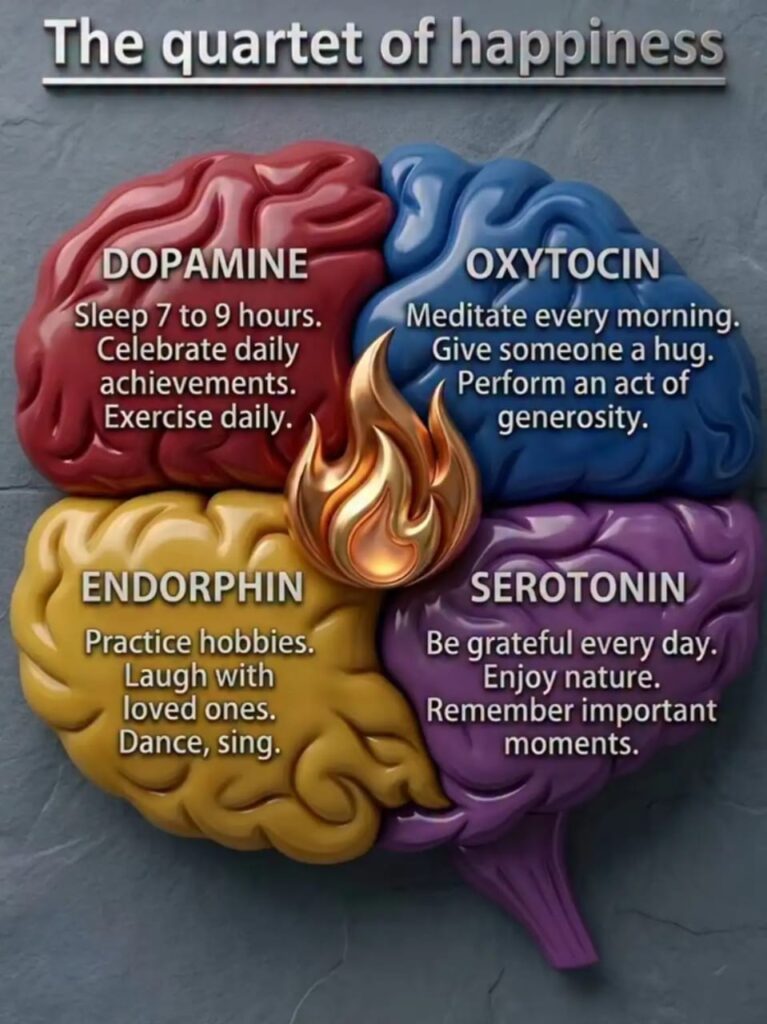
Every notification, every new post, every social media interaction triggers a small release of dopamine — the brain’s primary reward and motivation neurotransmitter. Over time, however, constant low-level dopamine stimulation from screens raises your brain’s baseline reward threshold.
As a result, ordinary life — conversation, reading, nature, focused work — begins to feel dull and unrewarding by comparison. This is precisely why heavy screen users often feel simultaneously overstimulated and profoundly bored the moment they put their devices down.
Cortisol Elevation and Chronic Stress
Furthermore, the content most platforms algorithmically amplify — conflict, outrage, threat, social comparison — is specifically the content that triggers the amygdala and activates the fight-or-flight response. Each such activation releases cortisol into your bloodstream.
With hours of daily exposure, this creates a pattern of sustained cortisol elevation that is physiologically identical to chronic stress — producing the same HPA axis dysregulation documented in burnout and anxiety disorders.
Sleep Disruption Through Blue Light and Mental Arousal
Additionally, evening screen use disrupts sleep through two distinct mechanisms. First, the blue light emitted by screens suppresses melatonin production — the hormone responsible for initiating the sleep cycle — by up to 50%, according to research from Harvard Medical School.
Second, and equally problematically, the emotionally activating content of most evening screen use keeps the brain in a state of heightened mental arousal that is fundamentally incompatible with the relaxed, drowsy state required for healthy sleep onset.
Attention Fragmentation — The Hidden Cost
Research by Dr. Gloria Mark of the University of California Irvine introduced the concept of attention residue — the finding that even after you close an app or stop checking notifications, a residual portion of your attention remains mentally engaged with that digital content. Consequently, it takes an average of 23 minutes to fully restore deep focus after a single digital interruption.
For professionals checking phones dozens of times daily, this means the capacity for sustained, deep, creative work is being progressively and significantly eroded.
Social Media and Mental Health — What the Research Shows
A landmark study by Dr. Melissa Hunt of the University of Pennsylvania, published in the Journal of Social and Clinical Psychology, found that reducing social media use to just 30 minutes per day produced significant reductions in depression, loneliness, anxiety and FOMO within three weeks — even among heavy users.
Similarly, Dr. Jean Twenge of San Diego State University, whose research on generational mental health trends is among the most cited in psychology, found strong correlations between smartphone adoption rates and rising anxiety and depression across Tier 1 countries.
Conduct an Honest Screen Time Audit
Before implementing any changes, it is essential to understand your current digital baseline honestly. Both iOS Screen Time (Settings → Screen Time) and Android Digital Wellbeing (Settings → Digital Wellbeing) provide detailed breakdowns of daily screen usage by application.
Most people significantly underestimate their screen time. Therefore, reviewing your actual data — without judgment — is the essential first step toward intentional change.
Once you have your baseline, identify specifically:
- Which applications consume the most time
- Which times of day your usage peaks
- Whether your usage aligns with your actual intentions and values
Implement the 30-Minute Social Media Rule
Based directly on the findings of Dr. Melissa Hunt’s University of Pennsylvania study, limiting social media use to a maximum of 30 minutes per day — divided across all platforms — produces measurable mental health improvements within three weeks.
To implement this effectively:
- Set daily app time limits for each social platform using your phone’s built-in tools
- Schedule your 30 minutes at a specific time each day — rather than checking continuously throughout the day
- When the limit is reached, close the app immediately — do not grant time extensions
- Replace the reclaimed time deliberately with an offline activity that genuinely nourishes you
Create Phone-Free Zones and Times
One of the most practically effective digital wellness interventions is establishing specific phone-free zones and periods within your daily life. Research published in the Journal of Experimental Psychology found that the mere visible presence of a smartphone — even face-down and silent — reduces available cognitive capacity and working memory.
Recommended phone-free zones:
- The bedroom — replace your phone alarm with a traditional alarm clock
- The dinner table — during mealtimes with family or alone
- The first 30 minutes after waking — give your nervous system time to regulate before digital stimulation begins
- The 60 minutes before bedtime — to allow natural melatonin production and genuine sleep preparation
Turn Off All Non-Essential Notifications
This is possibly the single highest-impact digital wellness change you can make today — and it costs nothing. Most notifications are not urgent. However, each one creates a micro-interruption that triggers attention residue and a micro-dose of cortisol.
Dr. Gloria Mark’s research at UC Irvine demonstrates that eliminating unnecessary notifications alone produces measurable reductions in stress, improved focus, and greater feelings of control and calm.
Notification audit — keep only:
- Phone calls from important contacts
- Essential calendar reminders
- Urgent messaging from specific people you designate
Switch off immediately:
- All social media notifications
- News application alerts
- Email notifications outside designated checking times
- Gaming and entertainment application prompts
Practice Intentional Consumption — Not Passive Scrolling
There is a fundamental difference between intentional technology use and passive scrolling. Intentional use means opening an application with a specific purpose, completing that purpose, and then closing it. Passive scrolling means opening an application with no particular goal and continuing indefinitely until something external interrupts you.
Dr. Cal Newport of Georgetown University, whose book Digital Minimalism introduced the concept of intentional technology philosophy, argues that the distinction between these two modes of use is more important than the total time spent online.
To practise intentional consumption:
- Before opening any application, ask yourself: “What am I here for specifically?”
- Set a time limit before you open the app — not after you are already inside it
- Use technology as a tool with a defined job — not as a default response to boredom or discomfort
Implement a Daily Digital Sunset
A digital sunset is a designated time each evening — typically 60 to 90 minutes before your target sleep time — after which all screens are turned off or put away. This practice addresses both the blue light and the mental arousal mechanisms that disrupt sleep quality.
According to the NHS and sleep research from UC Berkeley, eliminating screens in the pre-sleep window consistently improves:
- Sleep onset time — falling asleep faster
- Sleep depth — producing more restorative slow-wave sleep
- Morning alertness — waking feeling genuinely rested
- Emotional regulation the following day
Replace your pre-sleep screen time with:
- Reading a physical book or magazine
- Gentle stretching or yoga
- Journaling — particularly effective for processing the day’s stressors
- A warm bath or shower — which additionally lowers core body temperature, accelerating sleep onset
Schedule Specific News Consumption Windows
Doomscrolling — the compulsive consumption of negative news content — is one of the most significant drivers of anxiety in 2026. Research published in Health Communication Journal found that people who compulsively monitored news reported significantly higher anxiety, stress, and feelings of helplessness compared to those who limited news consumption deliberately.
Importantly, staying broadly informed does not require continuous news monitoring. A 20-minute daily news window — ideally at a fixed, mid-morning time — provides sufficient awareness of important events without the sustained amygdala activation that continuous news exposure produces.
Practical news boundary implementation:
- Choose one or two trusted news sources and read them only during your designated window
- Delete news applications from your phone home screen — replacing them with a physical newspaper or newsletter
- Avoid all news content within two hours of bedtime
- Unfollow or mute social media accounts that consistently share distressing content
Use Technology Actively — Not Passively
Not all screen time is equally harmful. Research from the Oxford Internet Institute by Dr. Andrew Przybylski found that active digital use — creating content, communicating meaningfully, learning, producing — has a significantly smaller negative mental health impact than passive digital use — consuming content, scrolling, watching without engagement.
Shift your digital use toward active engagement:
- Video calling loved ones instead of passively scrolling their social media feeds
- Creating content, writing, or learning new skills online
- Using technology for fitness — workout videos, running apps, meditation guides
- Engaging in purposeful research rather than aimless browsing
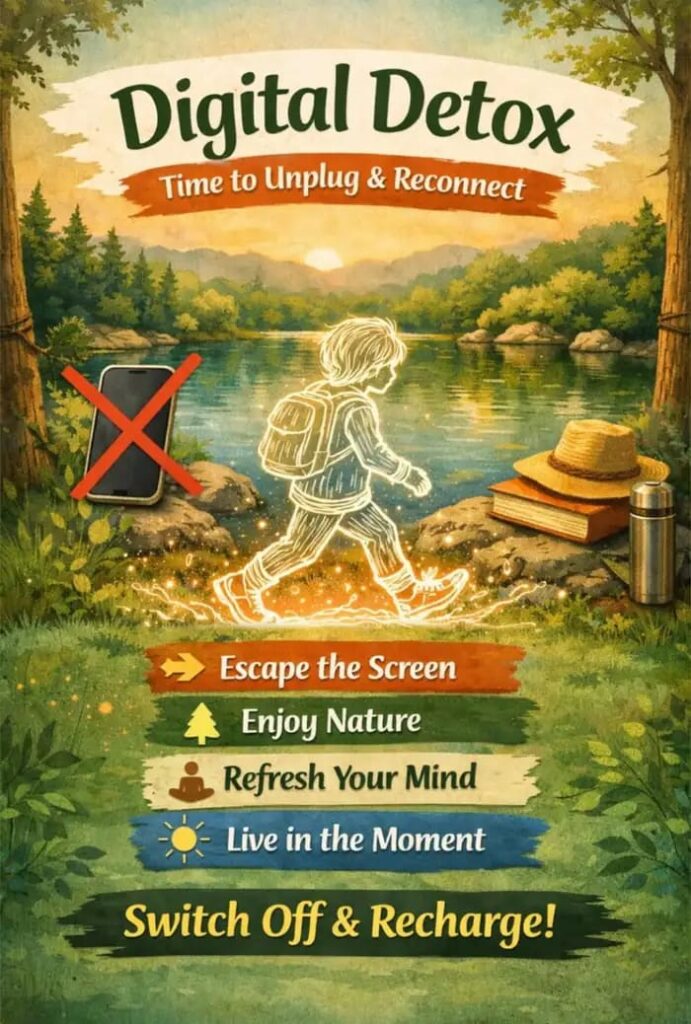
Take Regular Digital Detox Periods
Beyond daily habits, periodic extended digital detoxes produce significant and measurable mental health benefits. A weekend digital detox — 48 hours significantly reducing or eliminating recreational screen use — allows your dopamine system to partially recalibrate, your attention to rebuild, and your nervous system to experience extended periods of genuine rest.
Research from Stanford University found that participants who completed a 72-hour digital detox reported significant improvements in mood, focus, sleep quality, and feelings of social connection — with many describing an increased appreciation for offline experiences that persisted beyond the detox period itself.
To make a digital detox sustainable:
- Inform key contacts in advance that you will be less reachable
- Plan specific offline activities to fill the time intentionally
- Start with a 24-hour detox if 48 hours feels too daunting — then build gradually
- Notice and write down how you feel before, during, and after — this awareness is motivating
Finally — and most importantly — sustainable digital wellness is not about following a rigid set of universal rules. Rather, it is about honestly understanding your own relationship with technology and building a personalised approach that fits your specific life, work, and goals.
Your personalised plan should address:
- When you use technology — and when you deliberately do not
- Why you use each platform or application — and whether that reason genuinely serves you
- How you feel before, during, and after different types of digital use
- What you want to protect in your offline life — relationships, sleep, focus, creativity
- Which digital tools add genuine value to your life — and which ones you are using purely out of habit
Reviewing and adjusting your plan monthly ensures it remains relevant as your life, work demands, and digital environment evolve.
For additional strategies that complement digital wellness, our guide on healthy boundaries mental health covers digital boundary setting in depth.
The Positive Case-What You Gain
It is worth concluding with something genuinely motivating. Digital wellness is not about loss — about sacrificing connection, convenience, or entertainment. Quite the opposite. When practised consistently, it produces remarkable gains across every dimension of wellbeing.
Research consistently shows that people who actively manage their digital habits report:
- Significantly improved sleep quality — falling asleep faster and waking more rested
- Reduced anxiety and depression symptoms — measurable within as little as three weeks
- Greater capacity for deep focus and creative work — as attention fragments less
- Stronger and more satisfying real-world relationships — as presence replaces distraction
- Increased sense of time abundance — reclaiming hours previously lost to passive scrolling
- Higher life satisfaction — as offline experiences become more vivid and engaging by comparison
The goal is not a screen-free life. The goal is a life in which your relationship with technology is one of genuine choice — not compulsion.
Key Takeaways — Featured Snippet Optimised
10 science-backed digital wellness habits:
- Conduct a screen time audit — use iOS Screen Time or Android Digital Wellbeing to establish your honest baseline
- Limit social media to 30 minutes daily — proven to reduce anxiety and depression within 3 weeks
- Create phone-free zones and times — bedroom, dinner table, first 30 minutes after waking
- Turn off all non-essential notifications — eliminates attention residue and reduces cortisol
- Practise intentional consumption — open apps with a specific purpose and close them when done
- Implement a daily digital sunset — no screens 60–90 minutes before bed to protect sleep
- Schedule a 20-minute news window — eliminates doomscrolling while keeping you informed
- Shift to active digital use — creating, communicating, and learning rather than passive scrolling
- Take regular digital detox periods — weekend detoxes allow dopamine recalibration and attention restoration
- Build a personalised digital wellness plan — sustainable change requires individual tailoring, not rigid rules
A Word From Mindnesto –
At MindNesto, we believe that the relationship between technology and mental health is one of the most important conversations of our time — and one that is still not being had honestly enough.
You are not addicted to your phone because you are weak. You are not scrolling endlessly because you lack discipline. You are responding exactly as a human brain was always going to respond to technology that was deliberately designed to capture and hold your attention indefinitely.
Recognising that is not an excuse — it is the starting point for genuine, sustainable change. You deserve a life where technology serves you. Where your attention is yours to direct. Where evenings are genuinely restful and mornings are genuinely calm.
That life is available to you — and it begins with one intentional choice at a time. 💙
→ Read next: Healthy Boundaries: Why They Matter and How to Set Them
→ Also read: Burnout Prevention — 12 Science-Backed Strategies
Frequently Asked Questions
What is digital wellness and why is it important?
Digital wellness refers to the intentional and healthy management of technology use to protect and support mental, physical and social wellbeing. It matters because the average adult now spends over 10 hours daily on screens — exposure levels that research from the WHO, NHS and leading psychology journals consistently associate with increased anxiety, disrupted sleep, attention fragmentation, and reduced life satisfaction.
How does social media affect mental health?
Research by Dr. Melissa Hunt of the University of Pennsylvania found that reducing social media use to 30 minutes daily significantly reduced depression, loneliness and anxiety within three weeks.
How much screen time is too much?
There is no universal threshold — however, the WHO and multiple leading researchers suggest that recreational screen time beyond 2 hours per day is associated with measurable negative mental health effects in adults. More important than total time, however, is the nature of the use — passive scrolling and doomscrolling are significantly more harmful than active, purposeful digital engagement.
What is a digital detox and does it actually work?
A digital detox is a defined period — ranging from a few hours to several weeks — of significantly reduced or eliminated recreational screen use. Research from Stanford University found that even a 72-hour digital detox produced significant improvements in mood, sleep quality, focus, and feelings of social connection. Short, regular digital detox periods — such as screen-free weekend mornings — are more sustainable and cumulatively effective than infrequent extended ones.
How do I improve my digital wellness without giving up technology entirely?
The goal of digital wellness is intentional use — not abstinence. Practical starting points include conducting a screen time audit, limiting social media to 30 minutes daily, turning off non-essential notifications, creating phone-free zones, implementing a daily digital sunset before bed, and shifting from passive scrolling to active, purposeful digital engagement. Begin with one or two changes consistently applied, rather than attempting a complete overhaul immediately.
Can too much screen time cause anxiety?
Yes — research consistently demonstrates this link. Excessive screen time elevates cortisol through amygdala-activating content, disrupts sleep through blue light and mental arousal, fragments attention through constant notifications, and fuels anxiety through social comparison and doomscrolling. A 2022 study in Health Communication Journal found that problematic news consumption alone was directly associated with clinically significant anxiety symptoms.
Sources and External References
- World Health Organization — Screen Time and Health
- NHS UK — Screen Time and Sleep
- American Psychological Association — Technology and Mental Health
- Health Communication Journal — News Consumption and Anxiety
- Journal of Social and Clinical Psychology — Social Media Study
- Journal of Experimental Psychology — Smartphone Presence
- Frontiers in Psychology — Digital Use and Wellbeing
- Computers in Human Behaviour
- JAMA Pediatrics — Screen Time Research
- Mind UK — Digital Wellbeing
- NHS Talking Therapies
- ADAA — Technology and Anxiety
- Beyond Blue Australia
- CAMH Canada
- Self-Compassion.org