





By MindNesto Editorial Team · Updated June 2026 · 9 min read
Reviewed for accuracy — sources cited from APA, NHS, Mind UK and peer-reviewed clinical research
You cancel your own plans again to help someone else. You say yes when every part of you is screaming no. You lie awake replaying a conversation, wondering whether you said something wrong — or whether you should have said something at all.
If this pattern sounds familiar, you are not alone. And more importantly, you are not weak, selfish, or difficult for wanting things to be different.
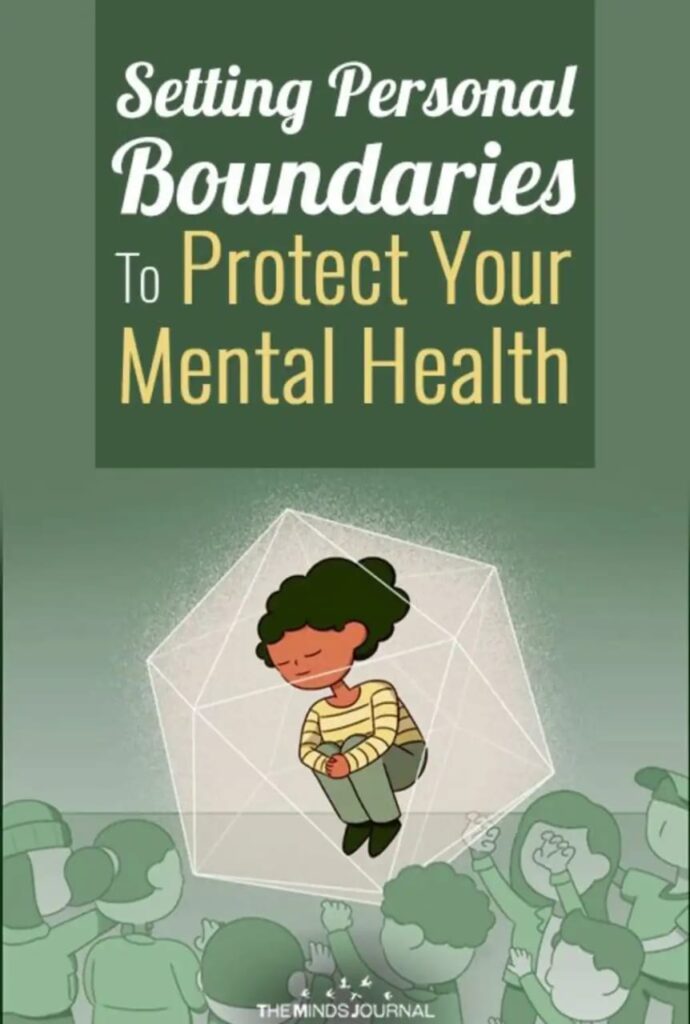
The concept of boundary setting is not a trendy self-care buzzword. It is a clinically validated cornerstone of mental health that is supported by decades of research from the American Psychological Association, the NHS, and leading psychology journals worldwide. Moreover, setting boundaries is not about building walls between yourself and others. As Dr. Brené Brown of the University of Houston puts it — boundaries are simply “what is okay and what is not okay.”
This guide will walk you through everything you need to understand about healthy boundaries — why they matter so deeply, what happens when they are absent, and precisely how to start setting them — even if the idea currently fills you with anxiety and guilt.
We have also connected this guide to our related posts on burnout prevention strategies and science-backed ways to calm anxiety without medication — because boundaries, burnout and anxiety are deeply and consistently interconnected.
⚠️ Medical Disclaimer: This article is for informational and educational purposes only. It is not a substitute for professional medical advice, diagnosis or treatment. If boundary issues are causing significant distress in your relationships or daily life, please consult a qualified therapist or mental health professional.
What Are Healthy Boundaries — And Why Do So Many People Struggle With Them?
Simply put, boundaries are the limits and rules we establish for ourselves in our relationships, our workplaces, and our daily interactions. They define what we are comfortable with, what we will accept, and what we will not tolerate — across physical, emotional, digital, and professional domains.
Nedra Glover Tawwab — licensed therapist, bestselling author of Set Boundaries, Find Peace, and one of the most respected voices in modern boundary psychology — defines healthy boundaries as “the expectations and needs that help you feel safe and comfortable in your relationships.” According to Tawwab, unhealthy boundaries — or the complete absence of boundaries — are among the most common root causes of anxiety, resentment, exhaustion, and relationship breakdown in her clinical practice.
Yet despite their fundamental importance, setting boundaries is genuinely difficult for a significant proportion of adults. Research published in the Journal of Social and Personal Relationships found that difficulty with boundary setting is strongly correlated with early family experiences, cultural conditioning, attachment style, and fear of rejection or conflict.
Why Boundary Setting Feels So Hard
Understanding why boundaries feel difficult — rather than simply telling yourself to “just say no” — is the first genuinely useful step toward changing the pattern.
The most common reasons people struggle to set boundaries include:
- Fear of rejection — a deep-rooted belief that saying no will cause others to withdraw love or approval
- Guilt and shame — feeling inherently selfish for prioritising your own needs above others
- People-pleasing patterns — learned behaviour, often rooted in childhood, of managing others’ emotions at the expense of your own
- Conflict avoidance — a genuine belief that any boundary assertion will inevitably result in conflict
- Cultural and social conditioning — particularly for women, many cultures explicitly teach that self-sacrifice is a virtue
- Codependency — in relationships where self-worth is tied to being needed by others, boundaries feel threatening to identity itself
Crucially, none of these patterns make you a bad person. They make you a human being who learned certain strategies for staying safe — strategies that may have once served you well, but are no longer working.
The Real Cost of Living Without Boundaries — What the Research Shows
Living without consistent personal boundaries does not simply feel uncomfortable. Over time, it produces measurable and serious consequences for mental, emotional, and physical health.
Chronic Stress and Cortisol Dysregulation
When we consistently override our own needs and limits to accommodate others, our bodies respond as though we are under chronic threat. Specifically, the amygdala — the brain’s threat-detection centre — registers boundary violations as social danger, triggering repeated activation of the fight-or-flight response and sustained elevation of cortisol.
Over time, this chronic cortisol elevation produces the same HPA axis dysregulation seen in burnout — explaining why people without healthy boundaries so consistently develop exhaustion, anxiety disorders, and physical health problems.
Resentment and Relationship Deterioration
Paradoxically, the very behaviour that people without boundaries use to maintain relationships — constant accommodation, never saying no, always putting others first — gradually destroys those relationships. Research published in the Journal of Clinical Psychology found that chronic boundary violations in relationships produce escalating resentment, emotional withdrawal, and eventual relationship breakdown — regardless of how much the boundary-less person sacrifices.
In other words, the absence of boundaries does not protect relationships. Ultimately, it ends them.
Anxiety, Depression and Loss of Identity
Furthermore, a consistent pattern of prioritising everyone else’s needs above your own gradually erodes your sense of self. Over time, you may lose clarity about what you actually want, value, or believe — because your identity has been constructed entirely around what others need from you.
Research published in Frontiers in Psychology identified boundary dysfunction — including chronic people-pleasing and inability to assert personal limits — as a significant predictor of generalised anxiety disorder and depressive episodes. Establishing healthy boundaries is therefore not merely a quality of life improvement. In many cases, it is a clinical mental health intervention.
The 5 Types of Boundaries You Need to Understand
Before setting boundaries effectively, it helps to understand that boundaries exist across several distinct domains of life. Each type requires different language and different strategies.
1. Emotional Boundaries
Emotional boundaries protect your feelings and emotional energy. They involve recognising that you are not responsible for managing other people’s emotions — and that others are not responsible for managing yours.
For example: “I am happy to support you through this, but I am not able to be your only source of emotional support.”
2. Physical Boundaries
Physical boundaries concern your personal space, your body, and your physical comfort. They include how close people stand to you, how and whether people touch you, and your right to physical privacy.
3. Time Boundaries
Time boundaries protect one of your most finite and valuable resources — your time. They include defining your working hours, protecting leisure time, and declining commitments that do not align with your priorities.
For example: “I am not available for calls after 7pm on weekdays.”
4. Digital Boundaries
In 2026, digital boundaries have become increasingly essential. They include response time expectations, social media engagement limits, and your right not to be contactable around the clock simply because technology makes it possible.

5. Values-Based Boundaries
Values-based boundaries protect your core principles and beliefs. They involve declining to participate in conversations, activities, or relationships that fundamentally contradict who you are and what you stand for.
10 Practical Steps to Start Setting Healthy Boundaries
Step 1 — Identify Where Your Limits Currently Are
Before setting any boundary, you first need to identify where your limits actually lie. To do this effectively, pay close attention to the physical and emotional signals your body sends you in social and professional situations.
Notice particularly when you feel:
- A sinking sensation of dread when your phone rings with a particular contact
- Resentment building after saying yes to something you genuinely wanted to decline
- Physical tension — tight shoulders, shallow breathing, stomach tightening — during certain interactions
- Persistent exhaustion after spending time with specific people
These physical signals are your nervous system communicating clearly that a limit has been reached or crossed. Consequently, learning to read them is the foundation of effective boundary setting.
Step 2 — Start With Low-Stakes Boundaries
Importantly, you do not need to begin with your most difficult boundary conversation. Instead, start practising in low-stakes situations where the consequences of boundary assertion feel manageable.
For example, decline a social invitation you do not want to attend without over-explaining. Order what you actually want at a restaurant rather than what feels easiest. Say no to a minor request at work that falls outside your responsibilities.
Each small boundary you successfully set builds the neural confidence and self-belief required for larger ones. Think of it as a graduated exposure programme for assertiveness — the same principle used in Cognitive Behavioural Therapy (CBT) for anxiety management.
Step 3 — Use Clear, Direct and Kind Language
One of the most common boundary-setting mistakes is over-explaining, apologising excessively, or softening the boundary to the point where it disappears entirely. In contrast, effective boundary language is clear, direct, and delivered with warmth — not aggression.
Useful boundary language frameworks:
- “I am not able to do that, but I can offer [alternative].”
- “That does not work for me.”
- “I need some time to think about that before committing.”
- “I am not comfortable with that.”
- “I understand you are disappointed. Nevertheless, my answer is no.”
Notice that none of these examples include lengthy justifications. As Nedra Tawwab emphasises — “No is a complete sentence.” You do not owe anyone an explanation for having a limit.
Step 4 — Manage the Guilt — It Is Normal and Temporary
When you first begin setting boundaries — particularly with people who have benefited from your previous lack of them — guilt is almost inevitable. This is entirely normal, and it does not mean you are doing something wrong.
Dr. Kristin Neff of the University of Texas Austin, the world’s leading researcher on self-compassion, notes that people who are new to boundary-setting often interpret the guilt they feel as evidence that their boundaries are unjust. In reality, guilt in this context is simply the discomfort of changing a learned pattern — not a moral signal.
To manage boundary guilt effectively:
Practice the self-compassion techniques researched by Dr. Kristin Neff — available at self-compassion.org
Acknowledge the feeling without acting on it — “I notice I feel guilty. That is okay. It will pass.”
Remind yourself that having needs is not selfish — it is human
Step 5 — Anticipate Pushback — And Prepare for It
Particularly with people who are accustomed to you having no boundaries, pushback when you begin asserting them is extremely common. They may express disappointment, guilt-trip you, become angry, or simply ignore your stated limit entirely.
This is uncomfortable — but it is also important information. How someone responds to your boundaries tells you a great deal about the nature of that relationship. Healthy relationships adapt to accommodate reasonable limits. Relationships that cannot survive your boundaries were not, in truth, healthy relationships.
Step 6 — Be Consistent — Boundaries Require Reinforcement
Setting a boundary once is rarely sufficient. Instead, boundaries typically require consistent, calm reinforcement over time — particularly in the early stages.
If you state a limit and then abandon it the first time someone pushes back, the message received is that your limits are negotiable. Consequently, consistent follow-through — even when uncomfortable — is what transforms a stated boundary into an established one.
Step 7 — Set Digital and Work Boundaries Deliberately
In 2026, the most commonly violated boundaries are digital and professional. Research from the University of California Irvine demonstrates that always-on digital availability is one of the most significant drivers of chronic stress and burnout in modern professional environments.
Practical digital boundaries:
Create a clear physical or temporal separation between work and personal time
Define your working hours clearly and communicate them to colleagues
Set an out-of-office response outside those hours and use it consistently
Turn off work notifications on personal devices after hours
Decide your social media response time expectations and communicate them when relevant
Step 8 — Protect Your Energy With People-Specific Boundaries
Not everyone in your life requires the same level of emotional investment from you. Some relationships energise you — they are characterised by genuine reciprocity, mutual care, and positive energy. Others consistently drain you — interactions that leave you feeling depleted, anxious, or resentful regardless of how much you give.
Recognising this distinction is not unkind — it is essential. You are allowed to limit the time and energy you invest in relationships that consistently cost more than they return. Reducing contact with chronically draining people is a valid and evidence-based form of self-care, not a character flaw.
Step 9 — Seek Therapeutic Support When Needed
For many people — particularly those with childhood experiences of boundary violations, trauma, or complex family dynamics — setting boundaries feels not just uncomfortable but genuinely impossible without professional support.
Cognitive Behavioural Therapy (CBT) and Dialectical Behaviour Therapy (DBT) both have strong evidence bases for helping people identify boundary patterns, challenge guilt-based thinking, and develop assertiveness skills in structured, supported ways.
Access support in your country:
Australia: Beyond Blue
Canada: CAMH
Step 10 — Remember That Boundaries Are an Act of Love
Perhaps the most important mindset shift in this entire guide is this: boundaries are not walls. They are not rejection. They are not selfishness.
As Dr. Henry Cloud and Dr. John Townsend — clinical psychologists and authors of the foundational text Boundaries — explain: “Boundaries define us. They define what is me and what is not me. A boundary shows me where I end and someone else begins, leading me to a sense of ownership.”
When you set clear, healthy boundaries, you bring your most present, energised, and genuine self to every relationship. You give from a full cup rather than an empty one. You protect the relationships that matter most by ensuring they are built on authentic engagement — not resentful obligation.
In other words — healthy boundaries do not push people away. When applied thoughtfully, they create the conditions in which genuine connection becomes possible.
Setting and maintaining healthy boundaries produces direct, measurable benefits across multiple dimensions of mental and physical health.
According to research published in the Journal of Counseling Psychology:
- Individuals with clearly defined personal boundaries report significantly lower levels of anxiety and depression
- Strong boundary-setting correlates with higher self-esteem and greater life satisfaction
- People who set work-life boundaries consistently show lower cortisol levels and reduced risk of burnout
- Assertiveness training — which includes boundary-setting skills — is one of the most effective interventions for social anxiety, as explored further in our guide on social anxiety vs shyness
Furthermore, when your boundaries are consistently respected, your parasympathetic nervous system spends more time in a regulated, safe state — producing lower baseline anxiety, better sleep, improved immune function, and greater emotional resilience over time.
Key Takeaways — Featured Snippet Optimised
Why healthy boundaries matter and how to set them:
- Living without boundaries produces chronic cortisol elevation, anxiety, resentment, and relationship deterioration
- The five boundary types are: emotional, physical, time, digital and values-based
- Boundary guilt is normal and temporary — it reflects changing a learned pattern, not doing something wrong
- Effective boundary language is clear, direct and kind — without excessive justification or apology
- Pushback from others when you begin setting limits is common — how people respond to your boundaries tells you important information about those relationships
- Boundaries must be consistently reinforced — stating a limit once is rarely sufficient
- Healthy boundaries reduce cortisol, lower anxiety, improve sleep and protect against burnout
- CBT and DBT both have strong evidence bases for helping people develop boundary-setting skills
- Boundaries are not rejection — they are the foundation of authentic and sustainable connection
Sources and External References
- American Psychological Association — Boundaries and Mental Health
- NHS UK — Mental Health and Self Care
- Mind UK — Wellbeing and Boundaries
- Journal of Social and Personal Relationships
- Journal of Clinical Psychology
- Journal of Counseling Psychology — APA
- Frontiers in Psychology — Boundaries and Anxiety
- Self-Compassion.org — Dr. Kristin Neff
- NHS Talking Therapies
- ADAA — Find a Therapist
- CAMH Canada
- Beyond Blue Australia
- NAMI — National Alliance on Mental Illness
- Behaviour Research and Therapy — CBT and Assertiveness
A Word From Mindnesto –
At Mindnesto, we believe that learning to set healthy boundaries is one of the most transformative things a person can do for their mental health. It is also one of the most misunderstood.
So many people we hear from have spent years believing that their inability to say no is simply a personality trait — something fixed, immovable, and defining. It is not. Boundary setting is a skill. Like every skill, it can be learned, practised, and gradually strengthened — regardless of your history, your relationships, or how impossible it currently feels.
You deserve to take up space. You deserve to have needs. You deserve relationships built on genuine reciprocity rather than endless self-sacrifice.
We are here every single step of the way. 💙
→ Read next: Burnout Prevention — 12 Science-Backed Strategies
→ Also read: 10 Science-Backed Ways to Calm Anxiety Without Medication
Frequently Asked Questions
What are healthy boundaries in relationships?
Healthy boundaries in relationships are the clearly defined limits that each person establishes to protect their emotional wellbeing, personal space, time, and values. According to Nedra Glover Tawwab, they represent the expectations and needs that help both people feel safe and respected. Crucially, healthy boundaries are communicated clearly and maintained consistently
Why do I feel guilty when I set boundaries?
Boundary guilt is extremely common — particularly for people who have spent years prioritising others’ needs above their own. According to Dr. Kristin Neff of the University of Texas Austin, guilt in this context reflects the discomfort of changing a deeply established behavioural pattern — not evidence that your boundaries are unjust or selfish.
How do I set boundaries with family members?
Family boundaries are often the most challenging to set because of long-established relationship dynamics and deeply held cultural expectations. The most effective approach is to start with smaller, lower-stakes boundaries, use clear and calm language without excessive justification, remain consistent even when faced with pushback, and seek support from a therapist if the process feels genuinely overwhelming.
What happens when someone violates my boundaries?
When a boundary is violated, the most effective response is to calmly restate the boundary and the consequence of continued violation — and then follow through on that consequence consistently. For example: “I asked not to be contacted after 8pm. If this continues, I will not be responding to late messages at all.” If boundary violations are persistent, severe, or part of a pattern of controlling behaviour, please seek support from a therapist or, where relevant, from appropriate safeguarding services.
Yes — significantly. Research published in the Journal of Counseling Psychology found that individuals with clearly established personal boundaries report lower anxiety, lower depression, higher self-esteem, and greater life satisfaction.
What is the difference between boundaries and walls?
Boundaries and walls are fundamentally different. Boundaries are permeable, flexible limits that allow genuine connection while protecting your wellbeing.
Sources and External References
- American Psychological Association — Boundaries and Mental Health
- NHS UK — Mental Health and Self Care
- Mind UK — Wellbeing and Boundaries
- Journal of Social and Personal Relationships
- Journal of Clinical Psychology
- Journal of Counseling Psychology — APA
- Frontiers in Psychology — Boundaries and Anxiety
- Self-Compassion.org — Dr. Kristin Neff
- NHS Talking Therapies
- ADAA — Find a Therapist
- CAMH Canada
- Beyond Blue Australia
- NAMI — National Alliance on Mental Illness
- Behaviour Research and Therapy — CBT and Assertiveness