





By mindnesto Editorial Team · Updated June 2026 · 10 min read
Reviewed for accuracy — sources cited from WHO, NHS, Harvard Health, PLOS Medicine and peer-reviewed research
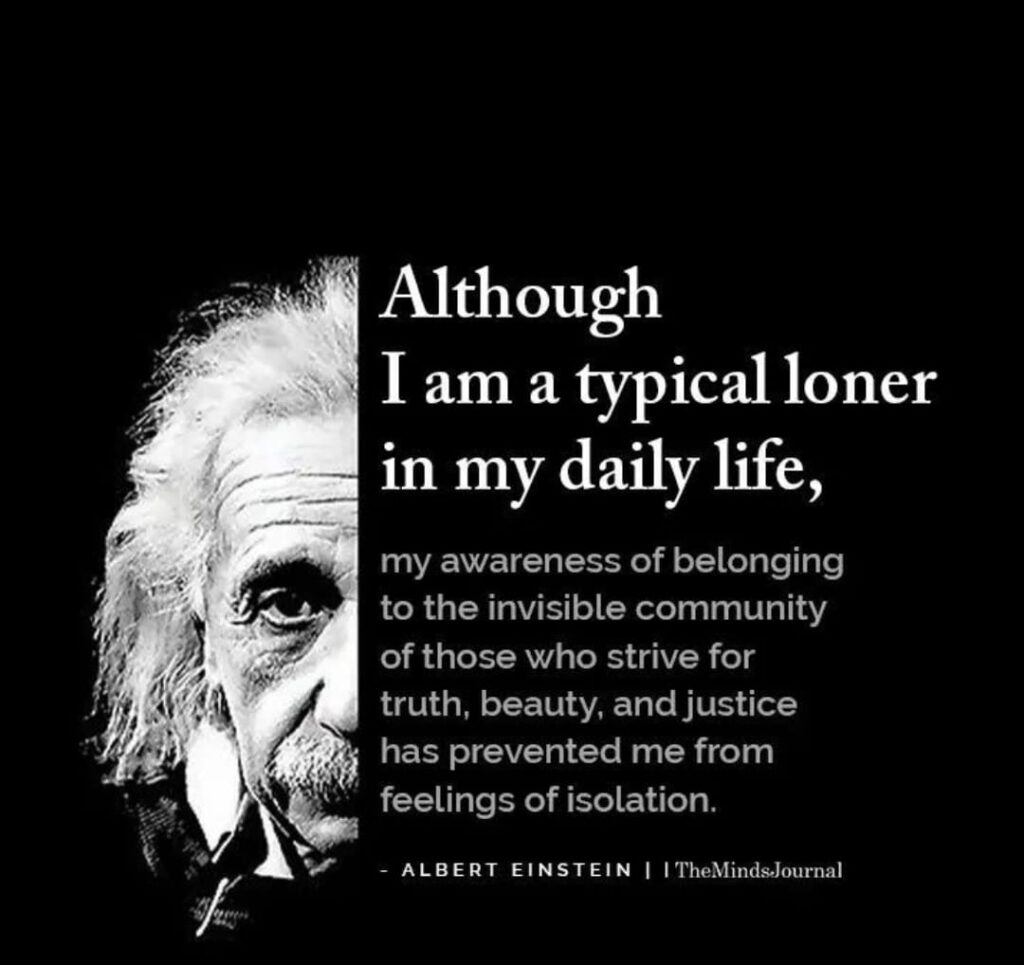
Loneliness does not always look the way people expect it to. Sometimes it arrives in a crowded room, when everyone around you is laughing and you feel completely invisible. Sometimes it settles in quietly on a Sunday afternoon, in the gap between a busy week and a week that has not started yet. Sometimes it hides inside a relationship, or a family, or a group chat that never quite touches the thing you actually need.
Knowing how to deal with loneliness starts with understanding what it genuinely is — and what the science says actually works. Because most of the common advice — join a club, call a friend, get a pet — barely touches the psychological and neurological reality of why loneliness persists even when people try all those things.
The scale of what we are dealing with is significant. The US Surgeon General Dr. Vivek Murthy declared loneliness a public health emergency in 2023, noting that its mortality impact is similar to smoking up to 15 cigarettes a day. The World Health Organization subsequently launched a global Commission on Social Connection, led by Dr. Murthy and African Union Youth Envoy Chido Mpemba, identifying loneliness as one of the defining public health challenges of the decade.
This guide covers the complete picture — the neuroscience of loneliness, the specific psychological patterns that maintain it, and 12 concrete strategies that go meaningfully beyond generic self-help advice.
We have linked this to our guides on social care mental health and depression mental health — because loneliness, depression, and social connection form an interconnected system that responds best when addressed together.
⚠️ Disclaimer: This article is for informational and educational purposes only. If loneliness is contributing to depression, suicidal thoughts, or severe mental health difficulties, please speak with your GP or a qualified mental health professional immediately.
What Loneliness Actually Is — And Why It Is So Misunderstood
Loneliness and being alone are not the same thing. That distinction sounds simple, but it changes everything about how to deal with it effectively.
You can spend an entire weekend in solitude and feel deeply content. You can sit in a meeting room surrounded by colleagues and feel profoundly isolated. Loneliness is not a measure of how many people are around you. It is a measure of the gap between the connection you have and the connection you genuinely need.
Dr. John Cacioppo of the University of Chicago — the world’s foremost loneliness researcher before his death in 2018 — defined loneliness as the perception of social isolation: the subjective experience of social connection being inadequate relative to your desired level of connection. This definition carries two critically important implications. First, loneliness is internal — it cannot be fixed simply by adding more people to your environment. Second, it is perceptual — meaning cognitive and psychological factors shape whether someone feels lonely in ways that go beyond their objective social circumstances.
Three Types of Loneliness You Need to Recognise
Understanding which type you are experiencing shapes which strategies will help most.
Situational loneliness follows a specific life event — moving to a new city, ending a relationship, losing someone important, changing jobs. It is painful, but it is responsive to the passage of time and to deliberate action. Most people recover from situational loneliness within months when they take active steps toward connection.
Chronic loneliness persists across years regardless of changing circumstances. It is maintained by specific psychological patterns — particularly negative social expectation and hostile attribution bias — that make connection genuinely difficult to establish and sustain even when the opportunity exists.
Existential loneliness is the deepest form — a sense of fundamental aloneness in one’s inner experience that cannot be fully bridged by any relationship. Existential loneliness is not a pathology. It is part of the human condition, and addressing it requires meaning-making, self-compassion, and often spiritual or philosophical engagement rather than social activity alone.
The Neuroscience of Loneliness — What Happens in Your Brain and Body
This is the section that Healthline, HelpGuide, and the Mental Health Foundation all skip — yet understanding it is arguably the most important step toward learning how to deal with loneliness effectively.
Loneliness Activates the Threat System
When you feel lonely, your brain does not register it as a social preference. It registers it as a threat. Specifically, loneliness activates the same neural threat circuitry — including the amygdala and the hypothalamic-pituitary-adrenal (HPA) axis — that responds to physical danger.
Research published in Perspectives on Psychological Science found that chronically lonely individuals show elevated cortisol throughout the day, heightened inflammatory markers, suppressed immune function, and increased amygdala reactivity to social stimuli. Over time, this sustained threat activation produces the same physiological profile as chronic stress — contributing to cardiovascular disease, immune dysfunction, and accelerated cognitive decline.
A landmark meta-analysis by Dr. Julianne Holt-Lunstad of Brigham Young University — published in PLOS Medicine — found that social isolation increased mortality risk by 26–29%. Loneliness, the subjective experience, increased it by 26%. These figures exceed the mortality impact of obesity, physical inactivity, and air pollution.
The Hostile Attribution Bias — Why Loneliness Maintains Itself
Here is the most clinically important neuroscientific finding about loneliness — and the one nobody else is writing about. Chronic loneliness changes how the brain processes social information in ways that make connection progressively harder to achieve.
Lonely individuals develop what researchers call hostile attribution bias — a tendency to interpret ambiguous social signals as rejection, threat, or disinterest. When someone does not reply to a message quickly, a lonely brain concludes they are not interested, rather than simply busy. When a social gathering feels awkward, a lonely brain concludes others dislike you, rather than that groups take time to warm up.
This bias is not a character flaw. It is an evolutionary adaptation — the lonely brain becoming hypervigilant to social threat because exclusion was genuinely dangerous for our ancestors. However, in modern life, it creates a self-fulfilling prophecy: loneliness produces the hypervigilance that makes connection feel threatening, which leads to withdrawal, which deepens the loneliness.
Learning how to deal with loneliness effectively requires addressing this cognitive pattern directly — not just increasing social exposure.
The 2026 Brain Turning Points and Loneliness Vulnerability
A 2025 University of Cambridge study analysing nearly 4,000 brain scans revealed that the human brain undergoes four major structural turning points at approximately ages 9, 32, 66, and 83. Each turning point represents a period of significant neurological reorganisation — and each creates specific loneliness vulnerability windows.
The transition around age 32 is particularly relevant for working adults in Tier 1 countries. This neurological shift coincides with the life circumstances — career demands, relationship pressures, geographic mobility, declining friend networks — that make the mid-30s one of the loneliest demographic windows in modern adult life. Understanding this as a biological as much as a social phenomenon normalises the experience and points toward targeted rather than generic responses.
12 Science-Backed Strategies to Deal With Loneliness
1. Distinguish the Type of Loneliness You Are Experiencing
Before trying any strategy, spend 10 minutes identifying whether your loneliness is situational, chronic, or existential — as identified above. Write your honest answer. This single step prevents the common and demoralising experience of applying the wrong solution to the wrong problem.
If your loneliness is situational, action-based strategies — joining groups, initiating contact, building routines — will produce results relatively quickly. If it is chronic, cognitive work on hostile attribution bias and social expectation must come first. If it is existential, meaning-making and self-compassion are more relevant entry points than social scheduling.
2. Address Hostile Attribution Bias With CBT Techniques
For chronic loneliness specifically, this is the highest-leverage intervention — and the one most commonly overlooked. Research published in Behaviour Research and Therapy found that CBT targeting social cognition — specifically the tendency to interpret ambiguous social signals as rejection — produced significant reductions in loneliness in people for whom social exposure alone had not helped.
Practical exercises:
When you notice a negative social interpretation arising, pause and ask: what are three alternative explanations for this situation that do not involve rejection? The goal is not to talk yourself into forced positivity. It is to genuinely widen the range of possible meanings you attribute to social events — which research consistently shows reduces the defensive withdrawal that maintains loneliness.
3. Prioritise Quality Over Quantity in Every Social Interaction
The research on loneliness and connection is unambiguous on one point. The depth of social connection matters far more than its frequency or volume. A single 30-minute conversation in which you feel genuinely seen and understood provides more protection against loneliness than five superficial interactions that leave you feeling invisible.
This matters practically because it redirects your energy. Rather than maximising the number of social events you attend, focus instead on the depth of engagement within the time you have. Ask genuine questions. Share something real about your own experience. Stay present rather than scanning the room. Each of these small shifts changes the neurological quality of an interaction in ways that surface-level exposure cannot replicate.
4. Strengthen Existing Relationships Before Building New Ones
Most advice about loneliness focuses on making new friends. Harvard Health research makes a compelling case for a different starting point — strengthening relationships you already have, including ones that have drifted.
Existing relationships carry a significant advantage over new ones: shared history. Shared memory activates the brain’s autobiographical networks differently from new social information, creating felt connection more rapidly. Reaching out to someone you have drifted from — even with a simple, specific message acknowledging the drift — is one of the highest-return connection investments available.
A template that works: “I’ve been thinking about you lately — I realised we haven’t properly caught up in ages. I miss that. Would you be up for a call sometime this week?”
5. Use Social Prescribing — The NHS-Endorsed Approach
Social prescribing — the practice of healthcare professionals directing patients toward community-based social activities as mental health interventions — is now endorsed by the NHS in England and gaining traction across Canada and Australia.
Research published in Perspectives on Psychological Science confirmed that structured community social activities produce measurable improvements in loneliness, depression, and overall wellbeing — with effects that increase over time with consistent participation.
How to access social prescribing:
- UK: Ask your GP directly about social prescribing referrals. All NHS GP practices now have access to social prescribing link workers who can connect you with local activities matched to your interests and circumstances
- USA: NAMI community finder
- Canada: CAMH resources
- Australia: Beyond Blue
6. Practise Co-Regulation — The Most Underrated Strategy
Co-regulation — the biological process through which one person’s calm nervous system helps regulate another’s — is possibly the most potent and least discussed mechanism through which human connection heals loneliness.
Physical proximity to a calm, trusted person activates the ventral vagal pathway of the vagus nerve — your body’s primary safety signal. This activation produces a measurable shift in your physiological state: heart rate slows, cortisol reduces, and the social engagement system opens. This is why sitting in the same room as someone you trust feels nourishing even when you are not speaking, and why phone calls — however warm — do not fully replicate the benefit of physical presence.
Practically, this means prioritising in-person time with people whose presence makes you feel safe. Even brief periods of physical co-presence — a shared meal, a walk alongside someone, a quiet afternoon in the same room — activate co-regulation in ways that digital interaction cannot fully match.
7. Volunteer — For Neuroscientific Reasons
Volunteering is one of the most consistently evidence-backed loneliness interventions — and the neurological mechanism behind it explains why. Research by Dr. Elizabeth Dunn of the University of British Columbia found that spending time in service of others is one of the most reliable predictors of personal wellbeing, activating reward circuitry in ways that purely self-focused social activity does not.
Furthermore, volunteering provides the structured social interaction with clear shared purpose that research identifies as particularly effective for people who find unstructured social situations — parties, meetups, casual socialising — anxiety-provoking. The shared task provides scaffolding for connection, reducing the pressure of direct social performance.
8. Engage With Nature as a Loneliness Intervention
Time in natural environments reduces loneliness through mechanisms that go beyond simple mood improvement. Research published in Environment and Behavior found that exposure to natural environments reduces the hypervigilance and social threat monitoring that characterises chronic loneliness — essentially calming the amygdala in ways that make subsequent social engagement feel less threatening.
Additionally, natural spaces facilitate what researchers call soft fascination — the kind of effortless, gentle attention that nature elicits — which restores directed attention capacity and reduces the cognitive depletion that makes social engagement feel effortful during lonely periods.
Even 20 minutes outdoors in a natural setting produces measurable reductions in cortisol. More importantly, outdoor spaces — parks, community gardens, walking routes — provide natural opportunities for the low-stakes, side-by-side micro-connections that build social confidence gradually.
9. Practise Self-Compassion Rather Than Self-Criticism
Lonely people are often their own harshest critics — attributing their loneliness to personal inadequacy, social incompetence, or being fundamentally unlovable. This self-critical stance is both inaccurate and counterproductive. It increases the shame that drives social withdrawal, and it depletes the psychological resources needed for the risk-taking that genuine connection requires.
Research by Dr. Kristin Neff of the University of Texas Austin consistently demonstrates that self-compassion — treating yourself with the same warmth and understanding you would offer a close friend — reduces social anxiety, increases willingness to engage in new social situations, and directly reduces feelings of loneliness.
A self-compassion exercise for loneliness:
Place one hand on your heart. Acknowledge what you are feeling honestly: “I am feeling lonely right now. This is genuinely painful.” Then remind yourself that loneliness is a universal human experience: “So many people feel exactly this way. I am not uniquely broken.” Finally, offer yourself the kindness you would give a friend: “What do I most need right now? Can I offer that to myself?”
10. Manage Digital Social Life Deliberately
Technology can both reduce and amplify loneliness — and the difference lies almost entirely in how you use it. Passive social media consumption — scrolling through others’ curated highlights while remaining socially inert yourself — is consistently associated with increased loneliness. Active digital engagement — direct messaging, video calling, participating in specific interest communities — shows neutral or positive loneliness outcomes.
The principle is straightforward. Use digital tools to initiate, deepen, and maintain genuine connection. Do not use them as a substitute for it. One genuine video call with someone who matters to you produces more loneliness relief than three hours of passively observing other people’s lives online.
For deeper guidance on managing the digital dimension of loneliness, our digital wellness guide provides a complete framework.
11. Build Meaningful Routine — The Structure That Supports Connection
Consistent daily and weekly routines create the predictable social contact points that allow relationships to develop organically over time. The morning coffee shop where the barista knows your order. The weekly running group where faces become familiar. The neighbourhood where you walk at the same time and begin to recognise people.
These micro-connections are not trivial. Research by Dr. Nicholas Epley of the University of Chicago found that brief genuine interactions with strangers — baristas, commuters, service workers — produced significantly higher positive affect than social isolation, and that the barrier to initiating them is primarily perceptual rather than real.
Building routines that place you in consistent proximity to the same people over time is one of the most natural and sustainable ways to address loneliness — because it replaces the pressure of deliberately initiating social contact with the organic repetition through which connection naturally forms.
12. Seek Professional Support When Loneliness Is Entrenched
When loneliness has persisted for more than a year, is accompanied by depression or social anxiety, or has become a central organising feature of your life rather than a temporary experience, professional therapeutic support significantly improves outcomes.
CBT for loneliness specifically targets the hostile attribution bias, negative social prediction, and avoidance patterns that maintain chronic loneliness. For people whose loneliness is rooted in early attachment experiences, schema therapy addresses the underlying relational beliefs most effectively.
Access professional support:
- UK: NHS Talking Therapies — free self-referral | Mind UK
- USA: ADAA Therapist Finder | NAMI
- Canada: CAMH
- Australia: Beyond Blue — 1300 22 4636
Key Takeaways — Featured Snippet Optimised
How to deal with loneliness — the complete evidence-based summary:
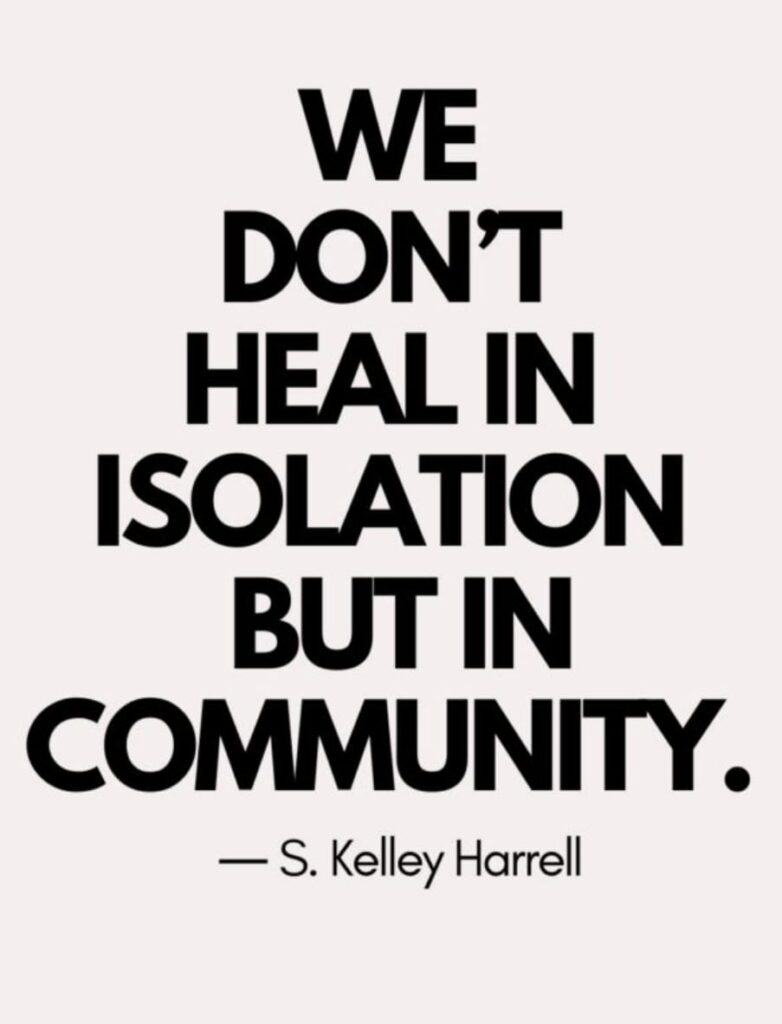
- Loneliness is the gap between desired and actual connection — not a measure of how many people surround you
- Its mortality impact equals smoking 15 cigarettes daily, making it one of the most serious public health challenges of 2026
- Three types require different approaches: situational, chronic, and existential loneliness
- Hostile attribution bias — interpreting ambiguous social signals as rejection — maintains chronic loneliness and must be addressed directly through CBT
- Quality of connection matters more than quantity — one genuinely deep interaction outweighs ten surface-level ones
- Co-regulation through physical proximity to calm, trusted people activates the ventral vagal pathway and directly reduces loneliness at the neurological level
- Volunteering activates reward circuitry in ways that purely self-focused social activity does not
- Nature exposure reduces amygdala hypervigilance, making subsequent social engagement feel less threatening
- Self-compassion reduces the shame that drives social withdrawal
- Passive social media use worsens loneliness — active, directed digital communication helps
- Social prescribing through NHS GPs provides structured, evidence-based community connection
- Entrenched chronic loneliness responds well to CBT and schema therapy
A Word From mindnesto-
At nindnesto, we know that the hardest part of loneliness is not the absence of people. It is the story that absence tells you about yourself — that you are somehow less loveable, less interesting, less worthy of the connection that seems to come so easily to everyone else around you.
That story is not true. It is the hostile attribution bias doing what it evolved to do — protecting you from further rejection by keeping you from trying. And the moment you recognise it as a brain pattern rather than a fact, something genuinely shifts.
You are not broken. You are not uniquely alone in feeling alone. And the connection you are looking for is genuinely available — with the right understanding, the right strategies, and enough self-compassion to keep trying even when it feels difficult.
We are here every step of the way. 💙
→ Read next: Social Care Mental Health — Building Genuine Human Connection
→ Also read: Men’s Mental Health — Breaking the Silence
Frequently Asked Questions
Why do I feel lonely even when I am around people?
Feeling lonely in social situations — sometimes called social loneliness — typically reflects a gap between the depth of connection available in those interactions and the depth of connection you genuinely need. It is also often driven by hostile attribution bias: the tendency, common in chronically lonely individuals, to interpret ambiguous social signals as indifference or rejection rather than simple busyness or social shyness. Addressing this cognitive pattern through CBT techniques — specifically learning to generate alternative, non-rejection-based interpretations of social events — is one of the most effective ways to reduce loneliness in social situations.
Is loneliness dangerous for health?
Yes — significantly. A landmark meta-analysis by Dr. Julianne Holt-Lunstad of Brigham Young University, published in PLOS Medicine, found that loneliness increases mortality risk by 26% and social isolation by 29% — comparable to the mortality impact of smoking 15 cigarettes daily. The WHO Commission on Social Connection, launched in 2023 under US Surgeon General Dr. Vivek Murthy, identified loneliness as one of the most pressing global public health challenges, linked to increased rates of cardiovascular disease, dementia, depression, anxiety, and premature death.
How long does it take to overcome loneliness?
Recovery from situational loneliness — following a move, breakup, or bereavement — typically occurs within 3–6 months when active connection-seeking steps are consistently taken. Chronic loneliness, which is maintained by specific cognitive patterns including hostile attribution bias and negative social expectation, takes longer and responds best to targeted therapeutic support alongside social strategies. Research suggests that people who combine cognitive work (CBT) with deliberate social engagement show significantly faster loneliness recovery than those who try either approach alone.
What is the difference between loneliness and solitude?
Solitude is chosen aloneness that feels restorative — time spent with yourself that you genuinely value and enjoy. Loneliness is unchosen or unwanted social disconnection that produces distress. Many people who describe themselves as introverts actively choose and enjoy solitude without experiencing loneliness. Conversely, some people feel profoundly lonely despite rarely being physically alone. The distinction matters practically because the strategies that support solitude — reflection, creative activity, inner development — are different from those that address loneliness, which require deliberate movement toward connection.
Can loneliness cause depression?
Yes — the relationship runs strongly in both directions. Loneliness increases the risk of depression by removing the social support that acts as one of its most powerful natural buffers. Depression, in turn, amplifies loneliness by producing withdrawal, anhedonia, and the cognitive distortions that make connection feel pointless or impossible. When both conditions are present simultaneously — which is extremely common — treating them in parallel produces the best outcomes. Our depression mental health guide provides the complete treatment pathway for depression that co-occurs with loneliness.
Sources and External References
- WHO — Commission on Social Connection 2023
- NHS — Loneliness and Mental Health
- PLOS Medicine — Holt-Lunstad Mortality Study
- Perspectives on Psychological Science — Loneliness Research
- Harvard Health — Strengthen Existing Relationships
- Mind UK — About Loneliness
- Mental Health Foundation — Loneliness
- Behaviour Research and Therapy — CBT and Loneliness
- Journal of Social and Personal Relationships
- Self-Compassion.org — Dr Kristin Neff
- NHS Talking Therapies
- ADAA — Find a Therapist
- NAMI USA
- CAMH Canada
- Beyond Blue Australia