




By mindnesto Editorial Team · Updated September 2026 · 10 min read
Reviewed for health information quality using guidance and research from Harvard Health, Mayo Clinic, and PubMed.
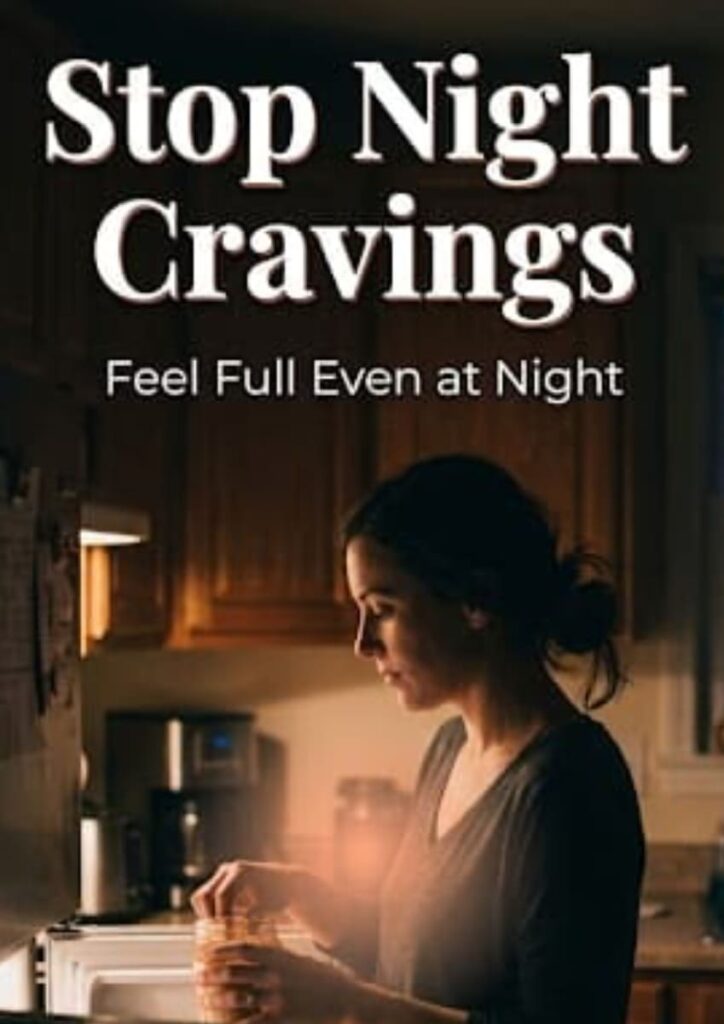
You don’t always crave food at night. Sometimes you crave relief from the day.
After a stressful day, nighttime can become the moment when emotions finally catch up with you.
You may finish work, put the children to bed, close your laptop, or finally get into bed. Then the craving begins.
Chips. Chocolate. Ice cream. Biscuits. Takeout.
Sometimes you are physically hungry.
Other times, the urge appears even though you ate dinner recently.
This can happen because stress, fatigue, habits, emotions, food cues, and sleep patterns can all influence eating behavior. Harvard Health specifically lists nighttime cravings as one form of stress eating.
The goal is not to label nighttime eating as “bad.”
The goal is to understand why it is happening and create a calmer response.
Why Does Stress Eating Happen at Night?
Nighttime stress eating can happen because the day has left you mentally or emotionally depleted.
Stress may increase cravings, while fatigue can make it harder to pause and make deliberate food decisions. Emotional triggers such as boredom, loneliness, frustration, or anxiety can also make food feel comforting.
A useful first step is to ask:
“Am I physically hungry, emotionally overwhelmed, tired, or simply following a nighttime habit?”
You may still choose to eat.
The aim is awareness, not restriction or guilt.
What Is Nighttime Stress Eating?
Nighttime stress eating refers to eating in the evening or late at night in response to stress, emotional discomfort, fatigue, habit, or environmental cues.
It can overlap with emotional eating and stress eating, but the timing is what makes nighttime eating particularly interesting.
For some people, nighttime is the first quiet moment of the day.
During the day, responsibilities provide constant stimulation.
At night, there may finally be space to notice:
- stress
- loneliness
- boredom
- anxiety
- frustration
- mental exhaustion
- unresolved emotions
Food can then become an easy source of comfort or distraction.
Harvard Health describes stress eating as using food as a coping mechanism when life feels difficult and notes that nighttime cravings are a common form
Why Does Stress Eating Get Worse at Night?
There isn’t one explanation for everyone.
Several factors can overlap.
1. Your Mental Energy Is Lower
By evening, you have already made decisions about work, family, responsibilities, messages, errands, and meals.
This connects directly with your food decision fatigue.
When mental energy is low, a quick, familiar food can feel easier than thinking through another decision.
That does not mean you lack discipline.
It may mean your brain wants simplicity.
Read next:
[Food Decision Fatigue: 8 Ways to Reduce Food Stress]
2. Stress Can Influence Eating Behavior
Stress can affect appetite and eating patterns in different ways.
Some people eat less during acute stress.
Others experience stronger cravings or overeating, especially when stress continues.
Harvard Health notes that persistent stress can influence appetite and food preferences, while Mayo Clinic lists overeating or undereating among possible behavioral effects of stress.
This means there is no single “stress response” around food.
Your response may also change from one situation to another.
3. Food Can Become a Reward
After a difficult day, you may unconsciously think:
“I deserve something.”
That something might become your favorite snack.
The food is not necessarily the real problem.
The deeper pattern may be:
stress → effort → reward → food
Over time, the brain can learn that certain situations predict certain foods.
Harvard Health notes that rewarding food experiences can reinforce emotional eating patterns.
4. You May Finally Have Time to Feel
Busy days can keep emotions in the background.
Then nighttime arrives.
The distractions stop.
Your mind becomes quieter.
Suddenly you notice that you’re:
- lonely
- worried
- angry
- overwhelmed
- disappointed
- emotionally drained
Eating can temporarily distract from those feelings.
But food cannot always address the underlying need.
Mayo Clinic describes emotional eating as eating for comfort during emotions such as stress, boredom, anger, fear, or loneliness.
5. Fatigue Can Make Cravings Harder to Manage
Being tired changes how you experience the end of the day.
When you are exhausted, cooking a balanced meal may feel like another task.
Opening a snack packet takes seconds.
Harvard Health recommends prioritizing sleep because fatigue can amplify cravings and make stress eating harder to manage.
So sometimes the solution is not another food rule.
It may be better sleep and less evening decision-making.
Nighttime Hunger vs. Nighttime Stress Eating
These two can look similar.
They are not always the same.
| Physical hunger | Stress or emotional eating |
|---|---|
| May develop gradually | May appear suddenly |
| Can happen several hours after eating | Can happen soon after eating |
| Many foods may sound acceptable | A specific comfort food may feel necessary |
| Eating usually reduces hunger | Eating may not resolve the emotional need |
| Physical hunger cues may be noticeable | Emotional or situational cues may dominate |
| Can occur at any time | Often follows a stressful or emotional situation |
These are clues, not diagnostic rules.
You can also experience both.
For example:
You may have had a stressful day and genuinely need dinner.
That is why “emotional eating versus physical hunger” should not become another rigid food rule.
7 Common Nighttime Stress-Eating Triggers
Understanding the trigger is often more useful than criticizing the behavior.
1. A Difficult Workday
You finally finish work and want something comforting.
2. Relationship Stress
An argument or difficult conversation may leave you emotionally unsettled.
3. Boredom
Scrolling through your phone while watching television can create repeated food cues.
4. Loneliness
Food may temporarily provide comfort when you want connection.
5. Anxiety
Worry about tomorrow can make eating feel distracting.
6. Fatigue
When you are exhausted, convenient foods may become especially appealing.
7. Restrictive Food Rules
If you spend the day trying to eat “perfectly,” you may feel mentally exhausted by evening.
Mayo Clinic cautions that excessive restriction can increase cravings and recommends avoiding a deprivation-based approach.
How to Stop Automatic Nighttime Stress Eating
The goal should not be:
“Never eat at night.”
Instead, aim for:
“Understand what is driving the urge.”
Try this five-step nighttime reset.
Step 1: Pause for 60 Seconds
Before reaching for food, stop.
Take a few slow breaths.
You do not need to fight the craving.
Simply create a small space between the urge and the action.
Step 2: Check Your Physical Hunger
Ask:
- When did I last eat?
- Did I have a satisfying meal?
- Do I notice physical hunger?
- Would I be comfortable eating a normal meal?
If you are genuinely hungry, eat.
You do not need to earn food.
Step 3: Name What You Are Feeling
Try completing this sentence:
“Right now, I feel ______.”
Maybe the answer is:
- stressed
- lonely
- bored
- angry
- anxious
- tired
- overwhelmed
- emotionally empty
Naming the emotion can make the pattern easier to understand.
Step 4: Ask What You Actually Need
Sometimes the need is food.
Sometimes it is:
- rest
- sleep
- connection
- reassurance
- quiet
- emotional support
- a break
- relaxation
- a change of environment
The question isn’t:
“How do I stop myself from eating?”
Try:
“What would actually help me right now?”
Step 5: Make a Conscious Choice
After the pause, you can still choose to eat.
That matters.
Mindful eating is not another form of restriction.
You might say:
“I understand why I want this. I can decide consciously whether I still want it.”
This reduces the shame cycle.

Try the 5-Minute Nighttime Stress Reset
When the craving feels emotional rather than physical, try this:
Minute 1 — Breathe
Take several slow breaths.
Minute 2 — Name
Identify your emotion.
Minute 3 — Check
Ask whether you are physically hungry.
Minute 4 — Choose
Select one supportive response:
- drink water
- make tea
- take a short walk
- stretch
- journal
- shower
- call someone
- sit somewhere quieter
- prepare a meal if hungry
Minute 5 — Reassess
Ask:
“Do I still want to eat?”
If yes, you can make a conscious decision.
If the urge has decreased, you may have discovered that the original need was emotional or situational.
What If You Still Want to Eat?
Eat without turning it into a punishment cycle.
This is important.
You do not need to compensate the next day.
You do not need to skip breakfast because you ate a snack.
You do not need to label yourself as “bad.”
One episode of emotional or nighttime eating does not define your relationship with food.
Mayo Clinic recommends learning from setbacks rather than using guilt to restart the cycle.
The more useful question is:
“What can I learn from what happened?”
Build a Lower-Stress Evening Food Routine
Prevention can be easier than relying on willpower at 11 p.m.
Create a predictable dinner routine
A simple dinner plan reduces late-night uncertainty.
Keep easy meals available
When you’re exhausted, having a few reliable meals can reduce decision fatigue.
Avoid extreme daytime restriction
Trying to eat as little as possible can make evening hunger and cravings harder to interpret.
Create a transition after work
Give your brain a signal that work is finished.
Try:
- changing clothes
- taking a short walk
- showering
- journaling
- listening to music
- having a quiet tea break
Protect your sleep routine
Stress and sleep can influence each other.
Mayo Clinic recommends a consistent, relaxing bedtime routine and notes that stress can interfere with sleep.
Nighttime Stress Eating and Food Decision Fatigue
Imagine this:
You have worked all day.
You answered messages.
You solved problems.
You made dozens of decisions.
Then you have to decide:
What should I eat?
Your mental energy is already low.
A simple food choice can suddenly feel complicated.
This is where food decision fatigue can interact with stress eating.
Instead of creating another complicated nutrition system, simplify the system itself.
Create:
- 5–10 reliable meals
- a repeatable grocery list
- simple dinner themes
- easy backup meals
- realistic snack options
The objective is not perfect eating.
It is less mental friction around everyday eating.
Is Nighttime Eating Always a Problem?
No.
Eating at night is not automatically unhealthy or evidence of emotional eating.
You may simply be hungry.
Your schedule may also naturally place dinner or a snack later in the evening.
The concern is more about the pattern and its impact.
Ask:
- Is this happening frequently?
- Do I feel out of control?
- Am I eating mainly to manage emotions?
- Is it disrupting my sleep?
- Am I experiencing significant distress?
- Does food feel like my only coping mechanism?
Those questions provide more useful information than simply asking what time you ate.
What Is Night Eating Syndrome?
Night eating syndrome (NES) is a recognized eating disorder involving a recurring pattern of substantial evening or nighttime food intake, often accompanied by sleep disturbance and reduced appetite in the morning.
It is different from occasionally having a late-night snack.
Research has examined relationships between night eating, emotional eating, sleep quality, and mood.
If you regularly wake during the night to eat, have difficulty sleeping unless you eat, consume a large proportion of your food late in the day, or experience significant distress around nighttime eating, consider discussing the pattern with a qualified healthcare professional.
Do not self-diagnose based on an online article.
When Should You Get Professional Support?
Consider talking with a healthcare professional or qualified mental-health professional if nighttime eating:
- feels consistently out of control
- causes significant distress
- regularly interferes with sleep
- involves repeated episodes of eating unusually large amounts
- is accompanied by intense guilt or shame
- feels like your primary way of coping with emotions
- is becoming increasingly frequent
- is affecting your daily functioning
A therapist, physician, registered dietitian, or eating-disorder specialist can help identify what is happening without reducing the issue to willpower.
A Simple Nighttime Eating Check-In
Save this five-question check-in:
1. Am I physically hungry?
2. What happened before this craving?
3. What emotion am I experiencing?
4. What do I actually need right now?
5. If I eat, can I do it without guilt or punishment afterward?
This turns nighttime eating into information.
Not failure.
Your Nighttime Stress-Eating Plan
Tonight, try this simple system:
Before eating:
Pause.
During the pause:
Check hunger.
Then:
Name the emotion.
Next:
Identify the need.
Finally:
Choose consciously.
If you’re hungry, eat.
If you’re emotionally overwhelmed, try meeting the emotional need first.
If you still want the food afterward, you can choose to eat it.
There is no requirement for perfection.
Frequently Asked Questions
Why do I crave food at night when I’m not hungry?
Stress, boredom, emotional discomfort, fatigue, habits, food cues, and learned associations can contribute to nighttime cravings. Harvard Health identifies nighttime cravings as a common form of stress eating.
Why do I stress eat at night?
Nighttime may be when you finally have fewer distractions. Emotional fatigue, stress, boredom, loneliness, and tiredness can make food feel comforting or rewarding.
Does stress make you crave sugar?
Stress can influence appetite and food preferences, and some people experience stronger cravings for highly palatable foods during stressful periods. Individual responses vary.
Should I stop eating after a certain time?
Not necessarily.
There is no universal bedtime cutoff that applies to everyone. Your overall eating pattern, hunger, schedule, health needs, and sleep pattern matter.
How can I stop emotional eating at night?
Start by identifying the trigger rather than relying on restriction. Check physical hunger, name the emotion, identify the underlying need, and create a short pause before deciding what to do.
Is nighttime eating the same as night eating syndrome?
No.
Occasional nighttime eating is common. Night eating syndrome involves a recurring clinical pattern that can include substantial nighttime intake, sleep disruption, and changes in morning appetite.
Can lack of sleep increase nighttime cravings?
Poor sleep and stress can interact with eating behavior. Fatigue may make cravings harder to manage, while stress can also disrupt sleep.
A word from mindnesto-
At mindnesto we believe nighttime stress eating is not simply a story about willpower.
Sometimes you are hungry.
Sometimes you are stressed.
Sometimes you are tired.
Sometimes food has become a familiar form of comfort.
And sometimes several of these things happen together.
Instead of asking:
“How do I stop eating at night?”
Try asking:
“What is happening in my body, emotions, and environment right now?”
That small shift can turn nighttime eating from a source of shame into an opportunity for self-awareness.
You don’t need a perfect relationship with food. You need a more understanding one.
Medical Disclaimer
This article is for educational purposes only and does not provide medical or psychological diagnosis, treatment, or individualized dietary advice.
Nighttime eating can have many possible causes. If eating patterns are persistent, distressing, difficult to control, or interfering with sleep or daily life, consider speaking with a qualified healthcare professional.