




By mindnesto Editorial Team · Updated November 2026 · 12 min read
Sources include the Merck Manual (reviewed July 2026 by a University of Pennsylvania sleep specialist), the American Psychiatric Association, a systematic review in Sleep Medicine Reviews, ClinicalTrials.gov and PubMed Central.
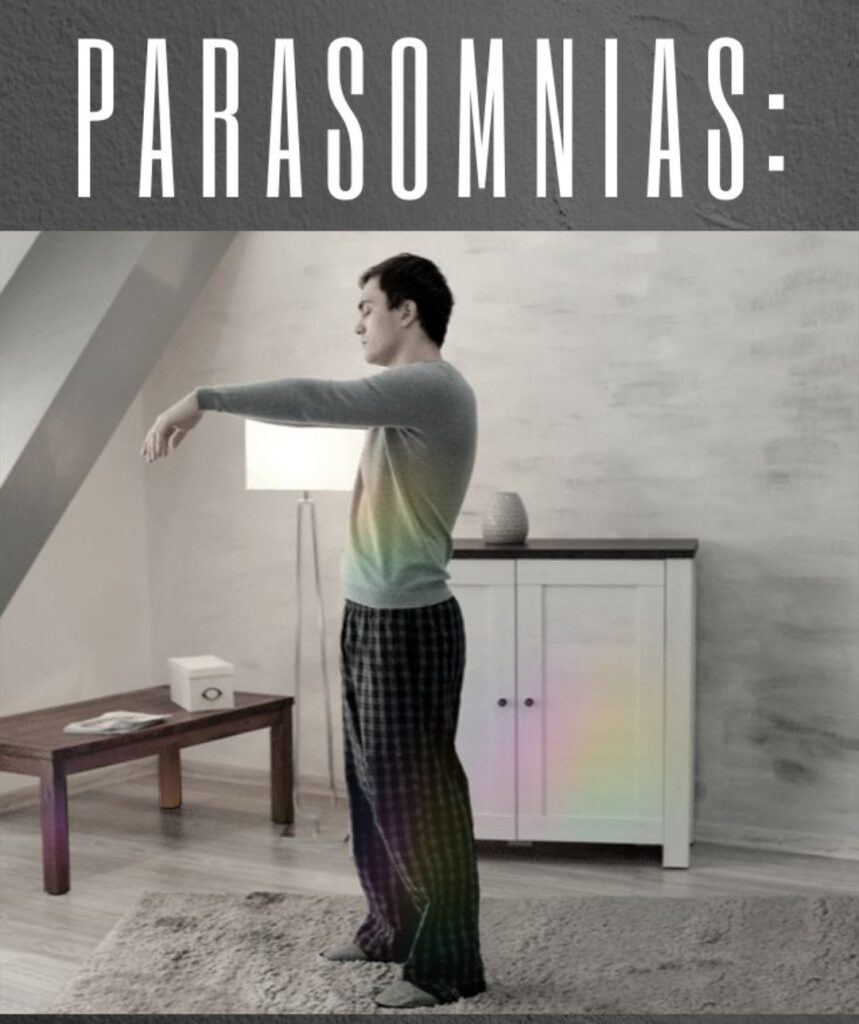
Someone finds you standing in the kitchen at 2am. You have no memory of getting up. Or you wake with a pounding heart after yelling in your sleep. Or your partner reports you have been swinging your arms as if fighting in a dream.
These are all parasomnias. Parasomnias in adults are far more common than most people realise, and they often carry quiet shame. The truth is simple: they are recognised sleep conditions, and most can be managed safely.
This guide explains the main types, why they happen, and what really helps. It sits within our wider guide to sleep problems in adults.
⚠️ Medical Disclaimer: This article is for information only. It does not replace advice from your GP or a sleep specialist. Seek assessment if episodes cause injury, put others at risk, or begin suddenly in later life.
What Are Parasomnias in Adults?
Parasomnias are unwanted physical or mental events that happen during sleep, or while waking from sleep. They include sleepwalking, sleep terrors, confusional arousals, sleep-related eating, acting out dreams, nightmares, and sleep talking. They arise when parts of the brain wake while others stay asleep. Most are benign, but some carry a risk of injury and need specialist care.
Researchers describe parasomnias as partial arousals, blends of waking and sleep. For example, your movement systems can switch on while your awareness stays off. That blend explains why people often remember nothing.
Two Families of Parasomnia
Doctors group parasomnias by the stage of sleep they come from.
| Family | Sleep stage | Examples | Typical features |
|---|---|---|---|
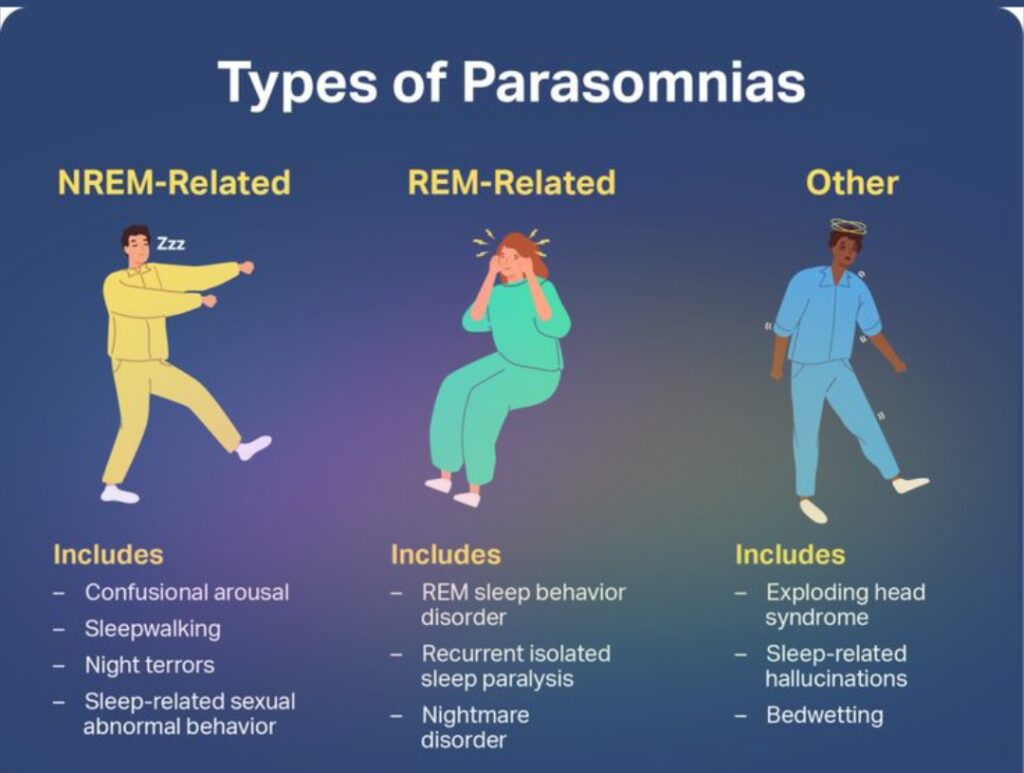
| NREM parasomnias | Deep non-REM sleep, often early in the night | Sleepwalking, sleep terrors, confusional arousals, sleep-related eating | Little or no memory; hard to wake |
| REM parasomnias | Dream (REM) sleep, often later in the night | REM sleep behavior disorder, nightmare disorder, recurrent isolated sleep paralysis | Vivid dreams; easier to wake and recall |
The two families can overlap in some people.
How Common Are Parasomnias in Adults?
Parasomnias are more common in childhood. NREM types often fade by adulthood. REM types tend to appear later in life.
Figures vary a lot between studies. Methods and definitions differ, so treat these as ranges.
| Parasomnia | Estimated frequency |
|---|---|
| Confusional arousals | About 18.5% at some point |
| Sleep terrors | About 10% at some point; about 1% to 3% of adults currently |
| Sexsomnia | About 7.1% at some point |
| Sleepwalking | About 6.9% at some point in a recent meta-analysis; older estimates run higher; about 1% to 4% of adults currently |
| Sleep-related eating | About 4.5% at some point |
| Weekly nightmares | About 2% to 8% of adults |
| REM sleep behavior disorder | Under 1% of adults, most often older men |
Most adults who sleepwalk have done so since childhood. Sleep talking is far more common still, affecting roughly two in three people at some time. Parasomnias also appear more often among people with psychiatric conditions.
The Main Parasomnias in Adults
Sleepwalking
Sleepwalking means getting up and moving while asleep. Episodes range from sitting up to walking out of the house. Adult triggers include sleep loss, alcohol, some medicines, and conditions that disturb sleep, such as sleep apnea.
The Merck Manual notes that caffeine, exercise, or exciting television too close to bedtime may trigger it. Usually no specific treatment is needed unless injury occurs.
Sleep Terrors
During a sleep terror, a person suddenly screams, flails, and looks frightened. Yet they are asleep and rarely remember it. In adults, episodes can be linked to psychological stress or heavy alcohol use.
Sleep terrors differ from nightmares. A nightmare is a vivid dream you remember after waking. A sleep terror is an arousal from deep sleep with little or no memory.
Confusional Arousals
These are episodes of confusion on waking, with slow speech and disorientation. They are the most common NREM parasomnia. They usually end on their own.
Sleep-Related Eating Disorder
Here, a person eats while partly asleep and often remembers little. Classification systems place it with NREM parasomnias. It can cause weight gain, injury from cooking, and distress, so it deserves assessment.
Sexsomnia
Sexsomnia is sexual behaviour during sleep without awareness. It is a recognised NREM parasomnia and can cause real distress in relationships. Specialists treat it as a medical condition, so seek confidential assessment.
REM Sleep Behavior Disorder (RBD)
Normally, REM sleep paralyses your muscles so you cannot act out dreams. In RBD, that paralysis fails. People shout, punch, or kick in response to dream content. RBD is rare and most often affects older men.
Injury is a real risk, for the sleeper and for a bed partner. RBD can also be a side effect of antidepressants and other medicines. Because it can sometimes be an early sign of a neurological condition such as Parkinson’s disease, specialist assessment matters.
Nightmare Disorder and Sleep Paralysis
Nightmare disorder and recurrent isolated sleep paralysis are also REM parasomnias. Each has its own detailed mindnesto guide.
Sleep Talking and Teeth Grinding
Sleep talking is very common and usually harmless. Sleep-related teeth grinding is another frequent night-time movement. A dentist can help protect your teeth.
What Triggers Parasomnias?
Several factors raise the risk:
- Sleep deprivation and irregular schedules. A tired brain slips into partial arousal more easily.
- Stress and anxiety. Our stress management guide can help.
- Alcohol. It fragments sleep and can trigger episodes.
- Medicines. Some antidepressants and sedatives are linked to certain parasomnias. Regulators have also warned about complex sleep behaviours with some prescription sleeping tablets.
- Other sleep disorders. Sleep apnea and periodic limb movements can provoke sleepwalking.
- Noise and touch. Sudden disturbances can trigger an arousal.
- Psychiatric and medical conditions. Parasomnias are more frequent in these groups.
Never stop a medicine without speaking to your prescriber.
Could It Be a Seizure?
Night-time seizures can look like NREM parasomnias. They also cause jerky movements, confusion, and unresponsiveness. Specialists use EEG recording to tell them apart. This is one reason to get episodes assessed.
How Doctors Diagnose Parasomnias
Diagnosis starts with your story. A bed partner’s account is extremely valuable. If possible, record an episode on video and bring it.
Your doctor may suggest:
- A detailed sleep history: timing, triggers, medicines, alcohol, and mood
- A sleep diary: two weeks of sleep times and episodes
- A sleep study: video-polysomnography records brain waves, breathing, and movement
- EEG monitoring: if seizures are a concern
Specialists usually reserve a full study for episodes that are violent, harmful, unusual, or hard to explain.
Treatment: What the Evidence Shows
Treatment research for NREM parasomnias has been neglected compared with other sleep disorders. Reasons include a low base rate, poor memory of events, and stigma. Here is what we know.
Start With Triggers and Safety
For many adults, the first steps are treating sleep apnea, improving sleep habits, cutting alcohol, and reviewing medicines. The Merck Manual notes that no specific treatment is needed for sleepwalking unless it causes injury.
Behavioural and Psychological Approaches
A systematic review of NREM parasomnia treatments found these approaches in the literature: hypnosis (33 publications), psychotherapy (31), sleep hygiene (19), education and reassurance (15), relaxation (10), scheduled awakenings (9), sleep extension and scheduled naps (9), and mindfulness (5). A 2026 review in Sleep Medicine Reviews examined medical hypnosis for NREM parasomnias. Importantly, the evidence base is still developing, and a small registered trial is testing a six-week CBT programme for parasomnias.
Medication
For severe sleep terrors that affect daily life, doctors sometimes prescribe short courses of sedative medicines, usually for about three to six weeks. These have significant side effects, so specialists weigh them carefully.
RBD is treated differently. Specialists often prescribe low-dose clonazepam at bedtime, usually long term. High-dose melatonin may also help. These are decisions for a specialist.
Treat the Whole Person
Parasomnias often improve when stress, anxiety, or depression is treated. Our guide to depression and sleep explains that link.
Make Your Bedroom Safe
Safety comes first, whatever the cause.
- Lock doors and windows. Fit a door alarm if you tend to wander.
- Sleep on the ground floor if possible.
- Clear the bedside. Remove sharp or fragile objects.
- Keep car keys out of reach.
- Guide, do not grab. If you find someone sleepwalking, most clinicians advise gently guiding them back to bed.
- Protect partners. If episodes are violent, consider separate beds until treated.
Everyday Habits That Help
- Keep a regular sleep schedule. Follow our sleep hygiene guide.
- Get enough sleep. Avoid sleep debt.
- Limit alcohol. Avoid it before bed.
- Avoid late caffeine and exciting activity. Wind down for an hour.
- Manage stress. Our anxiety journaling prompts help you offload worries.
- Check for sleep apnea. Loud snoring and gasping are clues.
- Keep a simple log. Note bedtime, alcohol, stress, and any episodes.
When to See a Doctor
Book an appointment with your GP or a sleep specialist if:
- Episodes cause injury or risk to others
- You act out dreams or have violent movements
- You leave the house or use dangerous objects while asleep
- Episodes begin suddenly in later adulthood
- You eat or behave in unusual ways while asleep
- You feel very sleepy in the daytime
- Episodes began after a new medicine
- You suspect seizures
Shame, Distress and Suicidal Thoughts
Some parasomnias feel embarrassing or frightening. Please do not carry that alone. If distress ever leads to thoughts of ending your life, reach out now.
- UK: Samaritans, call 116 123 (free, 24/7)
- USA and Canada: call or text 988
- Australia: Lifeline, call 13 11 14
Parasomnias in Adults: Key Takeaways
- Parasomnias are unwanted events during sleep, caused by partial brain arousal
- NREM types (sleepwalking, sleep terrors, confusional arousals) come from deep sleep
- REM types (RBD, nightmares, sleep paralysis) come from dream sleep
- Common triggers include sleep loss, stress, alcohol, medicines, and sleep apnea
- Night-time seizures can mimic NREM parasomnias, so assessment matters
- RBD needs specialist care and can sometimes signal a neurological condition
- Safety measures are the first line of defence
- Treatment research is still developing, and a specialist can tailor it
A Word From mindnesto
Waking to learn you did something you cannot remember can feel unsettling. It is not a sign that you are broken or dangerous.
With a safe bedroom, healthier sleep habits, and the right assessment, most people find episodes become rarer and easier to live with. You do not have to manage it alone. 💙
→ Read next: Sleep Problems in Adults: The Complete Guide
→ Also read: Sleep Hygiene and Mental Health
Frequently Asked Questions
What are parasomnias?
Parasomnias are unwanted physical or mental events during sleep or waking, such as sleepwalking, sleep terrors, or acting out dreams. They happen when parts of the brain wake while others sleep. Most are benign, but some carry injury risk.
What causes sleepwalking in adults?
Common causes include sleep deprivation, alcohol, stress, some medicines, and other sleep problems such as sleep apnea. Most adults who sleepwalk have done so since childhood. See a doctor if episodes are new, risky, or frequent.
Is REM sleep behavior disorder serious?
It can be. People may injure themselves or a partner while acting out dreams. It can also sometimes be an early sign of a neurological condition. Seek specialist assessment.
What is the difference between sleep terrors and nightmares?
Sleep terrors arise from deep sleep, and the person screams or thrashes with little or no memory. Nightmares arise from dream sleep, and you wake and remember the dream.
How do you treat parasomnias?
Treatment starts with safety, trigger control, and healthy sleep habits. Specialists may add therapy or medicine, depending on the type. RBD is usually treated with a specialist-prescribed medicine such as clonazepam or melatonin.
Where to Get Help
- UK: NHS: Sleepwalking | NHS: Sleep and Tiredness | NHS Talking Therapies
- USA: AASM Sleep Education | American Psychiatric Association: Parasomnias
- Canada: Canadian Sleep Society | CAMH
- Australia: Sleep Health Foundation | Beyond Blue
Sources and External References
- Merck Manual (Consumer): Parasomnias, reviewed July 2026
- Merck Manual (Professional): Parasomnias
- American Psychiatric Association: Sleepwalking and Other Parasomnias
- Sleep Medicine Reviews: Behavioral and Psychological Treatments for NREM Parasomnias, Systematic Review
- ScienceDirect Topics: Non-REM Parasomnia Overview
- ClinicalTrials.gov: Impact of CBT on Parasomnias
- PubMed Central: Parasomnias and Associated Factors Among University Students
- AASM: ICSD-3-TR Parasomnias Draft
- NHS: Sleepwalking
- AASM Sleep Education
- Sleep Health Foundation Australia