





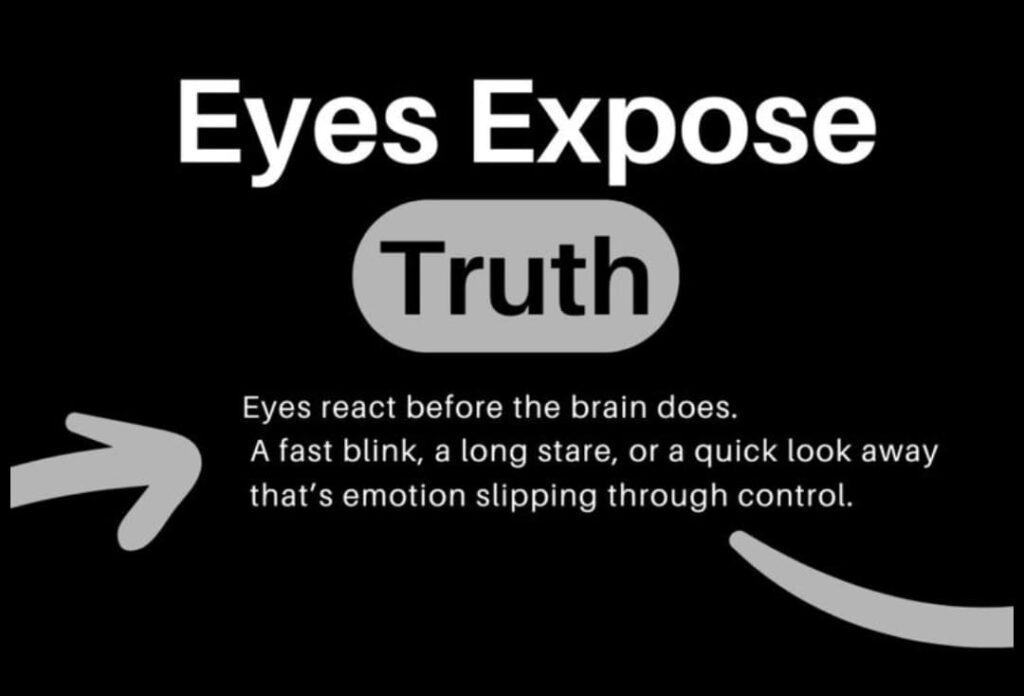
Sometimes, a partner looks into your eyes while you speak. At other times, they look away, glance toward their phone, or avoid direct eye contact during a difficult conversation.
It is easy to attach meaning to these moments.
You might wonder whether they feel emotionally connected, whether something is wrong, or whether they are hiding their feelings.
But eye contact does not have one universal meaning.
Eye contact in relationships can support communication and connection, but it cannot reveal a partner’s feelings or intentions on its own. Context, individual preferences, conversation patterns, and direct communication matter more than a single glance.
Understanding this distinction can help couples avoid unnecessary assumptions and build healthier conversations.
What Does Eye Contact Mean in a Relationship?
Eye contact is one part of nonverbal communication between partners. It can help people coordinate conversations, communicate attention, and respond to one another.
Mutual gaze may also contribute to feelings of involvement or intimacy in some situations. However, its emotional meaning varies between people and across contexts.
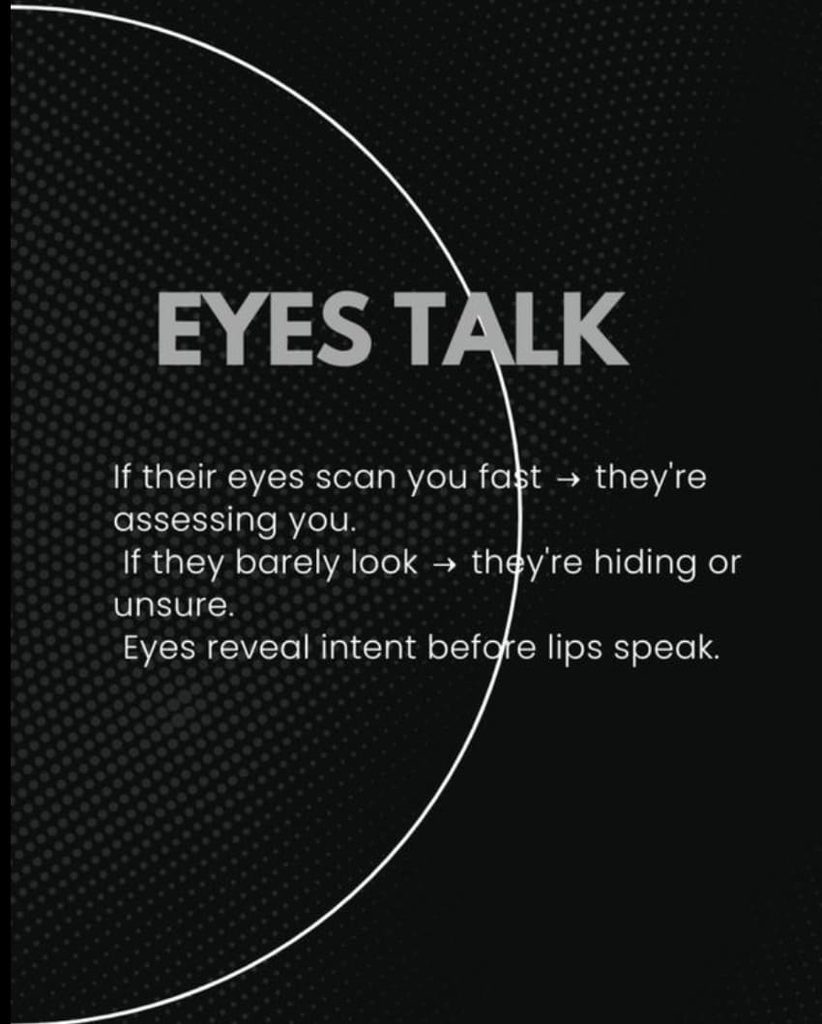
A partner who looks away may be thinking, managing strong emotions, feeling uncomfortable, or following their normal communication style. It does not automatically mean they are losing interest, lying, or hiding something.
The most useful approach is to consider eye contact alongside words, behavior, context, and reciprocal communication.
Healthy relationships do not require constant eye contact. They require respect, understanding, and a willingness to communicate.
Why Eye Contact Matters in Relationships
Relationships involve more than spoken words.
Partners use facial expressions, tone of voice, gestures, pauses, and gaze to coordinate conversations.
A systematic review of research on eye gaze found that it can help people manage conversational turn-taking, monitor speech, and handle interruptions. However, the precise role of gaze varies with the interaction and research context.
This helps explain why eye contact can feel meaningful during an important conversation.
A partner’s gaze may help you feel that they are following what you say. It may also help you notice when they want to speak or when the conversation needs a pause.
However, eye contact is not a perfect measure of attention.
Someone can listen carefully while looking away. Another person can maintain eye contact without truly listening.
Being present matters more than maintaining a particular gaze pattern.
1. Eye Contact Can Support Emotional Connection
When two people feel comfortable together, eye contact can become part of their shared communication.
A partner may look toward you while you share exciting news, express affection, or discuss something personal.
This can help the interaction feel more engaging.
Eye contact may also accompany other signs of connection, such as:
- listening without unnecessary interruption
- responding thoughtfully
- showing empathy
- remembering important details
- asking relevant questions
- respecting emotional boundaries
The important point is that these behaviors work together.
Eye contact alone cannot establish emotional closeness. A person may look directly at their partner while feeling distracted or disconnected.
Likewise, someone may look away while listening carefully and responding with genuine care.
Instead of asking, “How long did my partner look at me?” consider asking, “Did I feel heard and understood during our conversation?”
That question is more closely connected to the quality of your interaction.
2. Why Eye Contact Can Feel Intimate
Direct gaze can make an interaction feel personal.
When partners discuss meaningful experiences, share affection, or sit quietly together, eye contact may contribute to a sense of closeness.
Research on affective eye contact suggests that direct gaze can influence attention and emotional responses. However, findings about how people consciously evaluate direct gaze are not entirely consistent.
This means eye contact may feel warm and connecting in one situation but intense or uncomfortable in another.
For example, a couple enjoying a quiet moment may experience mutual gaze as affectionate.
During an argument, the same direct gaze may feel confrontational.
The difference lies partly in the emotional tone and circumstances surrounding the interaction.
Intimacy is not created by eye contact alone. It develops through mutual comfort, trust, respect, and shared experiences.
3. What Does It Mean When Your Partner Looks Away?
A partner looking away can trigger uncertainty, especially when you already feel worried about the relationship.
But several explanations are possible.
They may be thinking
Your partner might look away while organizing their thoughts or deciding how to respond.
This is particularly common during complicated or emotionally demanding conversations.
They may be managing their emotions
Someone who feels overwhelmed may need a moment to process what they are feeling.
Looking away can be one way of reducing the intensity of an interaction.
They may be distracted
Work stress, fatigue, notifications, or other concerns can affect attention.
Their gaze may reflect the distraction rather than their feelings toward you.
They may prefer less direct eye contact
People have different communication habits and sensory preferences.
Some feel comfortable maintaining direct gaze. Others find it distracting or uncomfortable.
They may feel uncomfortable with the conversation
A difficult topic can make anyone uncomfortable.
Your partner may need a pause, a different approach, or reassurance that they can express themselves without being attacked.
None of these explanations can be confirmed by gaze alone.
If the behavior concerns you, consider discussing the interaction rather than assigning a motive.
For example:
“I noticed we both seemed uncomfortable during that conversation. Would it help to take a break and talk again later?”
This creates an opportunity for understanding without accusing your partner.
4. Eye Contact During Arguments
Eye contact can feel especially intense during conflict.
When partners disagree, they may interpret each other’s expressions and movements through the emotions they are already experiencing.
A direct look may feel supportive to one person but intimidating to another.
Looking away may feel dismissive to one partner but necessary for the other to think clearly.
These differences can create misunderstandings.
Avoid turning eye contact into a demand
Statements such as “Look at me when I’m talking” can increase pressure during an already difficult conversation.
Although some people find direct gaze reassuring, others may find it overwhelming.
A better approach is to explain what you need without demanding a specific physical response.
For example:
“I want to know that we’re listening to each other. Could we put our phones aside while we talk?”
This focuses on the actual communication problem.
Separate attention from eye contact
If you feel ignored, identify the behavior that concerns you.
Is your partner interrupting? Checking their phone repeatedly? Dismissing your concerns? Refusing to respond?
These actions provide more concrete information than gaze alone.
You can discuss the behavior without claiming to know what your partner is thinking.
Take a break when necessary
If the conversation becomes too intense, either partner may benefit from a short pause.
Agree on a reasonable time to return to the discussion rather than using the break to avoid the issue indefinitely.
The goal is to make the conversation more manageable, not to punish the other person.
5. Does Avoiding Eye Contact Mean Your Partner Is Hiding Something?
No. Avoiding eye contact is not reliable standalone evidence of dishonesty.
People look away for many reasons, including thinking, discomfort, distraction, and personal communication preferences.
It is understandable to feel concerned when something seems different in your relationship. However, interpreting eye contact as proof of deception can create conflict without establishing what happened.
If you have a specific concern, address the concern directly.
For example:
“I felt confused when our plans changed and I didn’t understand why. Can we talk about what happened?”
This is more constructive than saying:
“You looked away, so I know you’re lying.”
Focus on verifiable behavior, clear questions, and consistent communication.
Trust develops through honesty, reliability, accountability, and respect over time. It cannot be measured by how long someone maintains eye contact.
6. What If Your Partner Avoids Eye Contact Only With You?
A change in behavior may be worth discussing, but it does not automatically mean that the relationship is in trouble.
Consider the context.
Has your partner been under unusual stress? Are you discussing a difficult subject? Have your conversations become more tense? Does your partner seem distracted in other parts of life?
These questions can help you avoid jumping to conclusions.
If the change continues and affects your relationship, describe what you have noticed without assuming the cause.
For example:
“I’ve noticed our conversations have felt different lately. Is there anything you’d like us to talk about?”
This gives your partner room to explain their experience.
Their answer, willingness to engage, and behavior over time will provide more useful information than eye contact alone.
7. Cultural and Individual Differences Matter
Eye contact is not interpreted identically by everyone.
Cultural expectations, family experiences, personal preferences, and the social setting can influence how people use direct gaze.
Neurodivergent people may also experience eye contact differently. For some, it can compete with attention or create sensory discomfort.
These differences do not automatically indicate a lack of affection or respect.
Couples can benefit from discussing what helps each person feel comfortable during conversations.
One partner might appreciate direct eye contact when discussing something important. The other might listen more effectively while looking away occasionally.
Neither preference automatically makes someone a better partner.
The aim is to find a mutually respectful way to communicate.
8. How to Improve Eye Contact and Communication as a Couple
You do not need to train yourselves to maintain constant eye contact.
Instead, focus on creating conversations in which both partners feel heard and respected.
Put distractions aside
If phones or television regularly interrupt your conversations, agree on times when you can give each other your attention.
This is a concrete way to improve connection without policing eye movements.
Listen to understand
Allow your partner to finish speaking before responding.
If something is unclear, ask a question rather than assuming you already know what they mean.
Explain your needs clearly
Instead of saying, “You never look at me,” explain what you are experiencing.
For example:
“I feel disconnected when we talk while both looking at our phones. Could we have a few minutes without distractions?”
This communicates a need without turning eye contact into a test of love.
Allow natural gaze breaks
People do not need to maintain direct eye contact throughout every conversation.
Allow each other to look away while thinking, remembering, or managing emotions.
Check your assumptions
When a behavior feels hurtful, separate what happened from what you think it means.
Observation: “My partner looked away while I was explaining something.”
Interpretation: “They do not care about me.”
The observation may be accurate, but the interpretation needs more evidence.
Pause before treating the interpretation as fact.
Repair misunderstandings
If you discover that you misunderstood a moment, acknowledge it.
You might say:
“I thought you were ignoring me, but I understand now that you needed time to think.”
Repairing misunderstandings can help couples build trust and learn how to communicate more effectively.
9. When Eye Contact Becomes a Boundary Issue
Eye contact should never become a requirement for proving love, honesty, respect, or obedience.
A partner should not have to tolerate intimidating staring or uncomfortable physical proximity to demonstrate that they care.
Similarly, looking away should not automatically be treated as disrespect.
If one partner repeatedly demands eye contact, uses staring to intimidate, or refuses to respect requests for space, the concern is not simply gaze. It is the wider pattern of behavior and whether both people feel safe and respected.
Healthy boundaries allow both partners to express discomfort without fear of punishment.
You can ask for attention and respectful listening without controlling how another person uses their eyes.
10. How to Tell Whether You Feel Connected
Instead of relying on a single nonverbal signal, consider the broader quality of your relationship.
Ask yourself:
- Can we discuss difficult topics respectfully?
- Do we listen to each other’s concerns?
- Can we disagree without intimidation?
- Do we respect each other’s boundaries?
- Can we ask for clarification without being mocked?
- Do we make an effort to repair misunderstandings?
- Do our words and actions generally align?
These questions do not provide a formal relationship assessment. They simply shift attention toward behaviors that can be discussed and improved.
Eye contact may contribute to a meaningful moment, but relationship quality depends on much more than gaze.
Frequently Asked Questions
What does eye contact mean in a relationship?
Eye contact can support attention, conversational coordination, and emotional connection. Its meaning depends on context, personal preferences, and the wider interaction. It cannot reveal a partner’s feelings on its own.
Does eye contact show love?
Eye contact can accompany affection, but it does not prove love. Consistent care, respect, honesty, and communication provide more meaningful information about a relationship.
Why does my partner look away when I talk?
Your partner may be thinking, distracted, uncomfortable, or using a different communication style. If the behavior concerns you, discuss how your conversations feel rather than assuming a motive.
Does avoiding eye contact mean my partner is lying?
No. Looking away is not reliable standalone evidence of deception. If you have a specific concern, discuss the facts and ask direct, respectful questions.
Why does eye contact feel uncomfortable with my partner?
Direct gaze can feel intense during emotional conversations, conflict, or moments of vulnerability. Anxiety, sensory preferences, fatigue, and personal communication habits may also contribute.
Is eye contact important during arguments?
Eye contact can help some people feel engaged, but it is not essential for every person during conflict. Respectful listening, clear communication, and a willingness to address the issue matter more than continuous gaze.
How can couples improve communication?
Put distractions aside, listen without interrupting, express needs clearly, allow natural pauses, and check assumptions before reacting. These habits can support more respectful conversations.
Should I ask my partner why they avoid eye contact?
You can, particularly if it affects your communication. Ask gently and without assuming that something is wrong. For example, “Is there anything that would make our conversations more comfortable for you?”
Can lack of eye contact indicate relationship problems?
Not by itself. If you are concerned about the relationship, look at broader patterns such as communication, trust, respect, and willingness to resolve problems.
A word from mindnesto-
Eye contact can help partners connect, coordinate conversations, and respond to one another. It can also feel uncomfortable during conflict or emotionally demanding moments.
Looking away does not automatically mean rejection, dishonesty, or a lack of affection.
The most helpful approach is to interpret gaze in context, respect individual differences, and communicate openly about what each partner needs.
A healthy relationship is not built on perfect eye contact. It is built on mutual respect, emotional safety, and the willingness to understand each other.
Mental Health and Relationship Disclaimer
This article is educational and does not diagnose relationship difficulties or mental-health conditions. If relationship conflict involves fear, intimidation, coercion, or abuse, consider seeking appropriate professional support and prioritizing safety.
Editorial note: This article draws on published research about gaze and interpersonal communication. Findings about groups cannot establish an individual partner’s feelings or intentions from a single behavior.
By mindnesto Editorial Team