


By Mindnesto Editorial Team · Updated May 2026-·27 min read
Reviewed for medical accuracy — sources cited from NHS, APA, NIMH, DSM-5 and peer-reviewed research
You walk into a room full of people and your stomach drops. Your face feels hot. You are suddenly convinced that everyone is looking at you — judging you, evaluating you, finding you lacking in some way you cannot even name.
Is that shyness? Or is it something more?
This is one of the most common questions in mental health — and one of the most misunderstood. People use the words shyness and social anxiety interchangeably every day, as though they mean the same thing. They do not. And that confusion matters more than most people realise — because confusing the two can mean missing a condition that is genuinely treatable, or worse, spending years believing something is fundamentally wrong with your personality when it is not.
This guide will walk you through exactly what separates social anxiety from shyness — what the science says, what the symptoms look like, how each one affects daily life, and most importantly, what you can do about it.
Everything here is backed by research from the American Psychological Association (APA), the National Institute of Mental Health (NIMH), the National Health Service (NHS), and peer-reviewed clinical journals.
We have also linked this to our guides on science-backed ways to calm anxiety without medication and how to stop a panic attack in 5 minutes — because social anxiety and panic often overlap in ways that are worth understanding together.
⚠️ Medical Disclaimer: This article is for informational and educational purposes only. It does not constitute medical advice and is not a substitute for professional diagnosis or treatment. If you believe you may have social anxiety disorder, please consult a qualified healthcare provider or licensed mental health professional.
What Is Shyness — And Is It a Problem?
Shyness is a personality trait — not a mental health condition. It describes a tendency to feel uncomfortable, nervous, or reserved in social situations, particularly with unfamiliar people or in new environments.
According to research led by Dr. Lynne Henderson of the Shyness Institute, approximately 40 to 60 percent of adults describe themselves as shy — making it one of the most common personality characteristics in the world. Being shy is not abnormal. It is not a flaw. It is simply a variation in how people relate to social situations.
The defining characteristic of shyness is this: it fades. A shy person may feel uncomfortable when they first walk into a room, but as they warm up — as the situation becomes familiar, as conversation begins to flow — the discomfort reduces. Shy people can and do engage in social situations. They may even enjoy them once they settle in.
Common Signs of Shyness
- Initial discomfort with strangers or new social situations
- Preference for small groups over large crowds
- Tendency to listen more than talk in early conversations
- Mild nervousness before social events that eases once engaged
- Feeling more comfortable with familiar people and environments
- Occasional self-consciousness that does not significantly interfere with daily life
Shyness exists on a spectrum. Some people are mildly shy and barely notice it. Others are more pronounced in their shyness but still live full, connected social lives. Shyness becomes a concern only when it causes significant distress or consistently prevents meaningful engagement — and when that happens, it may be crossing the line into social anxiety territory.
What Is Social Anxiety Disorder — And How Is It Different?
Social anxiety disorder (SAD) — also known as social phobia — is a recognised mental health condition classified in the Diagnostic and Statistical Manual of Mental Disorders (DSM-5) published by the American Psychiatric Association. It is not a personality trait. It is a clinical anxiety disorder with specific diagnostic criteria, measurable neurological underpinnings, and evidence-based treatments.
According to the National Institute of Mental Health (NIMH), social anxiety disorder affects approximately 15 million adults in the United States — making it the second most common anxiety disorder after generalised anxiety disorder. The NHS estimates that social anxiety affects around 1 in 10 people in the UK at some point in their lives.
The core feature of social anxiety disorder is an intense, persistent fear of social or performance situations in which the person believes they will be scrutinised, judged, humiliated, or embarrassed by others. The key word here is persistent — unlike shyness, which fades with familiarity, social anxiety does not simply ease once a person warms up to a situation. It continues. It escalates. And crucially — it begins to shape behaviour in ways that significantly limit daily life.
The DSM-5 Diagnostic Criteria for Social Anxiety Disorder
According to the DSM-5, a diagnosis of social anxiety disorder requires:
- Marked fear or anxiety about one or more social situations where the individual may be scrutinised by others
- Fear of acting in a way that will be humiliating or embarrassing — or showing visible anxiety symptoms such as blushing or trembling
- Social situations almost always provoke fear or anxiety
- Social situations are actively avoided or endured with intense distress
- The fear is out of proportion to the actual threat posed by the situation
- The fear or avoidance has persisted for 6 months or longer
- The fear causes clinically significant distress or impairment in social, occupational, or other important areas of functioning
This last criterion — significant impairment — is the clearest line between shyness and social anxiety disorder. Shyness may be uncomfortable. Social anxiety disorder changes the shape of your entire life.
Social Anxiety vs Shyness — The 7 Key Differences
Understanding the distinction clearly can be life-changing. Here are the seven most important differences between shyness and social anxiety disorder
1. Shyness Fades — Social Anxiety Persists
A shy person feels nervous meeting new people but relaxes as they warm up. A person with social anxiety disorder remains anxious throughout the interaction — and often feels worse as the situation continues, particularly if they feel they are being observed or evaluated.
2. Shyness Is a Trait — Social Anxiety Is a Disorder
Shyness is part of someone’s personality — it is stable, consistent, and not distressing in most cases. Social anxiety disorder is a diagnosable clinical condition with specific symptoms that meet criteria defined in the DSM-5. It is not a personality type — it is a pattern of thinking and responding that causes measurable harm.
3. Avoidance Behaviour
This is possibly the single most important distinction. Shy people may prefer to avoid certain social situations — but they generally push through when it matters. People with social anxiety disorder engage in systematic avoidance — declining jobs, relationships, and opportunities specifically to avoid the feared social exposure. Over time this avoidance narrows their world significantly.
4. The Physical Response
Shyness may produce mild nervousness — a quickened pulse, slight awkwardness. Social anxiety disorder often triggers the full fight-or-flight response — racing heart, sweating, blushing, trembling, nausea, and in some cases a full panic attack — even in relatively low-stakes social situations like making a phone call or eating in public.
5. Anticipatory Anxiety
People with social anxiety disorder often spend days or weeks dreading an upcoming social event — replaying catastrophic scenarios in their mind long before the event occurs. Shy people may feel some anticipatory nervousness but it does not typically consume their thoughts for extended periods.
6. Post-Event Processing
After a social interaction, people with social anxiety disorder tend to engage in painful post-event rumination — replaying everything they said, analysing every perceived mistake, catastrophising about how others judged them. This process — identified in research by Dr. Stefan Hofmann of Boston University as a key maintaining factor of social anxiety — can last for hours or even days after the event.
7. Impact on Daily Life
Shyness may occasionally cause mild inconvenience. Social anxiety disorder significantly impairs functioning — affecting careers (avoiding presentations, meetings, networking), relationships (difficulty forming close connections, dating), education (classroom participation, group work), and basic daily tasks (phone calls, shopping, eating in public).
What Causes Social Anxiety Disorder — The Neuroscience
The Amygdala and Social Threat Detection
At the neurological level, social anxiety disorder involves hyperactivity of the amygdala — the brain’s threat-detection centre — in response to social stimuli. Brain imaging studies published in JAMA Psychiatry have shown that individuals with social anxiety disorder show significantly greater amygdala activation when viewing faces — particularly faces expressing judgment or disapproval — compared to non-anxious individuals.
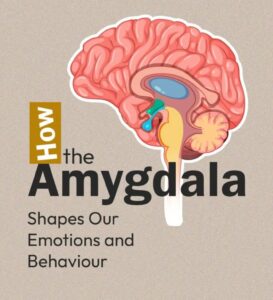
This means the socially anxious brain is literally wired to detect and respond to social threat more intensely. This is not imagination. It is neurobiology.
Negative Self-Evaluation and Core Beliefs
Dr. Aaron Beck, pioneer of cognitive therapy, identified that social anxiety is maintained by deeply held negative core beliefs about the self — beliefs such as “I am fundamentally boring,” “I will say something stupid,” or “People will see through me and find me inadequate.” These beliefs fuel anticipatory anxiety, in-situation distress, and post-event rumination in a self-reinforcing cycle.
Genetic and Environmental Factors
Research published in Psychological Medicine estimates that social anxiety disorder has a heritability of approximately 30 to 40 percent — meaning genetics plays a meaningful but not deterministic role. Environmental factors — including early experiences of bullying, criticism, humiliation, or overprotective parenting — also contribute significantly to its development.
Could You Have Social Anxiety Disorder? — A Self-Check
This is not a diagnostic tool. Only a qualified mental health professional can diagnose social anxiety disorder. But these questions — drawn from validated screening tools used in clinical settings — may help you reflect on your own experience.
Ask yourself honestly:
- Do you avoid social situations — phone calls, meetings, parties, public speaking — even when you want or need to participate?
- Do you spend significant time before social events worrying about what will happen and how you will be perceived?
- Do you replay social interactions afterwards and criticise yourself intensely for things you said or did?
- Does your anxiety in social situations feel physical — heart racing, face flushing, sweating, trembling?
- Has your anxiety stopped you from opportunities — a job, a relationship, a course — that you genuinely wanted?
- Has this pattern been present for more than 6 months?
If you answered yes to several of these questions — particularly the avoidance and impairment questions — it may be worth speaking with your GP or a mental health professional. Social anxiety disorder is highly treatable. The sooner it is identified, the sooner you can begin to feel better.
What Actually Helps — Evidence-Based Treatments for Social Anxiety
Cognitive Behavioural Therapy (CBT) — The Gold Standard
Cognitive Behavioural Therapy (CBT) is the most extensively researched and most effective psychological treatment for social anxiety disorder. A systematic review published in Psychological Medicine found that CBT produced significant and lasting reductions in social anxiety symptoms in the majority of participants, with effects maintained at 12-month follow-up.
CBT for social anxiety works by identifying and challenging the negative core beliefs and catastrophic predictions that fuel the disorder — combined with gradual exposure to feared social situations in a controlled, supported way. The NICE Guidelines — the UK’s gold standard for clinical treatment recommendations — list individual CBT as the first-line treatment for social anxiety disorder.
In the UK, you can self-refer through NHS Talking Therapies. In the US, use the ADAA therapist finder to locate a CBT-specialist near you.
Exposure Therapy — Facing the Fear Gradually
Exposure therapy — a component of CBT — involves systematically and gradually confronting feared social situations, starting with the least threatening and working upward. Research published in the Journal of Anxiety Disorders consistently shows that graduated exposure is one of the most powerful tools for reducing avoidance behaviour and breaking the social anxiety cycle.
The principle is straightforward: avoidance maintains anxiety; exposure reduces it. Every time you avoid a feared situation, you send your brain the message that the situation was genuinely dangerous. Every time you face it — even imperfectly — you begin to rewire that response.
Medication — When It Is Appropriate
For moderate-to-severe social anxiety disorder, medication can be an important part of treatment. SSRIs (selective serotonin reuptake inhibitors) — particularly sertraline and paroxetine — are the most commonly prescribed first-line medications for social anxiety disorder, approved by the FDA and recommended by NICE guidelines.
Medication is most effective when combined with CBT rather than used alone. Always discuss medication options with your GP or psychiatrist — never self-medicate.
Medication — When It Is Appropriate
For moderate-to-severe social anxiety disorder, medication can be an important part of treatment. SSRIs (selective serotonin reuptake inhibitors) — particularly sertraline and paroxetine — are the most commonly prescribed first-line medications for social anxiety disorder, approved by the FDA and recommended by NICE guidelines.
Medication is most effective when combined with CBT rather than used alone. Always discuss medication options with your GP or psychiatrist — never self-medicate.
Controlled breathing — activates the parasympathetic nervous system, reduces the physical symptoms of social anxiety in real time. See our full guide on science-backed ways to calm anxiety without medication
Mindfulness practice — reduces the intensity of post-event rumination by building present-moment awareness
Gradual voluntary exposure — deliberately choosing to engage in one mildly challenging social situation per week builds tolerance over time
Journaling — writing about feared social situations and their realistic outcomes challenges catastrophic thinking patterns
Reducing alcohol use — many people with social anxiety use alcohol as a social crutch, which maintains rather than treats the underlying fear
Social Anxiety vs Introversion — One More Important Distinction
Before we wrap up, it is worth addressing one more common confusion — the difference between social anxiety and introversion.
Introversion is a personality dimension describing people who recharge through solitude rather than social interaction. Introverts may genuinely prefer smaller social circles and quieter environments — but they do not experience fear of social situations. They simply prefer less of them.
Social anxiety disorder involves fear, dread, and avoidance — not preference. An introvert declines a party because they would rather read a book and genuinely feel fine about it. A person with social anxiety declines a party because the thought of attending produces genuine terror — and then feels guilty, isolated, and distressed about having declined.
You can be introverted without social anxiety. You can have social anxiety without being introverted. And you can be both — which is particularly common and particularly misunderstood.
Key Takeaways — Featured Snippet Optimised
Social anxiety vs shyness — the essential differences:
- Shyness is a common personality trait that fades with familiarity — it affects 40–60% of people and is not a mental health condition
- Social anxiety disorder is a diagnosable clinical condition affecting 15 million US adults — it is persistent, intense, and causes significant life impairment
- The clearest distinction is avoidance — social anxiety creates systematic avoidance that narrows a person’s life; shyness does not
- Physical symptoms — racing heart, sweating, trembling, blushing, panic attacks — are characteristic of social anxiety disorder, not shyness
- Anticipatory dread and post-event rumination are hallmarks of social anxiety disorder, not shyness
- Social anxiety disorder is highly treatable — CBT is the gold standard, with exposure therapy and SSRIs also proven effective
- If social situations cause you significant distress or avoidance lasting more than 6 months — please speak with a healthcare professional
A Word From Mindnesto-
At MindNesto, we believe that understanding yourself is the first step toward feeling better. So many people spend years — sometimes decades — believing they are simply “too shy” or “not a people person” when what they are actually living with is a recognised, treatable condition that has a name and a solution.
→ Read next: 10 Science-Backed Ways to Calm Anxiety Without Medication
→ Also read: How to Stop a Panic Attack in 5 Minutes
Frequently Asked Questions
Is shyness a form of social anxiety?
No. Shyness is a personality trait characterised by mild discomfort in social situations that typically fades with familiarity they are fundamentally different in their nature, intensity, and impact on daily life.
Can shyness develop into social anxiety disorder?
In some cases, yes. Severe shyness — particularly when combined with negative social experiences such as bullying, humiliation, or harsh criticism.
How common is social anxiety disorder?
According to the National Institute of Mental Health, social anxiety disorder affects approximately 15 million adults in the United States — around 7% of the adult population. The NHS estimates it affects around 1 in 10 people in the UK. It is the second most common anxiety disorder globally.
What is the best treatment for social anxiety disorder?
Cognitive Behavioural Therapy (CBT) is the gold standard treatment for social anxiety disorder, with the strongest evidence base of any psychological intervention. NICE guidelines recommend individual CBT as the first-line treatment. For moderate-to-severe cases, SSRIs such as sertraline may be prescribed alongside therapy. Many people achieve significant improvement — and some achieve complete remission — with treatment.
Can social anxiety disorder go away on its own?
Social anxiety disorder rarely resolves completely without some form of intervention. Unlike shyness, which can mellow naturally with age and experience, social anxiety disorder tends to persist and often worsens over time if left untreated
Is social anxiety the same as being an introvert?
No. Introversion is a personality dimension describing a preference for solitude and quieter environments — it does not involve fear. Social anxiety disorder involves genuine fear, dread, and avoidance of social situations.
- National Institute of Mental Health — Social Anxiety Disorder
- NHS UK — Social Anxiety
- American Psychological Association — Social Anxiety
- Mayo Clinic — Social Anxiety Disorder
- Mind UK — Social Anxiety
- ADAA — Social Anxiety Disorder
- NICE Guidelines — Social Anxiety Disorder (CG159)
- JAMA Psychiatry — Amygdala and Social Anxiety
- Psychological Medicine — CBT for Social Anxiety
- Journal of Anxiety Disorders — Exposure Therapy
- NHS Talking Therapies — Self Referral
- NAMI Helpline
- Beyond Blue Australia
- CAMH Canada