




By MindNesto Editorial Team · Updated May 2025 · 8 min read
Reviewed for medical accuracy — sources cited from Mayo Clinic, NHS, APA and peer-reviewed research
Some days anxiety sneaks up on you quietly. Other days it hits like a wall — chest tight, thoughts spiralling, breath shallow, and a creeping sense that something is very wrong even when nothing actually is.
If that sounds familiar, you are in good company. Living with anxiety is one of the most common human experiences of our time, and yet it still feels deeply isolating when you are in the middle of it.
Here is what nobody tells you enough: you have more power over your anxiety than you think. Not through willpower. Not through pretending it is not there. But through specific, proven techniques that work directly with your nervous system to bring you back to calm.
This guide covers 10 of those techniques — every single one backed by peer-reviewed research and recommended by leading mental health organisations including the American Psychological Association (APA), the National Health Service (NHS), and the Mayo Clinic.
No medication required. No expensive therapy sessions needed to get started. Just practical tools you can use today.
We have also linked this guide to our post on how to stop a panic attack fast — because knowing what to do in a crisis moment is just as important as managing anxiety in daily life.
⚠️ Medical Disclaimer: This article is for informational and educational purposes only. It does not constitute medical advice and is not a substitute for professional diagnosis or treatment. If anxiety is significantly affecting your daily life, please consult a qualified healthcare provider or licensed mental health professional.
What Is Anxiety — And Why Does Your Body React So Strongly?
Before diving into the techniques, it helps to understand what is actually happening inside your body when anxiety strikes — because this knowledge itself becomes a calming tool.
Anxiety is your brain’s threat-detection system doing its job. When your amygdala — the brain’s alarm centre — perceives danger (real or imagined), it triggers the release of cortisol and adrenaline into your bloodstream. Your heart rate increases.,breathing shallows., muscles tighten. Blood flow redirects away from your digestive system toward your limbs.
This is the fight-or-flight response, and it evolved to keep humans alive in life-threatening situations. The problem is that in modern life, your amygdala cannot always tell the difference between a predator and a difficult email from your boss.
According to the Anxiety and Depression Association of America (ADAA), anxiety disorders affect over 40 million adults in the United States — making it the most common mental health condition in the country. The World Health Organization (WHO) estimates that globally, 1 in 4 people will experience an anxiety disorder at some point in their lifetime.
The good news is that your nervous system is not a one-way street. Every technique in this guide works by activating your parasympathetic nervous system — the biological counterpart to fight-or-flight — which signals safety and initiates the relaxation response.
Let’s get into it.

1.Diaphragmatic Breathing — Your Fastest Route to Calm
When anxiety spikes, your breathing becomes shallow and rapid — which actually worsens the panic cycle by reducing oxygen flow and increasing carbon dioxide sensitivity. Controlled diaphragmatic breathing interrupts this loop directly.
The 4-7-8 breathing method, developed by Dr. Andrew Weil of the University of Arizona, is one of the most clinically supported breathing techniques for rapid anxiety reduction. A 2017 study published in Frontiers in Psychology found that slow-paced breathing significantly reduced cortisol levels and self-reported anxiety in healthy adults.
How to practise it:
- Sit upright or lie flat. Place one hand on your belly, one on your chest
- Inhale slowly through your nose for 4 seconds — your belly should rise, not your chest
- Hold your breath gently for 7 seconds
- Exhale completely through your mouth for 8 seconds
- Repeat the cycle 4 times
The extended exhale is the key mechanism — a longer exhale than inhale directly stimulates the vagus nerve, activating your parasympathetic nervous system and slowing your heart rate within seconds.
Practise this daily — not just in anxious moments. Research on heart rate variability (HRV) shows that consistent breathing practice builds long-term resilience to anxiety triggers.
2.Physical Movement — The Body’s Built-In Anxiety Medicine
When you move your body, your brain releases endorphins — natural mood-lifting chemicals. Simultaneously, physical activity increases levels of gamma-aminobutyric acid (GABA) — a neurotransmitter that reduces neuronal excitability and calms anxious brain activity. Exercise also directly lowers cortisol, the primary stress hormone linked to anxiety.
The Mayo Clinic states that even a brisk 10-minute walk can provide measurable anxiety relief lasting several hours. A landmark meta-analysis published in the American Journal of Psychiatry reviewed 33 clinical trials and concluded that aerobic exercise reduces anxiety symptoms comparably to first-line psychological treatments.
Anxiety lives in the future. It is the mind running catastrophic simulations of things that have not happened yet. Grounding techniques work by pulling your attention forcefully into the present moment — which is the one place anxiety cannot survive.
The 5-4-3-2-1 technique is a foundational tool in Cognitive Behavioural Therapy (CBT), endorsed by both the NHS and the American Psychological Association. It works by sequentially engaging all five senses, overriding the brain’s catastrophising loop with real sensory input.
The technique:
- 5 — Name 5 things you can currently see (the colour of a wall, your hands, a window)
- 4 — Notice 4 things you can physically feel (the weight of your feet, the texture of your clothing)
- 3 — Identify 3 things you can hear (distant traffic, your own breath, a fan)
- 2 — Find 2 things you can smell (even subtle — fabric, the air, coffee)
- 1 — Notice 1 thing you can taste
Go slowly through each sense. The deliberate pace is part of the mechanism — it forces your prefrontal cortex back online, overriding the amygdala’s alarm signal with rational sensory processing.
A 2019 study in Behaviour Research and Therapy confirmed that sensory grounding techniques significantly reduce acute anxiety and intrusive thought frequency.
4.Reduce Caffeine — The Hidden Anxiety Amplifier
This is possibly the most overlooked lifestyle change for anxiety — and one of the most impactful.
Caffeine is a stimulant that works by blocking adenosine receptors in the brain — adenosine is the chemical that makes you feel sleepy and calm. By blocking it, caffeine keeps your nervous system in a heightened state of arousal that is chemically indistinguishable from anxiety.
A study published in the journal Psychopharmacology found that individuals with anxiety disorders are significantly more sensitive to caffeine’s anxiogenic effects than non-anxious individuals — meaning caffeine hits anxious people harder and longer.
Practical steps:
- Cap daily caffeine at 200mg (roughly 1–2 cups of coffee)
- Avoid caffeine after 2pm — its half-life is 5–6 hours, meaning an afternoon coffee is still partially active at midnight
- Replace afternoon coffee with chamomile tea — a 2009 study in the Journal of Clinical Psychopharmacology found that chamomile extract significantly reduced generalised anxiety symptoms
- Watch for hidden caffeine in energy drinks, pre-workouts, and some soft drinks
5. Journaling — Writing Your Way Out of the Worry Loop
Journaling is not just a self-care cliché — it is a clinically validated emotional regulation tool with a strong evidence base.
Research from the University of Rochester Medical Center demonstrates that expressive writing — putting your thoughts and feelings into words — activates the prefrontal cortex and reduces the emotional intensity of anxiety-provoking thoughts. This process, known in Acceptance and Commitment Therapy (ACT) as cognitive defusion, creates psychological distance between you and your anxious thoughts.
A 2018 study in Psychotherapy Research found that participants who wrote about their worries for 15–20 minutes before a stressful event reported significantly lower anxiety than those who did not.
6.Cold Water Therapy — The Dive Reflex Reset
This technique sounds unusual. The physiology behind it is fascinating.
Submerging your face in cold water — or holding a cold, wet cloth against your face and eyes — triggers what physiologists call the mammalian dive reflex. This is a hardwired biological response that immediately slows heart rate and redirects blood flow, directly counteracting the physiological symptoms of anxiety and panic.
Dialectical Behaviour Therapy (DBT), developed by psychologist Dr. Marsha Linehan at the University of Washington, formally incorporates this technique — known as TIPP (Temperature, Intense exercise, Paced breathing, Paired muscle relaxation) — as a core distress tolerance skill.
How to use it:
- Fill a bowl with cold water (add ice cubes if available)
- Hold your breath and submerge your face for 15–30 seconds
- Alternatively, press a cold, damp cloth firmly against your closed eyes and cheeks
- Repeat 2–3 times if needed
The vagus nerve — which runs from your brainstem through your face and chest — is directly stimulated by cold facial contact, producing an immediate reduction in heart rate and sympathetic nervous system activation.
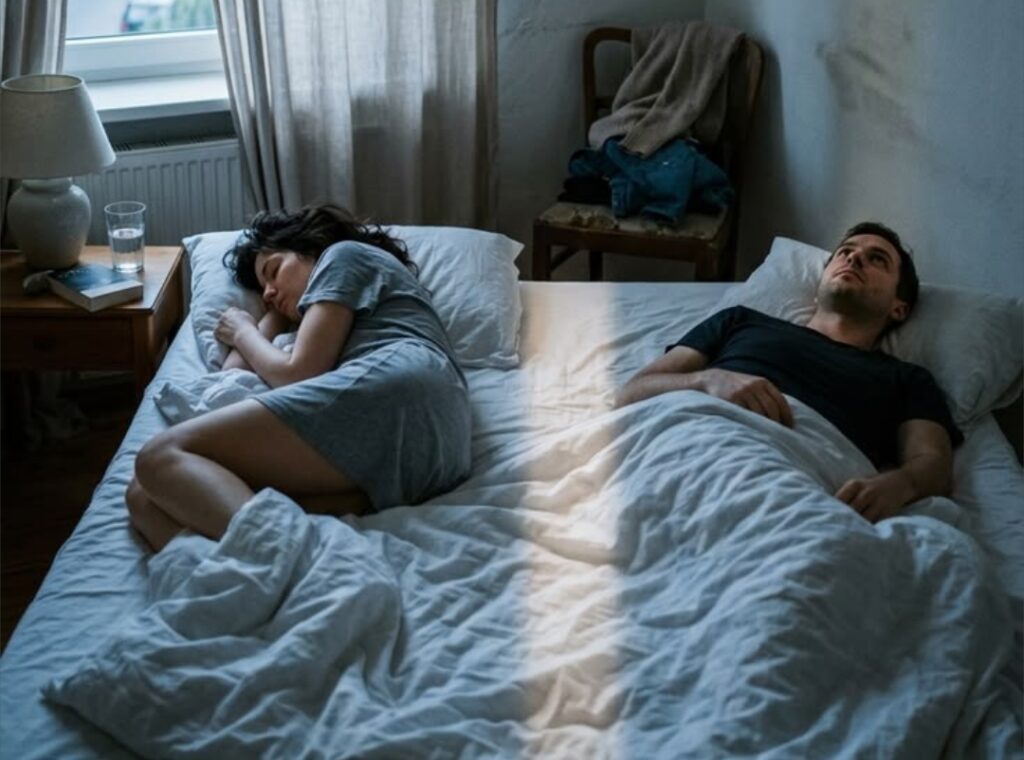
7.Sleep Optimisation — The Foundation Everything Else Rests On
If anxiety is a fire, sleep deprivation is petrol.
Neuroscientist Dr. Matthew Walker of UC Berkeley, author of Why We Sleep, has demonstrated through brain imaging studies that sleep-deprived individuals show 60% greater amygdala reactivity to anxiety-provoking stimuli compared to well-rested individuals. A single night of poor sleep measurably raises cortisol levels and lowers the threshold at which the brain triggers an anxiety response.
The CDC and NHS both recommend 7–9 hours of sleep per night for adults.
Evidence-based sleep hygiene practices:
- Maintain a consistent sleep and wake time — even on weekends. This anchors your circadian rhythm
- Avoid screens for 30–60 minutes before bed — blue light suppresses melatonin production
- Keep your bedroom temperature between 16–19°C (60–67°F) — the optimal range for sleep onset
- Avoid alcohol within 3 hours of bedtime — alcohol fragments REM sleep, the stage most critical for emotional processing
- If racing thoughts prevent sleep, try cognitive shuffle — a technique developed by researcher Dr. Luc Beaulieu-Prévost that disrupts the coherent narratives anxiety needs to sustain itself
8.Social Connection — The Underrated Biological Need
Humans are not designed for isolation. Social connection is not a luxury — it is a biological requirement for mental health regulation.
Research published in Psychological Science found that simply verbalising an anxious experience to a trusted person reduces amygdala activation measurably — the brain’s alarm centre literally quiets down when anxiety is shared rather than suppressed.
UCLA psychologist Dr. Shelley Taylor identified what she termed the tend-and-befriend response — a stress response (distinct from fight-or-flight) activated specifically through social connection, which triggers oxytocin release and reduces cortisol.
Practical application:
- When anxiety peaks, call or message someone you trust — not necessarily for advice, just to be heard
- Join a community — whether in-person or online — centred on mental health, shared interests, or mutual support
- If social anxiety makes connection difficult, starting with a therapist or structured support group provides a low-pressure entry point
For UK readers, Mind UK maintains a directory of peer support groups. For US readers, the NAMI Helpline provides immediate support and community referrals.
9.Digital Detox — Breaking the Anxiety-Scroll Cycle
The average adult in the USA consumes over 10 hours of screen media per day. Much of that content — particularly news and social media — is algorithmically optimised to trigger emotional responses, which means it is optimised to trigger your amygdala.
A 2022 study in Health Communication found that problematic news consumption was directly associated with increased anxiety, depression, stress, and physical health symptoms — even after controlling for underlying mental health conditions.
Social media compounds this through social comparison — the constant exposure to curated highlight reels of other people’s lives activates circuits associated with social threat, further raising baseline anxiety.
A sustainable digital detox approach:
- Set a single 20-minute news window per day — morning or lunchtime. No news in the evening
- Remove social media apps from your phone’s home screen — this adds friction that breaks automatic scrolling
- Enable grayscale mode on your phone after 8pm — colour reduction significantly decreases the dopaminergic pull of screens
- Replace 20 minutes of screen time with any of the other techniques in this guide — journaling, breathing, or a short walk
10.Magnesium — The Mineral Your Anxious Brain Is Probably Missing
Magnesium is the fourth most abundant mineral in the human body and plays a critical role in over 300 enzymatic reactions — including the regulation of the hypothalamic-pituitary-adrenal (HPA) axis, which governs your body’s cortisol stress response.
A significant portion of adults in Western countries are deficient in magnesium due to soil depletion, food processing, and high sugar diets. Crucially, stress itself depletes magnesium — creating a self-reinforcing cycle in anxious individuals.
A 2017 systematic review published in Nutrients analysed 18 studies and concluded that magnesium supplementation had a beneficial effect on subjective anxiety in both deficient and non-deficient adults.
Magnesium works partly by binding to GABA receptors in the brain — the same receptors targeted by anti-anxiety medications like benzodiazepines — producing a natural calming effect on the nervous system.
How to increase magnesium naturally:
- Food sources: dark leafy greens (spinach, kale), pumpkin seeds, almonds, dark chocolate (70%+), avocado, banana, black beans
- Supplementation: If considering supplements, magnesium glycinate is the most bioavailable and least likely to cause digestive side effects — typical therapeutic doses range from 200–400mg per day
- Always consult your GP or physician before starting supplementation, particularly if you take other medications
How These 10 Techniques Work Together
The most important thing to understand about this list is that these techniques are not isolated — they form an interconnected system that targets anxiety at multiple biological levels simultaneously.
Breathwork calms the vagus nerve. Exercise metabolises cortisol. Sleep restores amygdala regulation. Magnesium replenishes GABA receptor function. Grounding reactivates the prefrontal cortex. Social connection triggers oxytocin. Each technique reinforces the others.
This is why the research consistently shows that lifestyle-based anxiety management — when applied consistently — produces outcomes comparable to medication for mild-to-moderate anxiety, without the side effects or dependency risks.
You do not need to implement all 10 today. Start with two or three that feel most accessible. Notice what shifts. Build from there.
Key Takeaways — Featured Snippet Optimised
10 science-backed ways to calm anxiety without medication:
- Diaphragmatic breathing (4-7-8 method) — activates parasympathetic nervous system via vagus nerve stimulation
- Physical exercise — releases endorphins, increases GABA, reduces cortisol
- 5-4-3-2-1 grounding — engages prefrontal cortex, interrupts amygdala alarm response
- Reduce caffeine — eliminates a primary nervous system stimulant and anxiety amplifier
- Journaling — activates emotional processing via prefrontal cortex engagement
- Cold water therapy — triggers mammalian dive reflex, directly slows heart rate
- Sleep optimisation — restores amygdala regulation and reduces cortisol baseline
- Social connection — triggers oxytocin, activates tend-and-befriend stress response
- Digital detox — reduces amygdala overactivation from news and social comparison
- Magnesium — replenishes GABA receptor function and regulates HPA axis
A Word From Mindnesto
At MindNesto, we built this blog for one reason: to give you the kind of honest, evidence-based mental health information that feels like advice from a knowledgeable friend — not a clinical textbook.
Anxiety is one of the most treatable conditions in mental health. Millions of people have moved from daily anxiety to genuine calm — not by eliminating stress from their lives, but by building a stronger relationship with their own nervous system.
You deserve to feel calm. These tools exist. And we will be here every step of the way. 💙
→ Read next: How to Stop a Panic Attack in 5 Minutes: A Step-by-Step Guide
Frequently Asked Questions
Can anxiety be treated without medication?
Yes. Many people successfully manage mild-to-moderate anxiety through lifestyle interventions, therapy (particularly CBT), and self-care techniques.
How quickly do natural anxiety remedies work?
It depends on the technique. Diaphragmatic breathing and cold water therapy can reduce acute anxiety within 2–5 minutes. Grounding techniques typically produce relief within 5–10 minutes.
What is the most effective breathing technique for anxiety?
The 4-7-8 tends to be particularly effective,for acute anxiety spike, box breathing is better suited to daily maintenance practice.
Is magnesium good for anxiety?
Magnesium glycinate is the most recommended form for anxiety due to its high bioavailability and calming properties. Always consult your doctor before starting any supplement.
When should I seek professional help for anxiety?
You should speak to a healthcare professional if anxiety is interfering with your work, relationships, or daily activities; if you are experiencing panic attacks; if anxiety is accompanied by depression or substance use; or if self-help techniques are not producing relief after 4–6 weeks of consistent use. In the UK, you can self-refer to NHS Talking Therapies. In the US, the ADAA therapist finder is a reliable starting point.
What foods make anxiety worse?
Foods and substances that commonly worsen anxiety include caffeine, alcohol, high-sugar foods (which cause blood sugar spikes and crashes), ultra-processed foods, and artificial sweeteners. Research also links high-sodium diets to elevated cortisol.
Sources and External References
1, Anxiety and Depression Association of America (ADAA) — Prevalence statistics
2, World Health Organization — Mental Health — Global anxiety data
3. American Psychological Association — Anxiety — Clinical definitions and CBT guidance
4.NHS UK — Anxiety Self-Help — Practical techniques
5.Mayo Clinic — Anxiety Disorders — Exercise and anxiety
6.Frontiers in Psychology (2017) — Slow breathing and anxiety
7.Nutrients (2017) — Magnesium and anxiety systematic review
8.Behaviour Research and Therapy (2019) — Grounding techniques
9.Psychopharmacology Journal — Caffeine and anxiety sensitivity
10.Health Communication (2022) — News consumption and mental health
11.NAMI Helpline — US mental health support
12.Mind UK — UK peer support directory
11.NHS Talking Therapies — UK CBT referral
13.Psychological Science Journal — Social connection and amygdala
14.American Journal of Psychiatry — Exercise and anxiety meta-analysis