






By Mindesnto Editorial Team · Updated June 2026 · 11 min read
Reviewed for medical accuracy — sources cited from WHO, NHS, NIMH, NICE and peer-reviewed clinical research
Depression is one of the most searched, most experienced, and yet most misunderstood areas of human wellbeing in 2026. If you are reading this because you — or someone you care about — is struggling with persistent low mood, loss of interest, or a heaviness that will not lift regardless of external circumstances, please know this first: what you are experiencing is real, it is not your fault, and it is treatable.
Depression mental health challenges affect more than 280 million people worldwide, according to the World Health Organization — making depression the leading cause of disability globally. Moreover, the National Institute of Mental Health (NIMH) reports that in the United States alone, 21 million adults experienced at least one major depressive episode in 2023. In the UK, the NHS identifies depression as one of the most common mental health conditions presenting in primary care.
Yet despite this scale, depression remains deeply stigmatised and profoundly misunderstood. Too many people still believe depression is a sign of weakness, a choice, or something that should resolve with enough willpower and positive thinking. The neuroscience, and decades of clinical research, tell an entirely different story.
This guide provides the most current, evidence-based understanding of depression — what it actually is, what causes it, how to recognise it, and most importantly, what the latest research says genuinely helps.
We have connected this guide to our posts on science-backed ways to calm anxiety without medication and burnout prevention strategies — because depression mental health, anxiety, and burnout frequently overlap in ways that are essential to understand together.
⚠️ Medical Disclaimer: This article is for informational and educational purposes only. It is not a substitute for professional diagnosis or treatment. If you are experiencing depression, please speak with your GP or a qualified mental health professional. If you are in crisis, please contact your local emergency services or a crisis helpline immediately.
🆘 Crisis Resources: UK: Samaritans 116 123 | USA: 988 Suicide and Crisis Lifeline — call or text 988 | Canada: Crisis Services Canada 1-833-456-4566 | Australia: Lifeline 13 11 14
What Depression Actually Is — Beyond the Common Misconceptions
Depression conditions are not simply prolonged sadness. This is one of the most important and most frequently misunderstood distinctions in all of mental health.
Everyone experiences periods of sadness, grief, disappointment, and low mood — these are universal, healthy human responses to life’s inevitable difficulties. Depression health conditions are fundamentally different. They involve a persistent and pervasive disruption of mood, motivation, cognition, and physical function that extends far beyond what life circumstances alone can explain, and that causes significant impairment to daily functioning.
The Diagnostic and Statistical Manual of Mental Disorders (DSM-5) — published by the American Psychiatric Association — identifies several distinct depression mental health conditions, the most significant being:
- Major Depressive Disorder (MDD) — characterised by one or more major depressive episodes lasting at least two weeks, involving five or more specific symptoms
- Persistent Depressive Disorder (PDD) — formerly called dysthymia — a lower-intensity but chronic form of depression lasting two or more years
- Seasonal Affective Disorder (SAD) — a depression pattern tied to seasonal light changes — most commonly occurring in autumn and winter
- Postpartum Depression — a depression mental health condition occurring after childbirth, affecting approximately 1 in 10 new mothers globally
The DSM-5 Criteria for Major Depressive Disorder
According to the DSM-5, a diagnosis of Major Depressive Disorder requires five or more of the following depression symptoms, present nearly every day for at least two weeks, with at least one symptom being either depressed mood or loss of interest:
- Persistent depressed mood most of the day
- Anhedonia — markedly reduced interest or pleasure in all or most activities
- Significant unintentional weight change — loss or gain of more than 5% in a month
- Insomnia or hypersomnia nearly every day
- Psychomotor retardation or agitation — observable slowing or restlessness
- Persistent fatigue or loss of energy
- Feelings of worthlessness or excessive, inappropriate guilt
- Difficulty concentrating, thinking clearly, or making decisions
- Recurrent thoughts of death or suicidal ideation
Critically, these health symptoms must cause clinically significant distress or impairment in social, occupational, or other important areas of functioning. This is what distinguishes depression mental health conditions from ordinary emotional difficulty.
The Neuroscience of Depression — What Is Happening in the Brain
Understanding the biology of mental depression is transformative — both clinically and personally. It replaces shame with comprehension, and willpower with effective strategy.
Beyond the Serotonin Theory — A More Complete Picture
For decades, depression was explained primarily through the serotonin deficiency hypothesis — the idea that depression results from insufficient serotonin in the brain. While this theory provided the rationale for SSRI antidepressants — which increase available serotonin — the scientific picture in 2026 is significantly more nuanced and more hopeful.
A comprehensive 2022 review published in Molecular Psychiatry concluded that the evidence for a direct serotonin-depression connection is weaker than previously believed. Consequently, the current scientific understanding of mental depression involves multiple interacting systems.
Current depression mental health neuroscience:
- Neuroinflammation — research published in JAMA Psychiatry consistently finds elevated inflammatory markers — particularly interleukin-6 and C-reactive protein — in individuals with depression conditions. This inflammatory pathway is increasingly targeted by emerging depression treatments
- HPA axis dysregulation — chronic stress dysregulates the hypothalamic-pituitary-adrenal axis, producing cortisol patterns that directly damage hippocampal neurons and impair emotional regulation
- Reduced neuroplasticity — depression conditions are associated with reduced brain-derived neurotrophic factor (BDNF) — a protein critical for neural growth, connection, and adaptation. Importantly, multiple effective depression treatments — including exercise, antidepressants, and CBT — work partly by restoring BDNF levels
- Default mode network overactivity — neuroimaging research by Dr. Helen Mayberg of Mount Sinai identified that depression involves pathological overactivity of the brain’s default mode network — the self-referential thinking circuit responsible for rumination
The Social Causes of Depression — Johann Hari’s Contribution
One of the most important contributions to the 2026 understanding of depression comes from journalist and researcher Johann Hari — author of Lost Connections — whose work synthesises decades of social science research to argue that many cases of depression mental health are rooted in specific deficits of connection, meaning, and autonomy in modern life.
Hari identifies nine evidence-based disconnections that drive mental depression:
- Disconnection from meaningful work
- Disconnection from other people
- Disconnection from meaningful values
- Disconnection from childhood trauma resolution
- Disconnection from status and respect
- Disconnection from the natural world
- Disconnection from a hopeful future
- Disconnection from genetic or biological factors
- Disconnection from real-world psychological needs
This framework does not contradict the neuroscience — rather, it explains how social and environmental factors translate into the neurobiological changes described above. It also points toward social and environmental interventions as complementary or primary treatments for many depression presentations.
10 Evidence-Based Strategies for Depression
1. Seek Professional Assessment First — Always
The single most important depression strategy is professional assessment. Depression conditions have multiple subtypes, varying severity levels, and diverse biological, psychological, and social contributors — all of which require professional evaluation to identify and address appropriately.
Depression mental health assessment pathways:
- UK: Book a GP appointment — your GP will conduct an initial mental depression assessment and refer to NHS Talking Therapies, a psychiatrist, or prescribe medication as appropriate. You can also self-refer to NHS Talking Therapies directly
- USA: Contact your primary care physician or use the NIMH resource finder. The ADAA provides therapist directories nationally
- Canada: GP or access CAMH resources for assessment and referral
- Australia: GP for a Mental Health Care Plan — this provides subsidised access to depression mental health therapy sessions nationally. Beyond Blue provides additional support
2. Understand that CBT is the Core Treatment
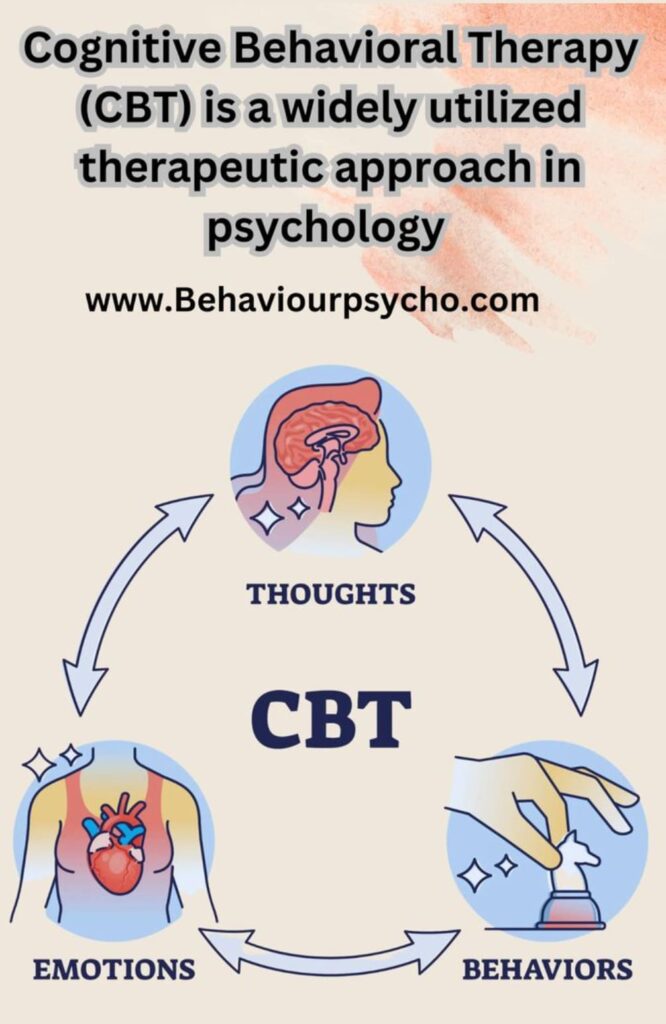
Cognitive Behavioural Therapy (CBT) — developed for depression by Dr. Aaron Beck at the University of Pennsylvania — remains the most extensively researched and most consistently effective psychological treatment for depression conditions. A comprehensive meta-analysis published in Psychological Medicine found that CBT produced significant and lasting reductions in depression symptoms across all severity levels, with effects maintained at 12-month follow-up.
CBT for depression works by identifying and challenging negative automatic thoughts and the negative cognitive triad — Beck’s term for depression’s characteristic negative views of the self, the world, and the future. Through structured sessions and between-session homework, CBT progressively builds more realistic and adaptive thinking patterns.
Additionally, Mindfulness-Based Cognitive Therapy (MBCT) — which combines CBT with mindfulness practice — has been specifically developed for recurrent depression mental health and is recommended by NICE guidelines as the first-line treatment for people with three or more previous depressive episodes.
3.Use Behavioural Activation to Break the Withdrawal Cycle
One of the most practically powerful depression self-help strategies — and one with very strong research support — is behavioural activation: deliberately and gradually increasing your engagement with activities, even when motivation is absent or minimal.
Depression creates a vicious cycle: low mood leads to withdrawal from activities, withdrawal removes sources of positive experience and meaning, which deepens low mood further. Behavioural activation directly breaks this cycle by reversing the withdrawal — not waiting for motivation to return before acting, but acting in order to generate the experience that rebuilds motivation.
Practical behavioural activation for depression:
- Create a simple list of activities across three categories: pleasurable, meaningful, and routine
- Schedule one small activity from each category daily — starting extremely small (a 5-minute walk outside counts)
- Complete the activity regardless of how you feel beforehand — and rate your mood before and after to build evidence that action precedes feeling
- Gradually increase activity breadth and duration as momentum builds
4. Exercise as a Depression Health Intervention
Exercise recommendations for depression mental health:
- Aim for 30 minutes of moderate aerobic exercise — brisk walking, cycling, swimming — at least 3–5 times per week
- Outdoor exercise in natural environments amplifies depression mental health benefits through additional light exposure and the restorative effects of nature
- Group exercise adds the social connection dimension that compounds depression mental health benefit
- Start with whatever is currently possible — even 10 minutes daily represents a clinically meaningful depression mental health intervention
%. Optimize Sleep Pattern
The relationship between sleep and depression mental health is deeply bidirectional — depression disrupts sleep, and sleep disruption worsens depression in a self-reinforcing cycle that can be genuinely difficult to break without targeted intervention.
Research published in Journal of Affective Disorders found that sleep disturbance is both a symptom and a predictor of depression — and that addressing sleep disruption directly produces measurable improvements in depression mental health outcomes, even independently of other treatment.
Our comprehensive sleep optimization strategies guide provides a full framework for addressing the sleep disruption that so consistently accompanies depression mental health. Key sleep strategies specifically relevant to depression include maintaining a consistent wake time, morning light exposure, elimination of alcohol, and CBT-I for insomnia that persists beyond the depressive episode.
6. Address Nutrition as a Depression
Nutritional psychiatry — as explored in depth in our eating habits and mental health guide — has produced compelling evidence for the role of diet in depression mental health. The landmark SMILES trial by Dr. Felice Jacka of Deakin University — the first randomised controlled trial of dietary intervention for depression — found that a Mediterranean-style dietary intervention produced a significant reduction in depression symptoms comparable in effect size to psychological therapy.
Specific dietary factors particularly relevant to depression mental health include:
- Omega-3 fatty acids — EPA specifically has the strongest evidence base for depression mental health, with meta-analyses finding significant antidepressant effects at doses of 1–2g EPA daily
- Gut microbiome diversity — given that approximately 90% of serotonin is produced in the gut, dietary diversity that supports microbiome health directly supports depression mental health
- Magnesium — deficiency is associated with increased depression risk, and supplementation has shown benefit in preliminary trials
- Reduction of ultra-processed foods — strongly associated with increased depression risk in multiple large population studies
7. Build and Maintain Social Connection
Dr. Johann Hari — journalist and author of Lost Connections — argued controversially but compellingly that social disconnection is one of the primary drivers of the depression epidemic in Western countries. His argument is well-supported by clinical evidence: a meta-analysis published in Perspectives on Psychological Science found that social isolation increases depression risk by over 25%.
Social connection is challenging during depression mental health episodes precisely because depression produces withdrawal, anhedonia, and a distorted sense that others do not want your company. Overcoming this withdrawal — reaching out even when it feels pointless — is one of the most powerful depression mental health actions you can take.
Starting small with social connection during depression episodes is entirely appropriate. A brief text to a trusted person, attendance at a structured group activity, or a session with a therapist all count as meaningful social connection within a depression mental health framework.
8. Practise Self-Compassion — Not Positive Thinking
A critically important distinction in depression is the difference between self-compassion and positive thinking. Positive thinking — simply trying to convince yourself that things are good when depression is telling you they are not — is largely ineffective for depression mind health and can increase self-blame when it fails.
Self-compassion — the practice developed and researched by Dr. Kristin Neff of the University of Texas Austin — involves treating yourself with the same kindness and understanding you would offer a close friend experiencing the same difficulties. Research consistently shows self-compassion significantly reduces depression severity and increases resilience during recovery.
Practical self-compassion for depression mental health:
- When the critical inner voice speaks, ask: “What would I say to a close friend feeling exactly this?” — then offer yourself that same response
- Acknowledge your suffering without minimising or catastrophising it — “This is genuinely hard right now, and that is okay”
- Recognise your shared humanity — depression mental health is a human experience shared by hundreds of millions of people, not evidence of individual inadequacy
9. Structure Your Day — The Architecture of Recovery
Depression is profoundly destabilising to daily structure — and the resulting absence of structure deepens depression in return. One of the most consistently recommended practical depression health strategies — a cross CBT, behavioural activation, and occupational therapy frameworks — is the deliberate re-establishment of daily structure and routine.
Daily structure for depression mental health:
- Set a consistent wake time regardless of sleep quality — this is the single most important depression health structural anchor
- Build a simple daily schedule that includes at least one activity from each category: physical movement, meaningful engagement, social connection, and rest
- Eat at consistent times — blood sugar stability has direct and measurable depression consequences as detailed in our eating habits and mental health guide
- Limit daytime sleeping to no more than 20 minutes — extended daytime sleep disrupts nocturnal sleep architecture and worsens depression
Monitor progress with self assessment
Recovery from depression is rarely linear. Most people experience fluctuations — better periods followed by more difficult ones — that do not indicate treatment failure but rather reflect the natural course of recovery. Understanding this prevents the devastating discouragement that often accompanies brief setbacks during depression health recovery.
Monitoring tools for depression mental health:
- The PHQ-9 (Patient Health Questionnaire) is a validated, freely available 9-item questionnaire widely used in NHS and primary care settings to monitor depression mental health severity over time — available at phqscreeners.com
- Keep a simple daily mood log — even just a 1–10 rating — to identify patterns, triggers, and genuine progress that is easy to miss when living inside depression
- Review your progress with your healthcare provider regularly — and communicate honestly about what is and is not working
Key Takeaways — Featured Snippet Optimised
Understanding and overcoming depression:
- Depression is a complex, multifactorial medical condition — not weakness or a personal failing
- Over 280 million people worldwide live with depression — making it the leading cause of global disability
- The defining feature of depression mental health is anhedonia — not simply intense sadness
- Modern depression health science recognises biological, inflammatory, psychological, and social dimensions simultaneously
- CBT, MBCT, and behavioural activation are the most evidence-based psychotherapy options
- Exercise reduces depression symptoms with effect sizes comparable to antidepressants for mild-to-moderate cases
- Esketamine, TMS, and psilocybin-assisted therapy represent important 2026 advances in treatment-resistant depression mind health
- Sleep, nutrition, social connection, and daily structure all have measurable and significant impacts on depression
- Self-compassion is more effective than positive thinking for depression barin health recovery
- The average gap between symptom onset and help-seeking is 11 years — please do not wait that long
A Word From Mindnesto –
At Mindnesto, we want every person reading this to understand one thing above all else: depression is not a life sentence. It is not who you are. And it is not something you should have to manage alone.
The science of depression has never been more advanced, the treatment options never more diverse, and the understanding of recovery never more compassionate. Wherever you are in your depression mental health journey — whether you are in the depths of an episode, supporting someone you love, or working to protect your own wellbeing — there is a path forward. It exists. People find it every day.
You deserve support. You deserve to feel well. And you deserve to know that reaching out for help is not a sign of weakness — it is the most courageous and intelligent depression mental health decision you can make.
We are here every step of the way. 💙
→ Read next: Sleep Optimization — 12 Science-Backed Strategies
→ Also read: Burnout Prevention — 12 Science-Backed Strategies
Frequently Asked Questions
What is the difference between depression and sadness?
Ordinary sadness is a normal human emotion that arises in response to specific difficult events — loss, disappointment, or setbacks — and typically resolves as circumstances change or time passes. Depression mental health, by contrast, is a persistent clinical condition characterised by low mood lasting at least two weeks, anhedonia (inability to experience pleasure), significant impairment in daily functioning, and often physical symptoms. Depression does not require a specific trigger, does not resolve simply with positive events, and reflects measurable changes in brain function that require specific treatment.
How is depression diagnose?
Depression mental health is diagnosed through clinical assessment by a qualified healthcare professional — typically a GP, psychiatrist, or psychologist. Assessment involves a structured interview exploring symptom duration, severity, and impact on functioning, ruling out medical causes (thyroid dysfunction, anaemia, and certain medications can mimic depression), and in some cases using validated questionnaires such as the PHQ-9 or Hamilton Depression Rating Scale. There is no blood test or brain scan that diagnoses depression — though both may be used to rule out other conditions.
What are the effective treatment in 2026?
Psychotherapy (particularly CBT or MBCT) combined with antidepressant medication for moderate-to-severe presentations, alongside lifestyle modifications including exercise, sleep optimization, dietary change, and social connection. For treatment-resistant depression mental health, options including esketamine (Spravato), TMS, and emerging psilocybin-assisted therapy are now available or approaching availability
Can depression go aways without any treatment?
Mild depressive episodes sometimes resolve naturally over time, particularly when the precipitating stressor resolves. However, moderate-to-severe depression mental health rarely resolves without treatment
Is depression genetic?
Depression mental health has a heritability of approximately 30–40% — meaning genetics plays a meaningful but not deterministic role. Having a first-degree relative with depression increases your risk, but does not make depression inevitable.
where i can get help immediately?
UK: NHS Talking Therapies — free self-referral | Samaritans — 116 123 | Mind UK
USA: 988 Suicide and Crisis Lifeline — call or text 988 | NAMI | NIMH Treatment Locator
Canada: Crisis Services Canada — 1-833-456-4566 | CAMH
Australia: Lifeline — 13 11 14 | Beyond Blue — 1300 22 4636
Sources and External References
- WHO — Depression Fact Sheet
- NIMH — Major Depression Statistics
- NHS — Depression Guidance
- NICE — Depression in Adults Guidelines
- Lancet Psychiatry — MBCT Research
- JAMA Psychiatry — Exercise and Depression
- JAMA Psychiatry — Inflammation and Depression
- Molecular Psychiatry — Serotonin Hypothesis Review
- Nature Neuroscience — Hippocampal Volume
- Frontiers in Psychology — High Functioning Depression
- Journal of Affective Disorders — Sleep and Depression
- New England Journal of Medicine — Esketamine
- NEJM Evidence — Psilocybin Research
- Perspectives on Psychological Science — Social Connection
- Mind UK — Depression
- Samaritans UK
- 988 Suicide and Crisis Lifeline USA
- Beyond Blue Australia
- CAMH Canada